New Forest: the rare brown hare

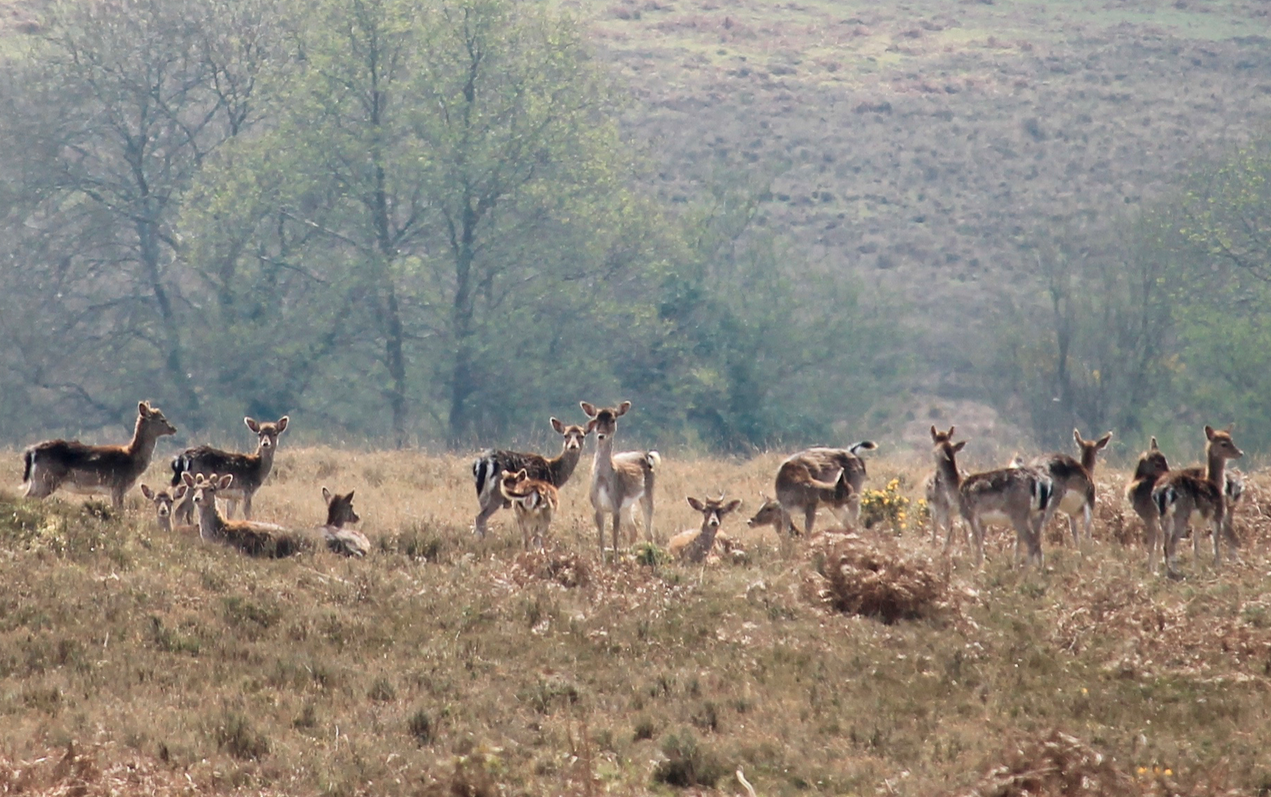
Brown hares were once found in the New Forest but are now rarely seen, if at all.

On a recent journey away from the Forest, where I had the pleasure to be a passenger rather than the driver, I was able to look out of the window and admire the scenery instead of concentrating on the road as usual. Passing a wide expanse of grassland I spotted the tell tale silhouette of a brown hare (Lepus europaeus), as it moved through the sward. This is an outline so distinctive that there is no other creature that can even begin to resemble it. Though in some circumstances hares are often mistaken for rabbits (or the other way around), which is much the same as confusing horses with cows. Thankfully for the uninitiated there are other clues, both physical and environmental, that reveal its true identity. Hares, for instance, are much bigger than rabbits and have longer, larger ears with a black tip to the ends. Hares are predominantly solitary creatures, though a lack of choice in places for them to eat may mean that they band together when feeding at suitable locations. Rabbits, on the other hand, are sociable; living in groups, know as herds – just like horses and cows. Hares live above ground in a ‘form’, which is a shallow depression in the ground or grass, and their only defensive strategy is to run from predators (now you understand why they need larger, longer ears – to hear their enemies coming). Rabbits live under the ground in burrows, often with a system of warrens, which they will run to, and hide, if threatened. The offspring of the rabbit is known as a ‘kitten’ or ‘kit’, whereas the offspring of a hare is known as a ‘leveret’. Rabbits make excellent companion animals, but hares are completely unsuited to life in captivity as pets – though many have tried to tame them.

Hare in decline
Hares were once found in the New Forest, but are now rarely encountered, if at all. According to the Hare Preservation Trust, during the late 1800s there were about four million brown hares in Britain, but their numbers have declined by more than 80% during the past 100 years and the decline continues.[1] There are several factors identified as possible causes for the loss of brown hares in our countryside, including changes in farming practices that are not sympathetic to the hare’s lifestyle. In the New Forest, common opinion points to the rise in the number of dogs allowed to run off the lead. Even our most docile pet, once off the lead and free to run, will follow their instinct and begin hunting.[2] Unfortunately, hares leave their young in the form, only returning once a day for the first four weeks to feed them. During this time the leverets are vulnerable to predation from dogs. The baby hares can be killed and eaten without the dog owner even realising that it’s happened. Adult hares can reach speeds of up to 72 km.p.h (45 m.p.h)[3] and are pound for pound are faster than a cheetah, so are unlikely to be caught by dogs; it is the loss of baby hares that is a another factor in their population decline. In order to preserve this fascinating and alluring species it is up to us to be mindful of their young during their breeding season, which lasts from February until September.  This is true for other wild creatures, including our ground nesting birds, and another good reason to stay on the designated tracks with our dogs under control when out enjoying the New Forest.

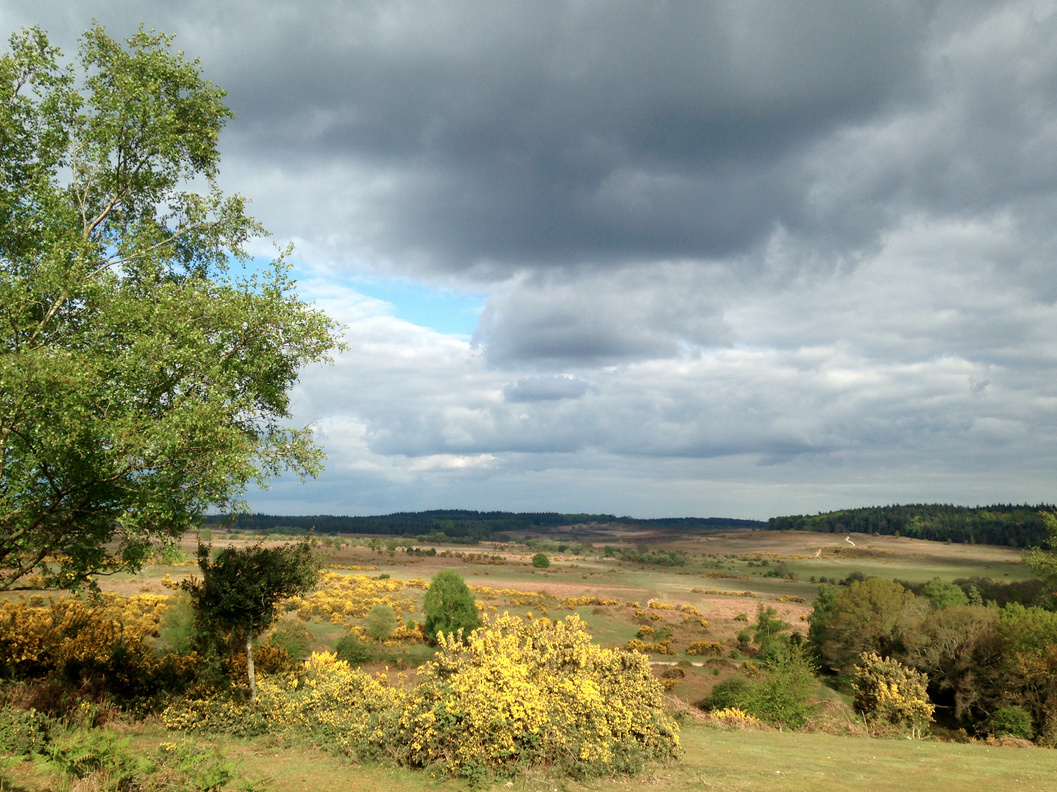
The New Forest is a landscape of irreplacable habitats that supports a diversity of wildlife.

SOURCES:

[1] BBC Nature website: http://www.bbc.co.uk/nature/life/European_Hare

[1] Hare Preservation Trust website: http://www.hare-preservation-trust.co.uk/status.php

[2] Colin Tubbs, The New Forest, History, Ecology, Conservation (Lyndhurst, 2001), p. 329.

See also: Mammal Society Species Fact Sheet: Brown Hare (Lepus europaeus)

Posted in Uncategorized | Tagged , , , , , , , , , , , , , , , , , , , , | Comments Off on New Forest: the rare brown hare

New Forest: “I thought it would be bigger!”

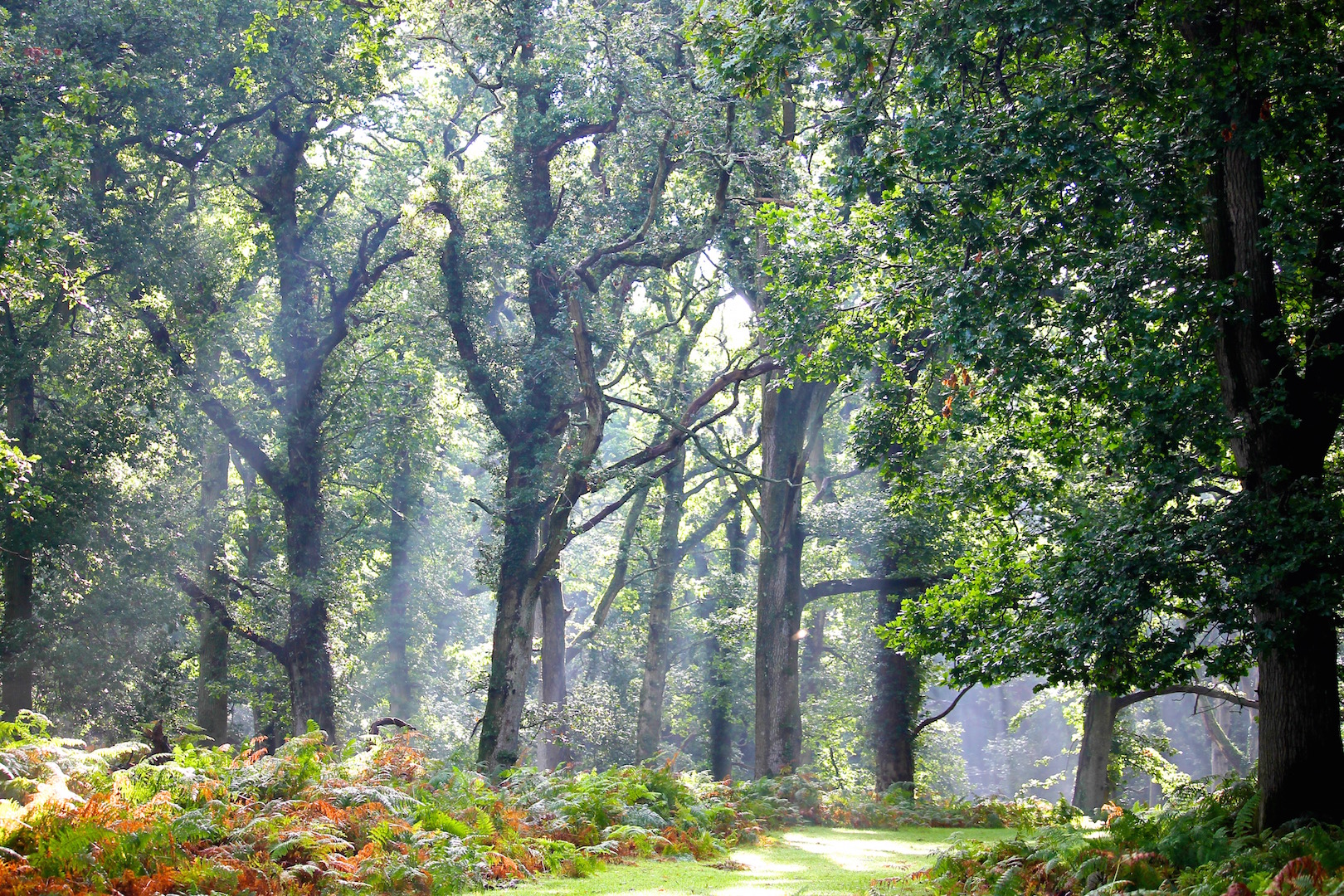
The New Forest is a landscape without equal.

Living in or around the New Forest is a pleasure and a privilege that many of us sometimes take for granted, as a friend of mine discovered recently. She had travelled from London to the New Forest bringing with her a young relative who had never visit the area before. They reached the junction at Cadnam and turned off the M27 to travel north on the B3079. It was a beautiful day by all accounts. The sun was shining gently, and the lush greens of the grasses, hedgerows and unfurling leaves of the trees were contrasted by the bluest of cloudless skies. At the entrance to the B3079 was a speed restriction sign, which clearly displayed the words ‘New Forest 40’. At this point they travelled over the cattle-grid, crossing the metal poles placed across an open pit in the ground, which are laid to prevent the livestock from straying off the Forest. This was something the young relative had never seen before and the sensation of the crossing proved to be quite a talking point. However, when they had travelled as far as Brook, the youngster loudly declared their disappointment. My astonished friend enquired why that could be, and the young relative answered, “Well, I thought the New Forest would have been bigger than that”. It transpired that the young relative, confused by the wording on the village sign, believed that they had already left the New Forest. My friend laughed to think that after extolling the virtues of this wonderful landscape, its flora and fauna, and free-roaming livestock to the young relative, they could only conceive of such a small area.

Cultural and natural asset
Of course, the boundary, or perambulation, of the New Forest has changed over time and was once much bigger than the 150 sq. miles (388 sq. km) it is now. In fact, at one point it is believed that a third of the whole area of England was designated, like the New Forest, as a royal forest. The forests were places where forest law, rather than common law prevailed and, according to a treatise, written in 1598, was a …certain Territory of woody grounds & fruitful pastures, privileged for wild beast and fowls, of Forest, Chase and Warren, to rest and abide in, in the safe protection of the King, for his princely delight and pleasure… Traditional management practices, such as commoning, which were supported by the forest law system, created a rural landscape throughout the country that would have been familiar to everyone. Indeed, once upon a time the city would have been an alien landscape, as the majority of people lived in the country rather than the other way around, as it is today. So, I suppose my friends’ young relative travelling from our nation’s capital can be forgiven for not recognising one of our country’s greatest cultural and natural assets – the New Forest. The story at least has a happy ending. My friend was able to show the young city dweller the delights of the New Forest’s historic landscape, including its free-roaming livestock; and to re-experience, through the eyes of the next generation, the wonder and excitement of such a discovery.

Traditional management practices, particularly commoning, have conserved the ecological diversity of the Forest.

Posted in New Forest | Tagged , , , , , , , , , , , , , , , , , | Comments Off on New Forest: “I thought it would be bigger!”

New Forest: itchy, scratchy, lousy!

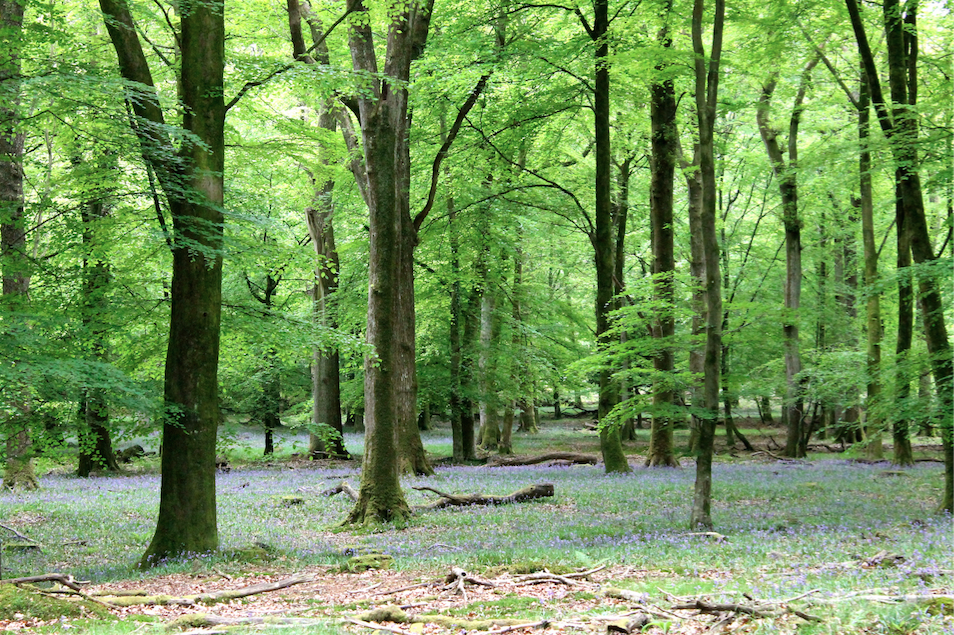
The bluebells that carpet the woodlands are a popular sight with visitors to the New Forest.

I went for a walk this week, in a part of the Forest that I don’t usually visit. I wanted to see if the bluebells had bloomed, so went on a route that took in one of the Forestry Commission enclosures. I could see spots of blue beginning to emerge from underneath the leaf-litter of the forest floor, but not the profusion of azure set amongst the verdant green colours that one normally associates with the bluebell season. I knew that I’d have to be patient and wait a day or two more to get the full effect of this most pleasing display. I nevertheless continued on and emerged from the other side of the enclosure a mile or two from my normal walking route. I hadn’t gone very far before I came across a herd of ponies quietly grazing beside the track. In their midst was a young bay pony that I’ve been missing for a while. I was pleased to see her again and, although she looked up momentarily, she continued to graze without really registering my presence. Her companions ignored me totally. I was able to quietly appraise my filly’s condition, and she looked generally as ponies do at this time of year, particularly if they have lived out all winter. I noticed that she had been rubbing herself, as small bald patches were showing on her coat. On closer inspection I could see that she was carrying lice.

Ponies with lice
There are several types of lice that can live on equines, but in this case the culprit was Damalinia equi. This wasn’t entirely a shock, as lice are a common sight on the free-roaming animals, particularly at this time of year. (Lice are not confined to the semi-wild populations of free-roaming New Forest ponies and donkeys, but also affected stable-kept horses, ponies and donkeys too.) Damalinia are biting parasites that can be seen with the naked eye, and prefer to feed on areas of the pony with shorter body hairs, such as the neck, flanks and around the base of the tail. The patches on my pony were behind her front legs, but were not extensive or deep. The bite of the Damalinia is very itchy and you may notice some ponies exhibiting scratching-behaviour in the spring, which most people associate with the shedding of their winter coats, but could in fact be caused by lice. Of course, if she were one of my home-kept ponies I would be able to wash her with the appropriate veterinary treatment, but semi-wild ponies are a different proposition, as they do not like to be handled – let alone bathed!  Now that I know the area she is in, and have identified the ponies she is with, I should be able to find her again. I will keep an eye out and make sure that she doesn’t become infested with lice or suffer as a result of her scratching. Luckily, New Forest ponies are able to cope well with parasites and do not seem to be affected by lice in the summer months. Further good news is that Damalinia equi are species specific and, while they can crawl on you, they won’t bite you. This is, of course, another good reason why visitors to the New Forest should just look at the ponies and not touch them.

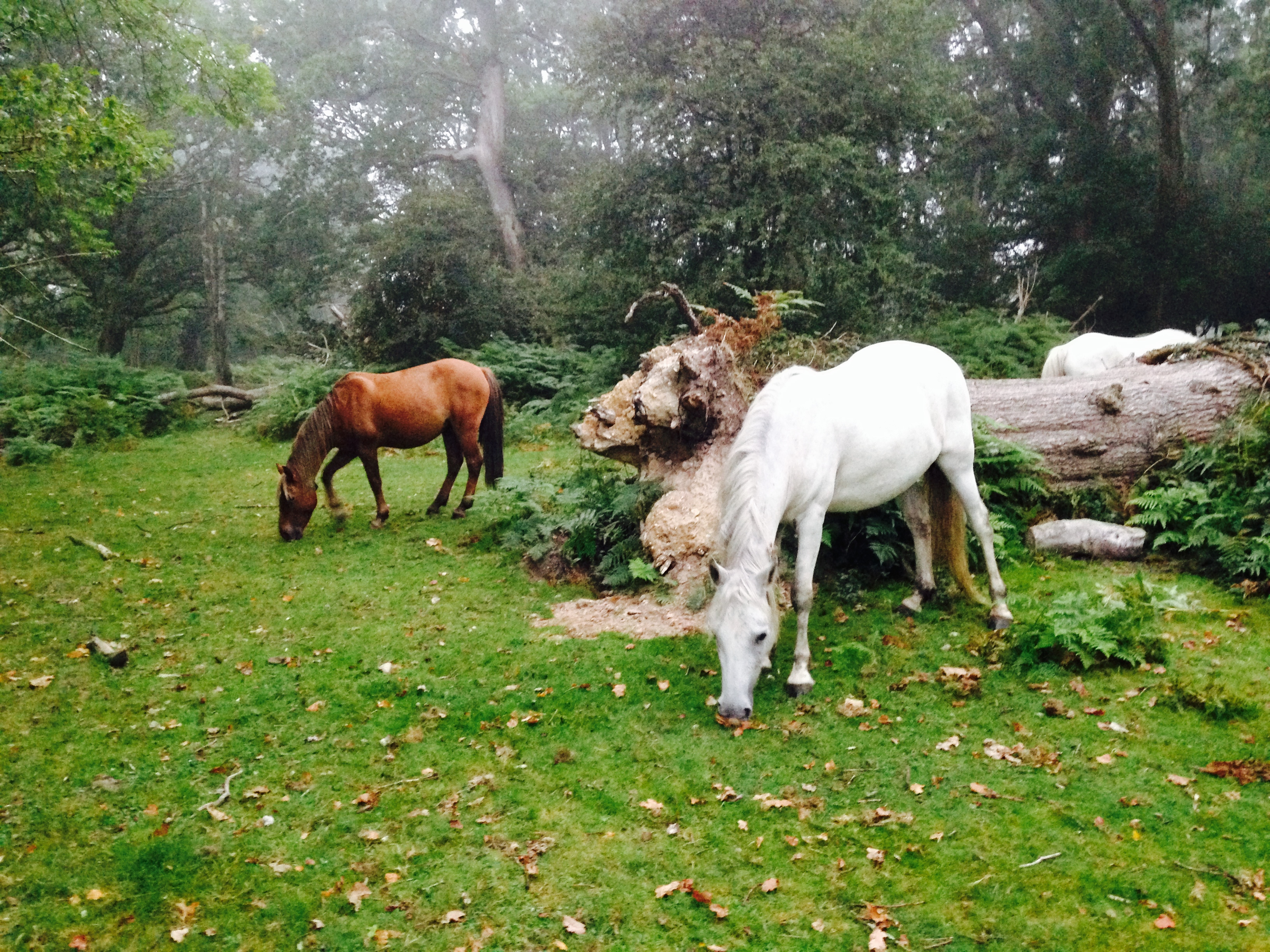
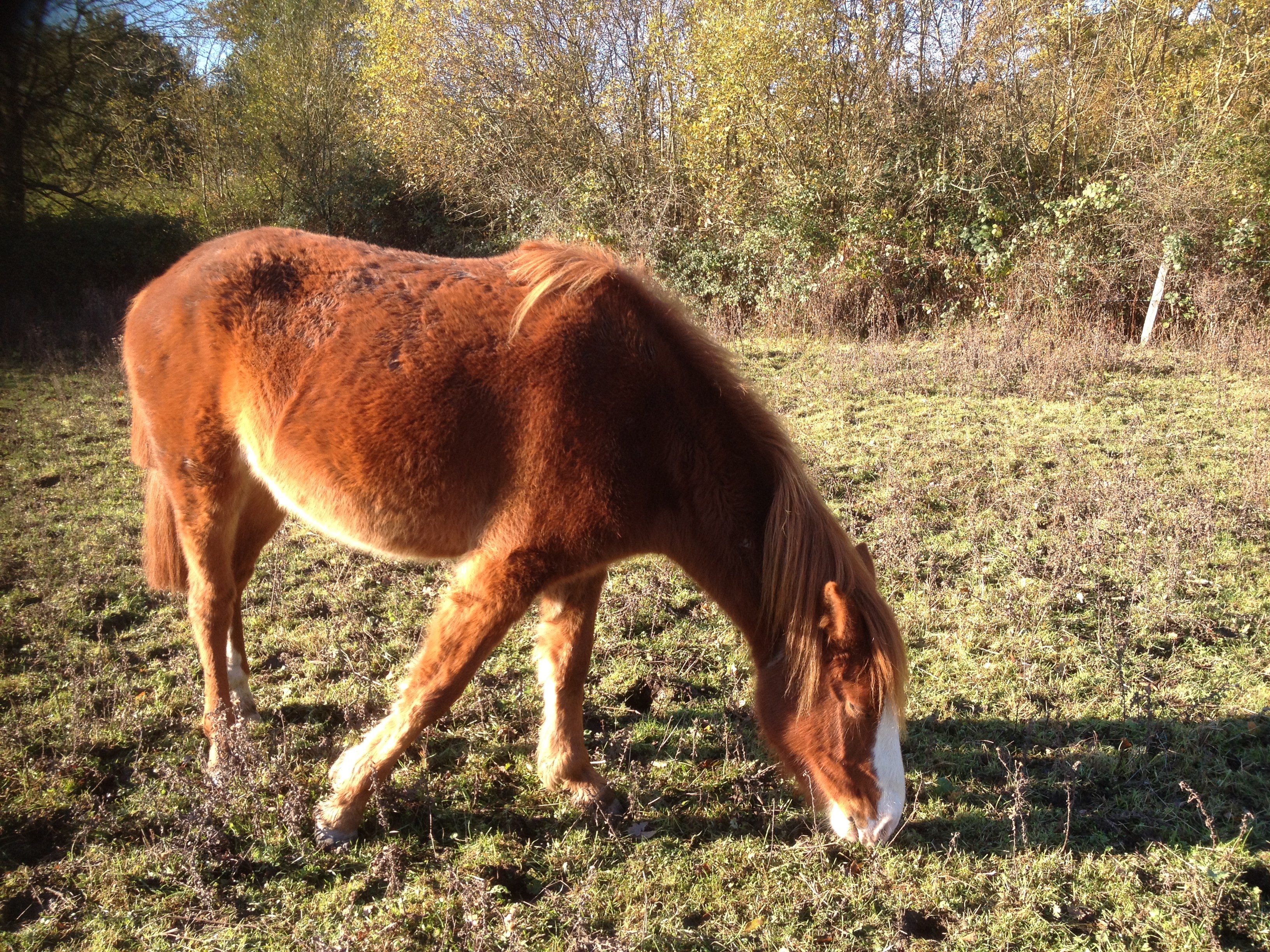
New Forest ponies have thick coats to keep them warm and dry in winter; but parasites, such as lice, can find them cosy places to breed and feed.

Posted in New Forest, New Forest pony | Tagged , , , , , , , , , , , , | Comments Off on New Forest: itchy, scratchy, lousy!

New Forest: Look, but don’t touch the animals

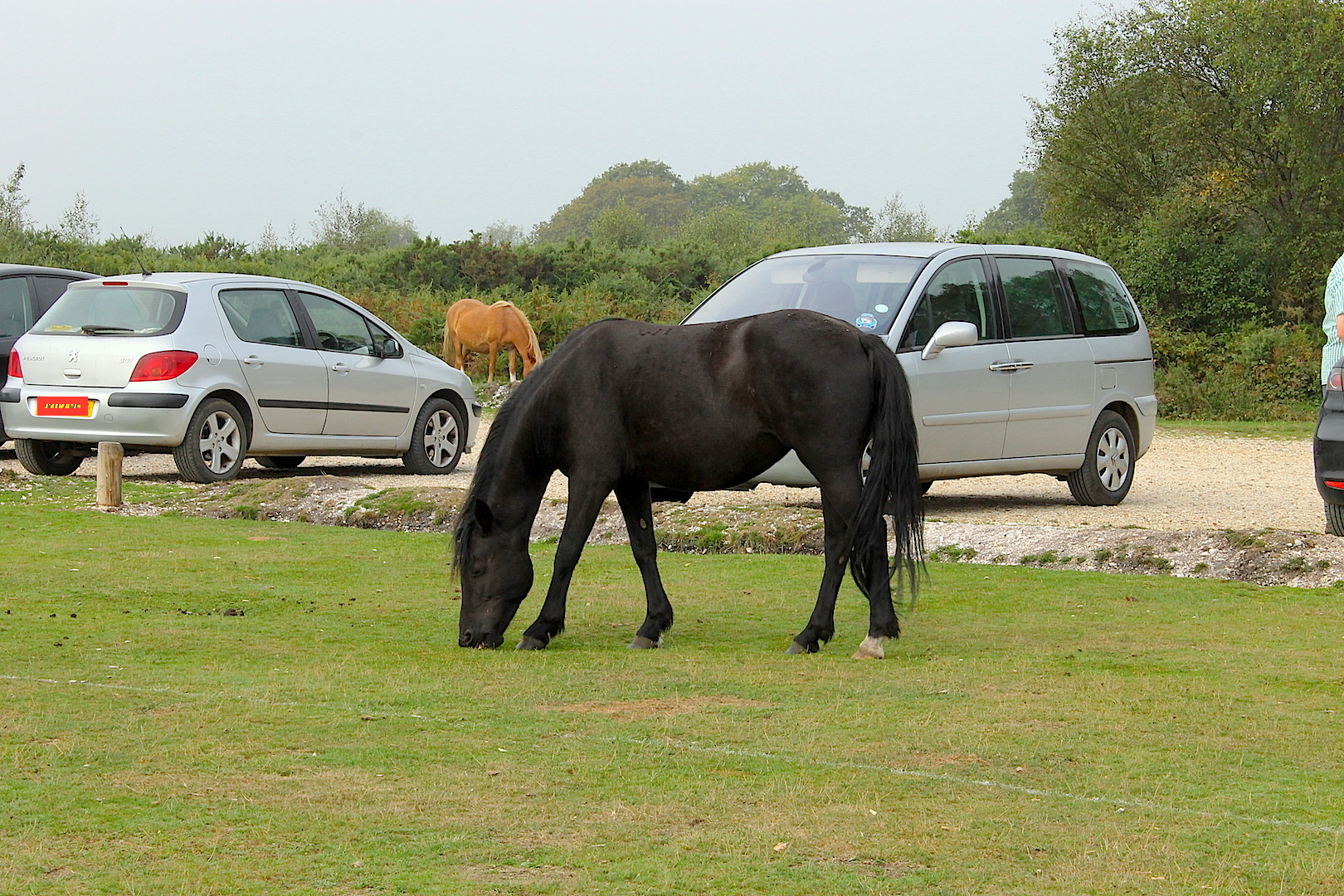
Visitors who feed the New Forest ponies, and other livestock, are teaching them not to fear humans or cars.

This week I had a long Twitter conversation with someone concerned about the amount of people feeding and petting the donkeys at Hatchet Pond, near Beaulieu. In one incident a family went even further, and were trying to force a donkey foal into the lap of a child seated on the ground, so that the mother could take a photo. (Readers with access to social media may have seen similar images and videos doing the rounds of people rolling around on the floor cuddling baby elephants and thoroughbred foals etc.) My outraged follower was incensed by such an exhibition of cruelty, and asked if there was at least a fine for feeding the animals in the New Forest. The short answer is, of course, yes. There is a fine of £200 and the risk of a criminal record, if you are successfully prosecuted for feeding a commonable animal in the New Forest.

Under the New Forest Byelaws (Statutory Instruments 2010, No. 993), Section 16:
(1) No person other than the owner, or a person appointed as their agent or an agister shall hand feed or attempt to hand feed any horse, bovine animal, sheep or pig depastured in the Forest.
(2) No person shall place in the Forest any material that might be consumed by horses, bovine animal, sheep or pigs depastured in the Forest, except that the owner or a person appointed as their agent may place straw, hay or other feedstuffs approved by the Verderers in the Forest for the benefit of the owner’s horses, bovine animal, sheep or pigs in such places as shall have been previously approved for that purpose by the Verderers.
(3) In this byelaw “agister” means a person who is for the time being employed or appointed as an agister by the Verderers.

The New Forest’s free-roaming livestock (ponies, donkeys, cattle, pigs and, in some areas, sheep) are owned by local people with ‘common rights’, who are responsible for the care and maintenance of their animals. (The animals are not wild, therefore, but semi-feral.) New Forest common rights are administrated and protected by the Verderer’s, who have the power and legal status of a magistrate. The Verderers employ Agisters, whose job it is to assist the commoners and make sure that they keep their animals to an appropriate standard. Visitors who feed the animals are interfering with their upkeep.

Big no-no!
The reason that feeding the Forest animals is such a big no-no is because it seriously jeopardises their safety and welfare. Hand feeding encourages aggression, because the animals demand food from visitors and often get very upset when there is none or when the supply runs out. People feeding the waterfowl, at places like Hatchet Pond, are often surrounded by donkeys insisting on being fed too. Some visitors, in trying to protect the food for the ducks and swans, have been chased and even mugged by the animals jealous for their share. Hand feeding also teaches the ponies and donkeys to bite. Visitors unused to holding out titbits for equines can be very tentative about offering them an outstretched palm bearing food. This faltering motion teaches the ponies and donkeys to lunge, in order to try and quickly snatch the proffered food. Many people are bitten in this scenario dropping the food as a result. The animals then learn that if they just bite they’ll get the food that was dropped on the floor by the nervous visitor. This aggressive (and learned) behaviour can lead to the permanent removal from the Forest of the offending pony or donkey, which is not fair to an animal that was born there. Animals displaying bad behaviour or violence to humans are difficult to sell on, do not make good pets, and in extreme cases may have to be put down.

Human Food is not animal food.
Hand feeding or leaving food out on the verges also encourages the animals into the car parks and onto the roads, where they are exposed to the dangers of vehicular traffic. I have seen ponies squabbling over a pile of apples left by a busy roadside, completely oblivious to the passing traffic in their fight for the food. I even heard this week that a woman has been seen driving through a village in the northern part of the Forest throwing handfuls of carrots onto the verge as she drives along in her car! Some people actually feed the New Forest animals from inside their cars, we know this because they take photos and happily post the results on social media. These people are in effect training the ponies and donkeys not to fear cars, caravans or other motorised transport. Consequently, people who feed the animals are directly contributing to the number of ponies and donkeys killed or injured on the Forest roads. There is also another important point – human food is not animal food. There are certain foodstuffs, particularly picnic treats and snacks, which are not good for ponies and donkeys to eat. Items such as potatoes, either as chips or crisps, chocolate, tomatoes and onions are toxic to all equines. Other foods can even give the animals a serious or fatal colic, and anything containing meat should not be fed to a herbivore. The free roaming animals of the New Forest are an asset to the local economy, its cultural heritage, and are symbolic of its special qualities. There is enough natural food available on the Open Forest to sustain the free roaming animals, without them being fed by visitors. The best way to appreciate the animals is to look and not touch. If you are concerned, however, about the condition of any animal in the New Forest then please contact the Verderers’ Office and report it.

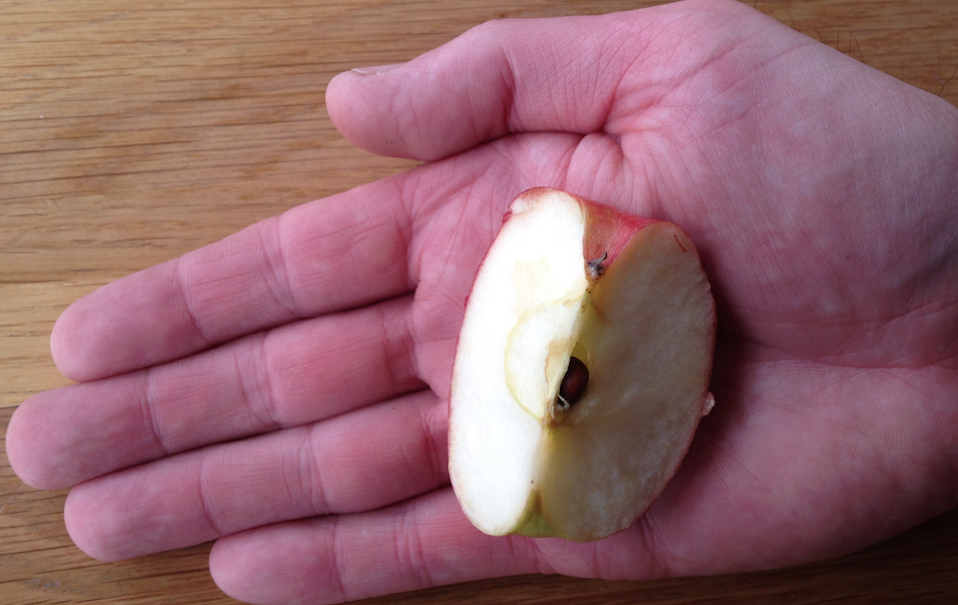
Hand feeding the New Forest animals, however well-intentioned, is prohibited by law.

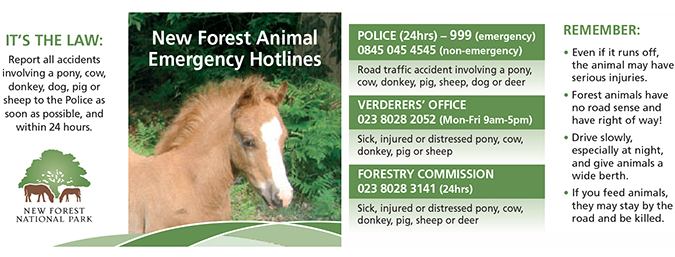
Know who to call for incidents involving the commonable livestock of the New Forest:
(contact the Forestry Commission regarding deer and other wildlife).

Posted in New Forest, New Forest Animal Road Traffic Accidents, New Forest pony | Tagged , , , , , , , , , , , , , , , , , , , , , , , , , , , , , , | Comments Off on New Forest: Look, but don’t touch the animals

New Forest: animal accidents – multiple causes/multiple solutions

Animal road accidents are always a concern, but more so when the foals are born in spring.

This week (April, 2017) the subject of animal accidents on the Forest roads has been very much at the forefront of my mind. I’ve been watching with interest the comments on various social media forums, reading newspaper reports, listening to radio broadcasts, and attending meetings where the subject of speeding cars, hit-and-runs, and the toll of livestock inevitably surfaces for discussion. As I go about the Forest and see the in-foal mares who will soon be giving birth to the next generation of free-roaming pony I sigh deeply and hope that ways to address the situation can be found – and soon. I say ‘ways’ because this is a problem that has multiple causes, including visitors feeding the ponies in the car parks and on the roads; drivers speeding; and, drivers not paying attention or not driving according to the road conditions. Therefore it is an issue that will need multiple solutions, such as discouraging the unauthorised feeding of the ponies; making the road surfaces lighter in colour in order to make animals on the roads, particularly at night, stand out more; perhaps returning some of the roads to gravel tracks, to slow drivers down and make them drive with more care; and even reducing the speed limits or closing some roads between dusk and dawn. These solutions would be much more preferable to that of fencing the Open Forest roads and installing road-bridges for the animals to cross, as has also been suggested. There are, it has been offered, even technological solutions that may help in the future, such as driverless cars and cars that can warn the driver of nearby ‘obstacles’, such as animals in the road, but these are a long way from being perfected.[1]

Green solution
There are also environmental ways of helping to solve the problem. One such ‘green solution’ uses the stream and wetland restoration works, which reinstate the natural functions of the Forest’s catchment system. Many of the Forest’s mires and streams were damaged by the man-made drainage channels, which were installed for timber production in the 19th and 20th centuries. Although reducing animal accidents is not the main reason for undertaking such restoration work it does seem to have some very beneficial outcomes for the animals of the New Forest. Wetland restoration improves the grazing by allowing the natural cycle of flooding to return, which covers areas with nutrient-rich water. This action provides an important source of grazing for commoners’ animals, particularly in the early spring when the first flush of growth precedes the growth of most grasses.[2] This means that the animals stay in the valleys to graze for longer periods, keeping them away from the roads and dangers of the traffic.

Whose responsibility is it?
The responsibility for reducing the rate of animal accidents is shared between all of us who use of the Forest roads – although many organisations, communities, and road-user groups do undertake initiatives to address the problem. Fortunately, there has been a reduction in the overall numbers of animals killed or injured on the Forests’ roads, and the trend continues downwards, but many would argue that one death is a death too many, and that we must not become complacent. The free-roaming livestock have right of way on all roads, and must be given priority. The commoners’ animals that roam the New Forest are an intrinsic and vital part of its alluring landscape. The sight of ponies, cattle, donkeys, pigs and, in some areas, sheep, is one of the many joys of visiting the New Forest. The reduction of animal accidents is, therefore, part of a wider scheme to improve the New Forest environment to the benefit of all. Safer roads for ponies are safer roads for all. In the meantime the campaign to raise awareness and implore drivers to stay under the 40-mile an hour speed limit continues.

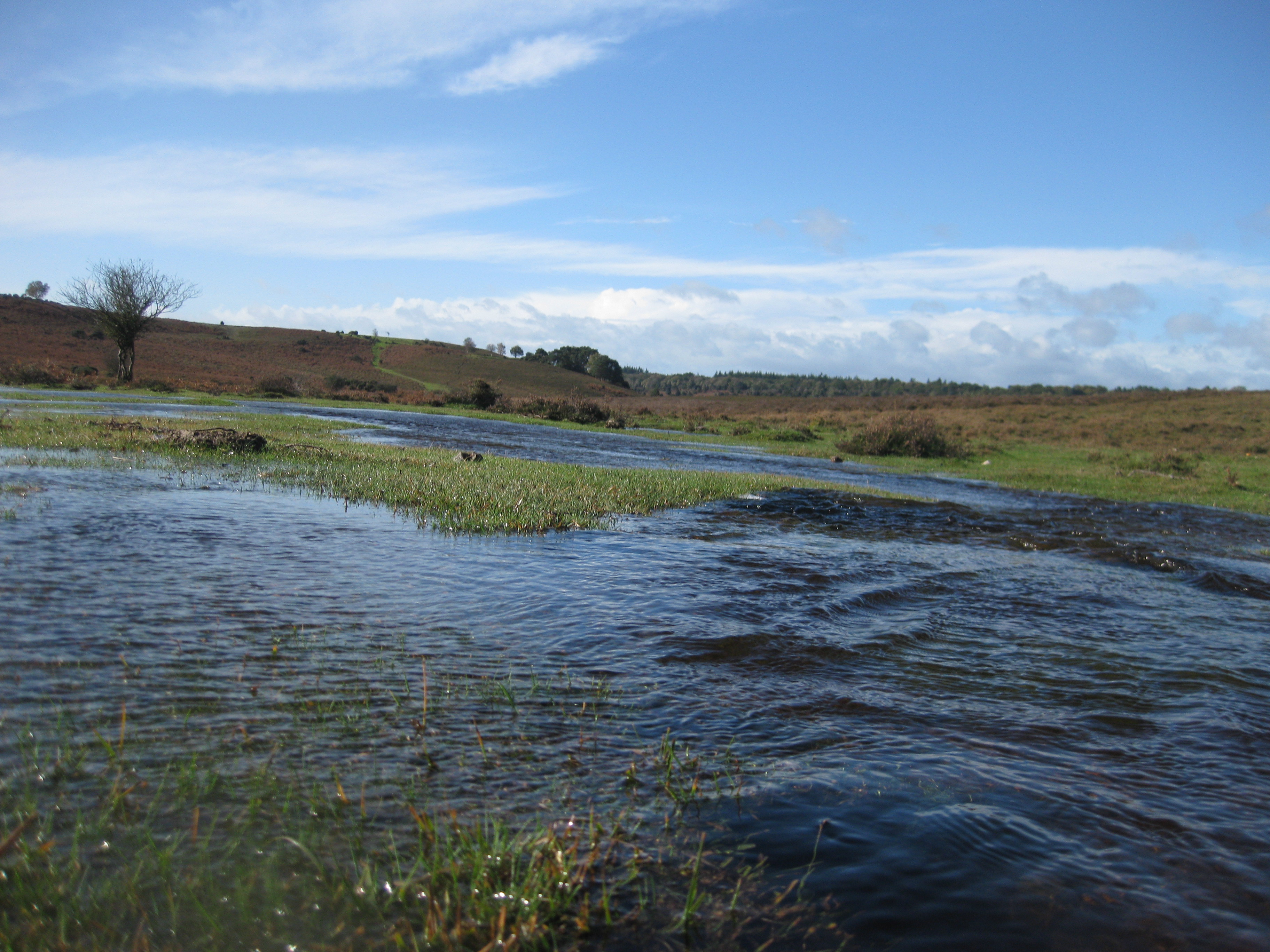
Flood water carries nutrients, which enriches the grazing for the New Forests’ livestock.

NB: This link contains an ‘Animal Accident map’, by species, between 2011-2015, showing were collisions with livestock have occurred.

Sources:

[1] BBC News website, ‘Driverless car test call over New Forest animal deaths’, http://www.bbc.co.uk/news/uk-england-hampshire-39441355

[2] George Peterken, Jonathan W Spencer, Alison B Field, ‘3.8 – Rivers and Wetlands’, Maintaining the Ancient and Ornamental Woodlands of the New Forest, available at: http://www.geodata.soton.ac.uk/newforest/public/resources/strategy.html

Posted in New Forest, New Forest Animal Road Traffic Accidents | Tagged , , , , , , , , , , , , , , , , , , , , , , , , , , , | Comments Off on New Forest: animal accidents – multiple causes/multiple solutions

New Forest: spring-time musings

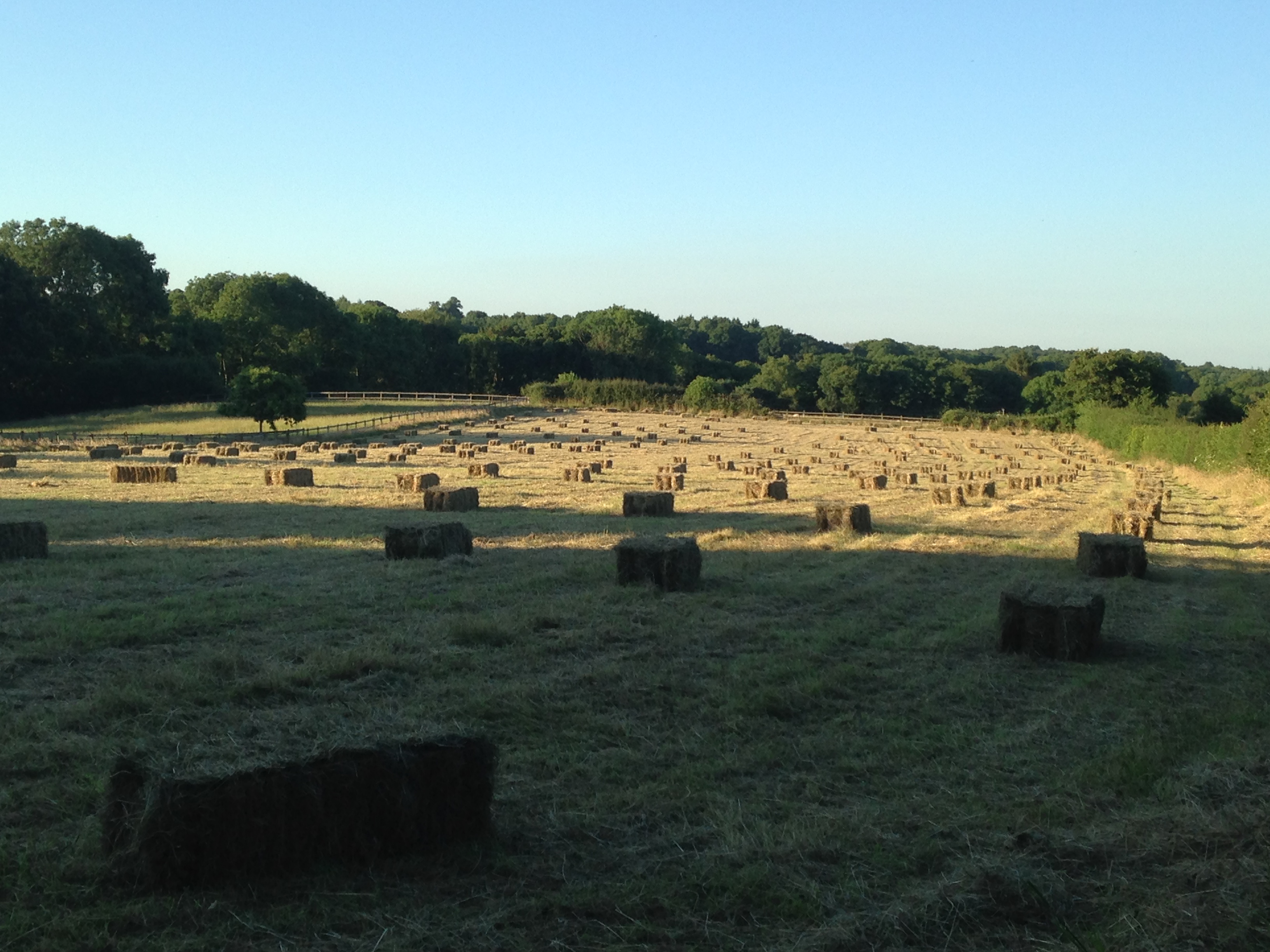
Last year’s haymaking produced a bumper crop of backbreaking work.

I was going through my diary to see what I was doing this time last year. I was wondering when I had moved the home-kept ponies off their winter grazing and into their spring paddocks. When did I begin to harrow, re-seed and fertilise the winter pasture ready for summer haymaking? The weather, it seems, was much wetter in 2016 and for a while I was worried about the fields getting too poached, which is when areas get over-used and broken up under the ponies hooves, such as around gateways or troughs, and become overly muddy. This would have had an impact on the hay crop, because any muddied areas would have to be repaired and re-seeded and, if they didn’t recover in time, would consequently affect the hay yield. As it happens, last year was a bumper harvest and, like many of my horse-owning friends, I still have plenty of hay left over from last year. All due, no doubt, to the prolonged  spring rains. Now, of course, I have the quandary of – do I dispose of last years hay and take a new crop? Or, do I try to make do with the year-old hay and not have to worry about the backbreaking work at harvest time? Decisions! Decisions! When so much depends upon the prevailing weather conditions it is difficult to make definite future plans. Last years events in my diary, it seems, are a merely guide and not a blue-print.

African migrants
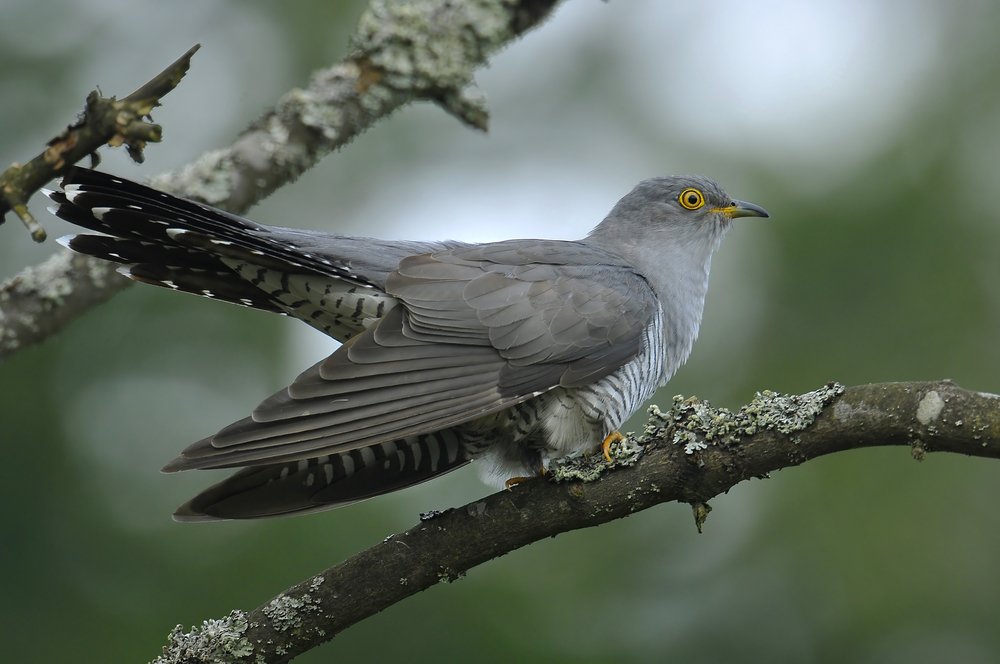
Also, I noticed, at this time last year I received the advance-party of my regular African visitors – the migrating swallows (Hirundo rustica). I always reserve a stable for their use during the summer, as the ponies have no use for it. Their mud nests adorn the walls, ceiling and beams, but the mess they made (and they do make a lot of mess) will have been cleared up as part of my winter maintenance. I have peeked quietly inside the stable and, as yet, there is no sign of them. They are welcome visitors to my holding because each day they eat thousands of the flying insects that pester the ponies. I wait with anticipation for their arrival. I know for certain that the cuckoos (Cuculus canorus), which announce their arrival from about mid-April, are on their way however. The British Trust for Ornithology (BTO) is tracking an individual bird, named Selborne, on his journey to Hampshire. Selborne was ringed in the New Forest last year and given his name by the Hampshire Ornithological Society (HOS) in memory of Gilbert White, who was a pioneering 18th century naturalist and ornithologist from Selborne in east Hampshire. The bird’s progress across the digital map, on the BTO website, reminds me of the NORAD Santa tracker that children watch avidly at Christmas time. For an amateur ornithologist, such as myself, the track across my laptop screen getting ever closer to home is viewed with the same excited anticipation. He’s currently in Spain and, hopefully, will arrive safe and sound in the next week or so and, as cuckoos are traditionally the heralds of spring, let’s hope he doesn’t take any longer.

The cuckoo (Cuculus canorus)  is a regular visitor to the New Forest and is heard rather than seen.

To followed Selborne’s progress please visit: https://www.bto.org/science/migration/tracking-studies/cuckoo-tracking/selborne

Posted in New Forest, New Forest flora & fauna | Tagged , , , , , , , , , , , , , , , , , , , , , , , , , | Comments Off on New Forest: spring-time musings

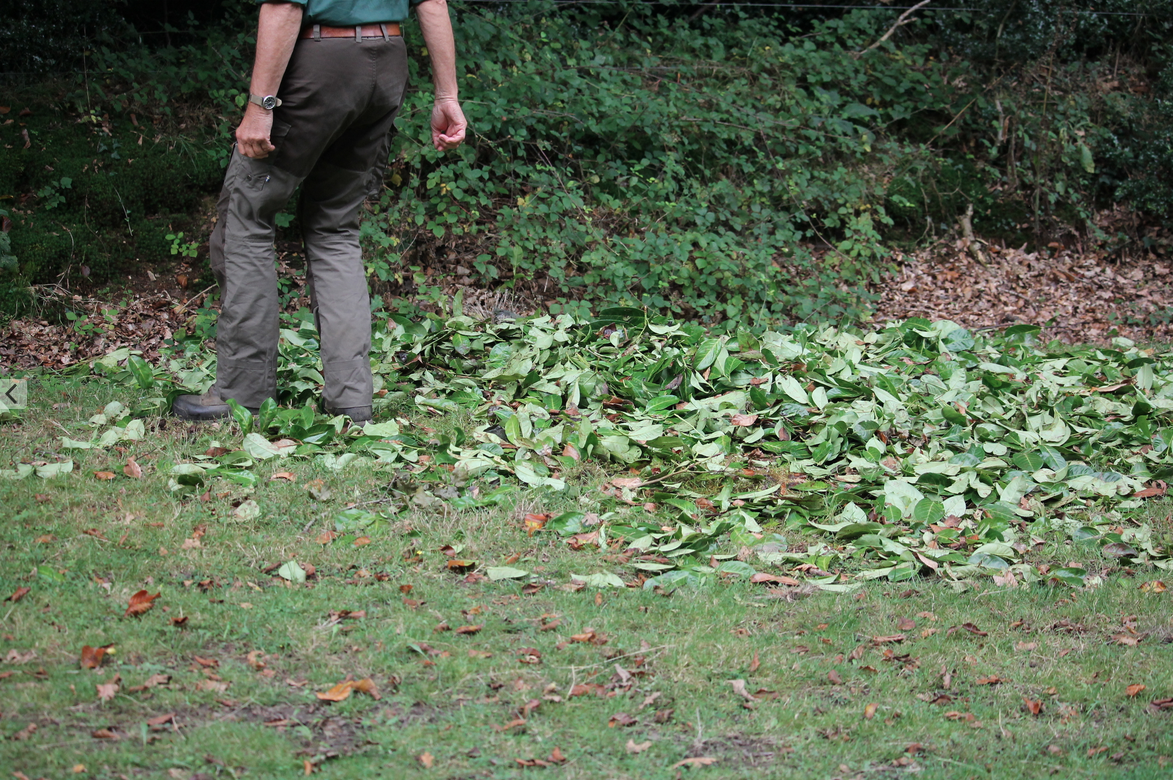
Garden waste has no place on the New Forest.

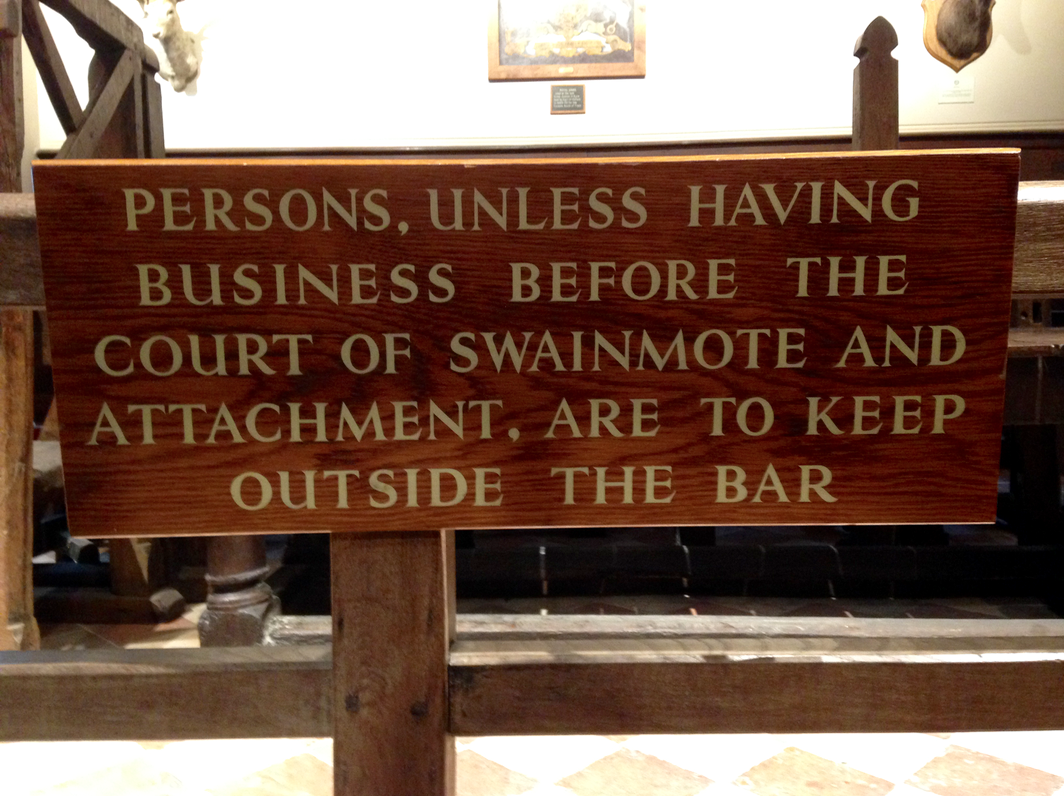
The Verderers Court is one of the oldest in the British judicial system.

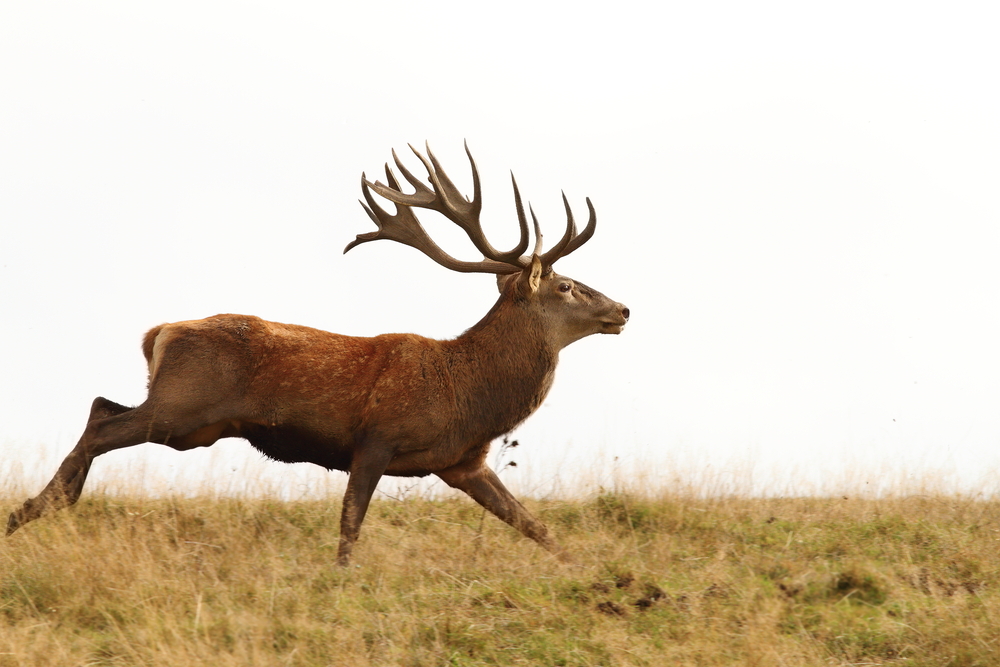
This week I attended the Verderers Court in Lyndhurst, which one of the oldest courts in the British judicial system. It has recently undergone refurbishment, and the freshly painted walls are a more muted beige tone than the previous ‘ox-blood’ pink colour. The interpretation area has received some attention and is now encased in a smart wooden cabinet. Other than that, the familiar stag’s heads adorn the walls, and the dock, verderers benches, and public benches are the still the same. Attendance at court was good, which always bodes well for the tearooms and coffee shops in the High Street. The court business this time was a very swift affair, as there were no presentments made. (A presentment is when people attending submit a formal statement to the court of a matter to be dealt with by the Verderers.) Therefore, the only person to speak, other than the Head Agister, who gives his traditional opening salutation, was the Official Verderer. The Official Verderer reminded everyone that with spring approaching many people would be in their gardens mowing their lawns and clipping their hedges. Unfortunately, as he pointed out, some people then feed that garden waste to the ponies, either by tipping it over their fences or by dumping it on the Open Forest, thinking that they are giving the ponies a tasty treat. (Or some contractors illegally fly-tip garden waste rather than pay to have it disposed of correctly.) However, this method of disposal can have serious health consequences for the ponies and even cause a fatal colic.

Horses and ponies fed mown grass-clippings can die
It does seem strange that an animal that eats grass isn’t somehow able to eat mown grass-clippings. But it’s true. Normally, ponies will eat grass in small mouthfuls that are selected from a wide area and chewed slowly, where it can be mixed with saliva. When presented with mown grass-clippings large mouthfuls can be taken and swallowed without being chewed effectively or diluted by the natural fluids in the mouth. But the real danger comes from the fermentation process of the mown grass-clippings as they decompose. This process generates a lot of heat (if you’ve ever put your hand inside a pile of mown grass-clippings you’ll understand how much) and, when ingested, this action produces gas. Ordinarily, the grass that is eaten during normal grazing activity begins to breakdown at a much later stage in the pony’s digestive system and the resultant gasses are passed out of the body as wind. Because mown grass-clippings decompose more quickly, the gasses they produce arrive earlier in the digestive system and have the potential to cause an agonising belly-ache or, in some cases, fatal internal ruptures. Unlike other animals, equines cannot burp, regurgitate or vomit, meaning that any poisonous or noxious substance that is ingested cannot be expelled through the mouth. So, the best thing is not to put dangerous foodstuffs there in the first place! The message to gardeners is: Please dispose of your garden waste responsibly and do not dump it on the Forest. Householders employing contractors to attend to any garden projects must ensure that they are using respectable tradespeople who dispose of waste in the appropriate (legal) manner. To all Forest users the message is: To protect them from dietary-related injury or sickness, please do not feed the ponies – your kindness can kill.

Garden waste should be disposed of responsibly and not dumped on the Forest. 

Posted in New Forest | Tagged , , , , , , , , , , , , , , , , , , , , , , , , , , | Comments Off on Garden waste has no place on the New Forest.

New Forest: being called a ‘nimby’ is no joke!

Access to nature is hugely beneficial – not least to our physical and mental health.

I was teasingly called a ‘nimby’ this week. It was during a conversation about the New Forest when I happened to mention that I was a commoner. The person I was talking to laughed and casually said, “Oh, you’re one of those nimby’s then, aren’t you?” My immediate response was one of shock at what I’d heard and my face must have registered a look of indignation because the respondent, on realising they had made a faux pas, coloured up. I was surprised by the fierceness of my reaction, which had been instantaneous, and with the depth of offence that such a careless comment could have provoked in me. I have spent a lot of time since pondering why I found the word ‘nimby’ so offensive. It later occurred to me that in that one sentence was carried so much assumption, prejudice, and insult that its effect on me could not have been any different. Nimby is a pejorative term and acronym, which means Not-In-My-Back-Yard. The phrase was popularised by the media in the 1980s (although some say the term was first used in the 1950s in the post-war development era) and refers to people who are in opposition to anything that imposes on the comfort of their space. It was initially used to describe people who resisted large-scale development, such as housing estates, airports, motorways, business parks and industrial sites, although the term now has a much wider application. These people were (and still are) seen as holding back economic growth and national prosperity by resisting homes, jobs and the expansion of infrastructure.[1] In the media they were (and still are) portrayed as utterly selfish, un-democratic and being predominantly representative of an affluent, privileged ‘Middle England’ class.

More-In-My-Back-Yard 
Consequently, referring to me, a commoner, as a nimby contained an accusation that I was only concerned in preserving my own personal interests with regard to the New Forest; that I was somehow elitist, reactionary, and that I was anti-tourism, anti-cycling, anti-motorist, in fact, anti-everything that impacted the New Forest. However, on the contrary, I believe that access to, and the protection of, nature and the countryside, has an important place in the development of a robust, prosperous economy. Expanding contact with the natural environment by creating more green open spaces, as well as preserving existing landscapes, also beneficially contributes to our mental and physical health. I believe such measures should be a prime objective for any government or community. (The preservation of such landscapes, flora and fauna also has global benefits too.)  I  believe that people should come to the New Forest to enjoy its special qualities, and to support and respect the traditional activities, such as commoning, which have maintained this exceptional landscape for centuries. People should come here, not because they have no other choice, due to a lack of amenity in their neighbourhoods, but because there is nowhere else like it – in terms of biodiversity or human heritage – in the world. I think that every community deserves a public green space in their backyard, which is planned for a variety of plant and animal life, and that offers opportunities for relaxation and recreation to its human inhabitants. I’m not sure what acronym could be applied to that philosophical outlook (perhaps More-In-My-Back-Yard) but I certainly know its not ‘NIMBY’.

The New Forest is a unique landscape developed by an ancient pastoral system.


[1] Richard Morrison, ‘Ignore this charge of the nimbys’, The Times (London, England), Friday, November 18, 2011; Tim Webb, ‘Nimby power ‘will lead to higher energy bills’, The Times (London, England), Saturday, September 24, 2011; Deirdre Hipwell and Chris Johnston, ‘Redrow chief rails at Nimbys who would return us to ‘squalor’’, The Times (London, England), Friday, September 09, 2011.

Posted in New Forest, New Forest Commoner | Tagged , , , , , , , , , , , , , , , , , , , , , , , , , , | Comments Off on New Forest: being called a ‘nimby’ is no joke!

New Forest: commoning generations

The New Forest is loved for its scenery, wildlife and the free roaming animals.

While visitors to the New Forest, and those lucky enough to reside here, undoubtably appreciate its magnificent scenery, free roaming livestock, and exceptional wildlife, not many would consider the significance to the landscape of the unbroken chain of Forest ancestry that occurs in some of the commoning families. Several of these families span generations that are as old as the oaks and beech trees that make up the ancient woodland. It is tempting to imagine that some may even pre-date the creation of the New Forest in the late 11th century, and to have been resident in these parts when the Saxons referred to the territory as Ytene. To me, the preservation of these human markers of heritage is just as important as protecting the landscape they have nurtured, and been nurtured by, for centuries. Indeed, some writers have described the relationship between the commoners and the New Forest as symbiotic, meaning that effectively one cannot live without the other, which, in my humble opinion, is undoubtedly true. The commoners know the Forest intimately. Scientists examining the Forest’s habitats have often confirmed, using ‘painstaking quantification’ or rigorous scientific method, what has been in the knowledge of generations of commoners. In fact, how many times do we reflect upon the innate skill or abilities of certain people and remark ‘”it’s in their blood”? Long have I suspected, therefore, that many of my commoning friends have inherited memories (and wisdom) about the landscape from their ancestors, as well as the colour of their hair and eyes, shape of their bodies, or height, and so on.

Commoning families
When delving into history and learning about the New Forest, it is inevitable that some of the characters from these commoning families will pop up to present themselves. Sometimes these are people who have done something so extraordinary that their deeds have been recorded for posterity, often reaching a certain level of fame. An example of this is the story of one member of the Purkis family who, according to legend, carried the body of King William II, or Rufus the Red as he was also known, to Winchester after he was killed while hunting in the New Forest in 1100AD. It’s difficult to read anything about the ‘accident or murder conundrum’ of the Red King without learning about Purkis’s involvement in the drama. However, more generally, as I am going about my research into the Forest’s history the names of commoning families repeat in less dramatic but no less significant ways. This could be in the annual accounts of one of the landed estates in or around the Forest, in contemporary newspapers and magazines, the court petty sessions or marked on many of the war memorials that can be found on village greens throughout the New Forest. So, next time you are in the Forest and enjoying the spectacular views, or admiring its wildlife and free roaming animals, spare a thought for the families of the commoners who have been making this possible for generations.

The body of King William I (Rufus the Red) was carried from the New Forest by a commoner.

Posted in New Forest, New Forest Commoner | Tagged , , , , , , , , , , , , , , , , , , , , | Comments Off on New Forest: commoning generations

New Forest: C19th Verderers on pony-buying spree

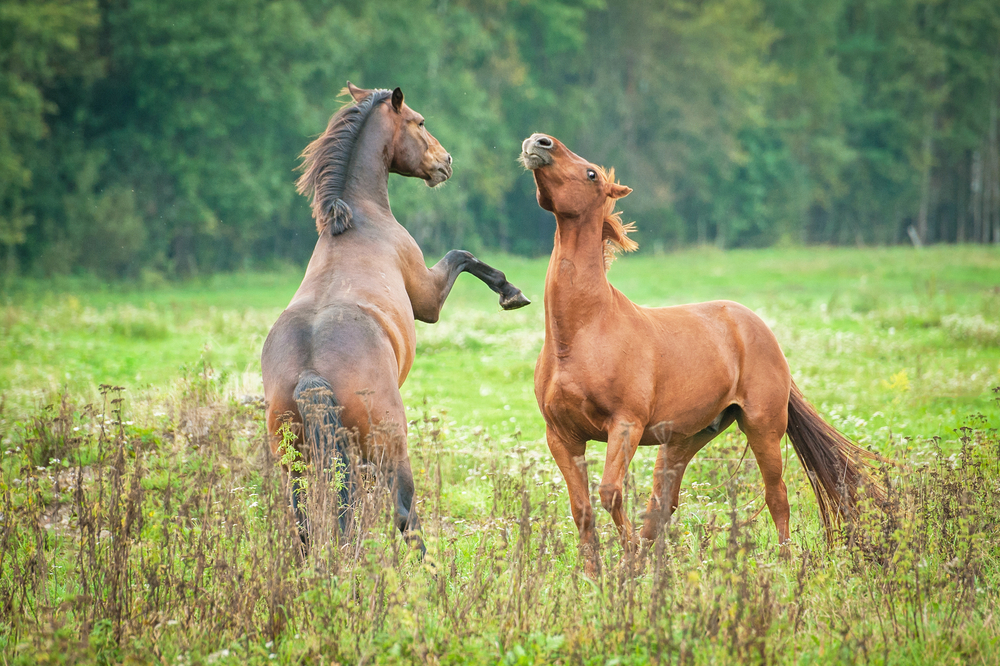
Only registered, licenced stallions are permitted to run with the free-roaming New Forest mares.

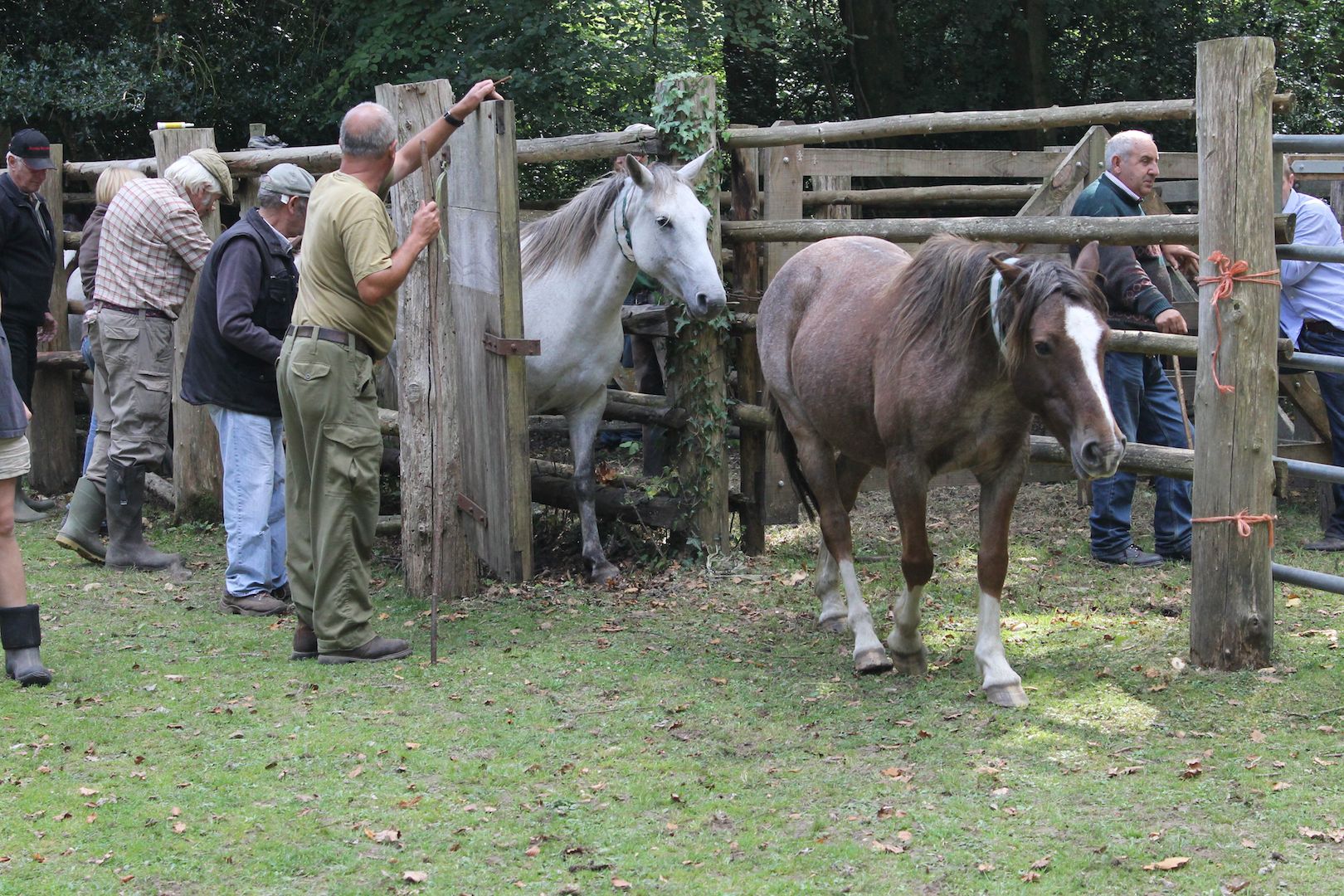
In early March 1887, the Verderers Court met to discuss Forest issues, chief among these was how best to improve the breeding of New Forest ponies with special reference to the procuring of stallions, purchased by the Verderers, for use on the Forest mares. The Clerk reported that some twenty or thirty commoners had written to him with reference to the question of supplying a stallion for the Forest, and asking the Court to consider the matter. According to the Agisters, who are the specialist stockmen employed by the Verderers, not only was there a scarcity of stallions in the Forest at that time, but they did not know of a good one among them. Colonel Esdaile believed that as the scheme would benefit the commoners he did not see any reason for the Verderers not to pay for it, but stated that stallions from the Forest that were below a certain standard would have to be excluded first. The idea was that four stallions would be purchased and turned out on the following year. A general discussion ensued about the merits of the various pony breeds that might be bought. The Clerk stated that some of the commoners believed that the stallions should be purchased in Wales. Col. Esdaile said that he believed a good selection could be found in Cumberland. He had his eye on one, he said, which had extraordinarily good shoulders, and was what they wanted. In his opinion they could have four short-legged, fine-shouldered ponies. (Col. Esdaile is describing the important qualities necessary in a good a harness-horse, which is what the New Forest ponies would have been primarily used for.)

Pony-buying spree
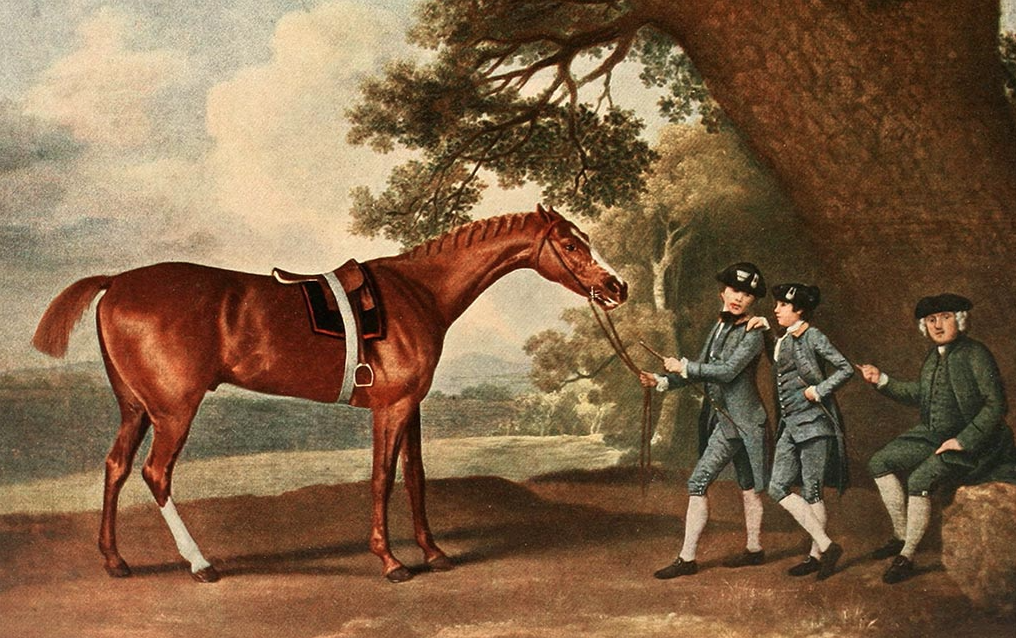
It was generally agreed that previous attempts to introduce thoroughbreds into the New Forest breed had been useless, and that if commoners wanted thoroughbreds they would have to do so at their own expense. For their pony-buying spree the Verderers wanted a breed that could not only improve the Forest pony but cope with the Forest environment. George Edward Briscoe Eyre suggested that the Court ought to consider the Corsican pony, which he said was wiry and a good worker. To which Mr W G Roy replied, that they might go a little further, and as the Corsican pony lived on rocks they might have a stallion, which lived on nothing – have an Arab, which lived in the Desert. However, after some debate the conclusion of the meeting was found in favour of Welsh ponies, and it was agreed to purchase four. The decision as to whether the stallions were to be turned out on the Forest was postponed until the matter could be discussed at length with the Agisters. Today, of course, the management of the New Forest pony breed is taken much more seriously and, while its lineage does contain other native British breeds only purebred, registered New Forest stallions are now permitted to roam the Forest. The Verderers, nevertheless, remain actively involved in promoting projects to sustain commoning and livestock in the New Forest and still support schemes to protect and maintain New Forest pony bloodlines. I am curious to discover if, during my research, I can find out what happened next and whether the Welsh stallion were purchased or not.

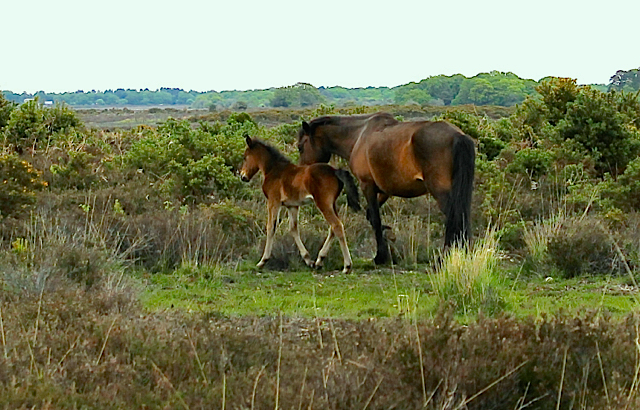
New Forest ponies are adapted to cope the demands of a free-roaming existence.

Posted in Uncategorized | Tagged , , , , , , , , , , , , , , , , , , , , , , , | Comments Off on New Forest: C19th Verderers on pony-buying spree