New Forest: Wet! Wet! Wet!

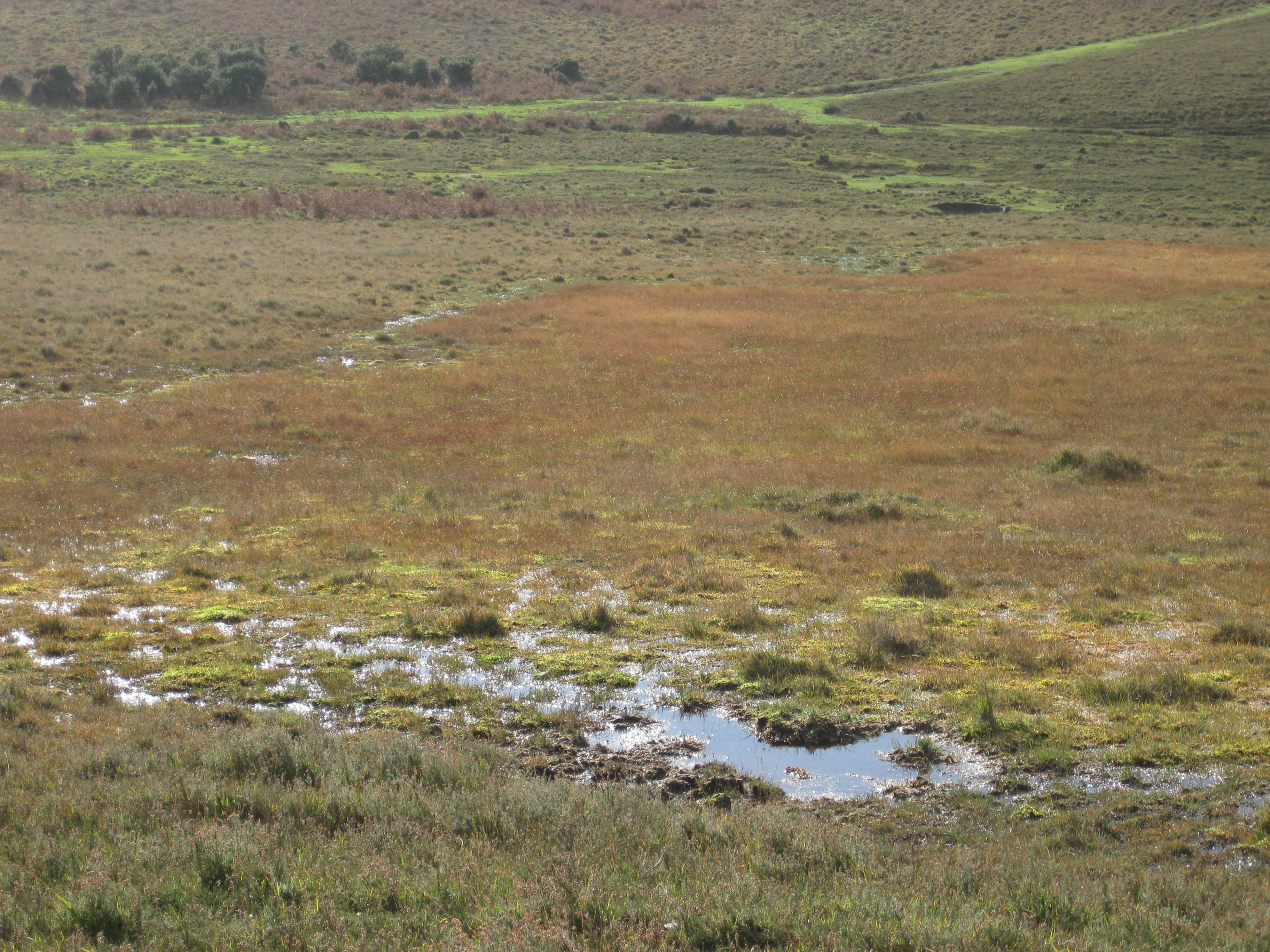
The bogs and valley mires are important New Forest habitats.

The bogs and valley mires are important New Forest habitats.

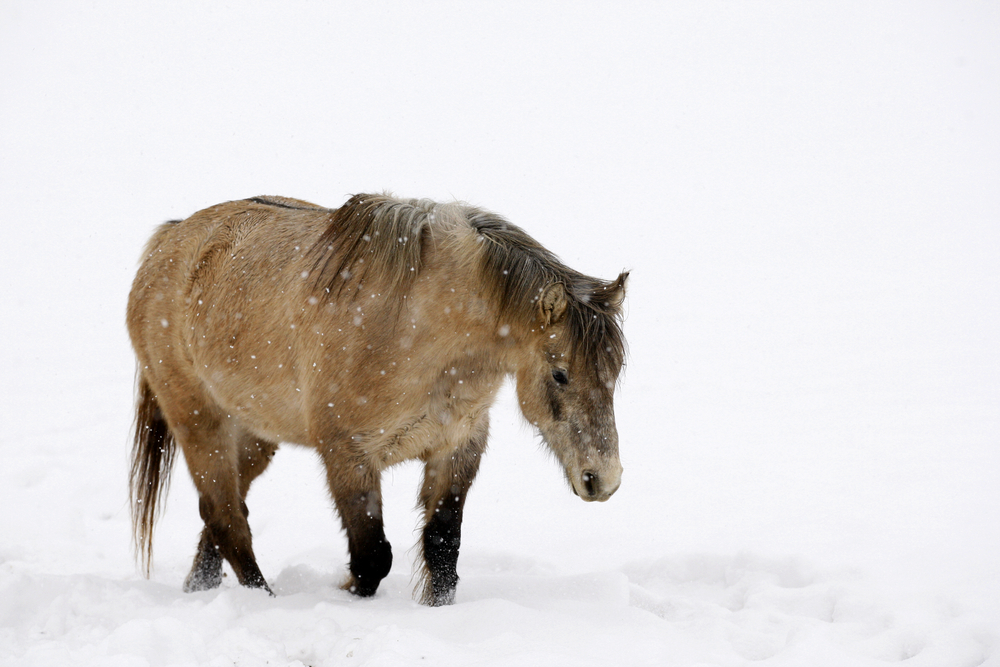
The downpours of late (January 2016) have created lakes in my fields and paddocks and my home-kept ponies are looking decidedly soggy and miserable. The ground beside the field gates has been churned into mud, as the ponies parade up and down the fence line each afternoon in their impatience to be fed. I have to push the barrow loads of hay further and further up the hill in order to deposit the piles onto ground that isn’t poached. On the flip side though, my free-roaming ponies out on the open Forest continue in good health and have kept much of the condition that they gained on the good summer grass. The recent temperatures have been so mild that they’ve not yet had to use their fat reserves to stay warm. Provided the inclement weather is not unduly prolonged they should remain well. The wet weather doesn’t seem to affect the free-roaming ponies too badly as they know all the tricks for avoiding the worst of it.

Danger of bogs and mires
Of course the recent heavy rainfall will mean that the watercourses across the New Forest will be filling up. The Forest catchment is fed by a series of unconnected steams that begin in areas of bog and heathland mire. These bogs and mires are areas of precious habitat that can be deceptive looking, even in summer. Unwary walkers, horse-riders or careless Forest animals have been trapped in their murky depths whilst trying to cross what otherwise looks like ordinary open heathland. Hampshire Fire and Rescue Service are regularly called out to attend such incidents and frequently urge people using the Forest to remain on the footpaths to avoid a similar fate. In times past, before the tracks and pathways were so helpfully laid and maintained by the authorities, strangers to the Forest would be warned of the dangers of traversing the Forest and the bogs in particular. The reason was (and still remains) because the free-roaming ponies and cattle make tracks through their territories that lead to the best grazing, shelter and water. To the uninitiated human traveller these tracks can resemble footpaths that simply lead nowhere and can get them hopelessly lost. Travellers of old were therefore told to follow carriage tracks, rather than hoof prints, especially when traversing the bogs and mires. The ‘wild’ Forest ponies can safely travel where ridden or driven horses can’t. If there were no signs of where carriage wheels had been on the opposite side of a bog even people on foot were advised not to attempt a crossing.

Crossing a swollen ford
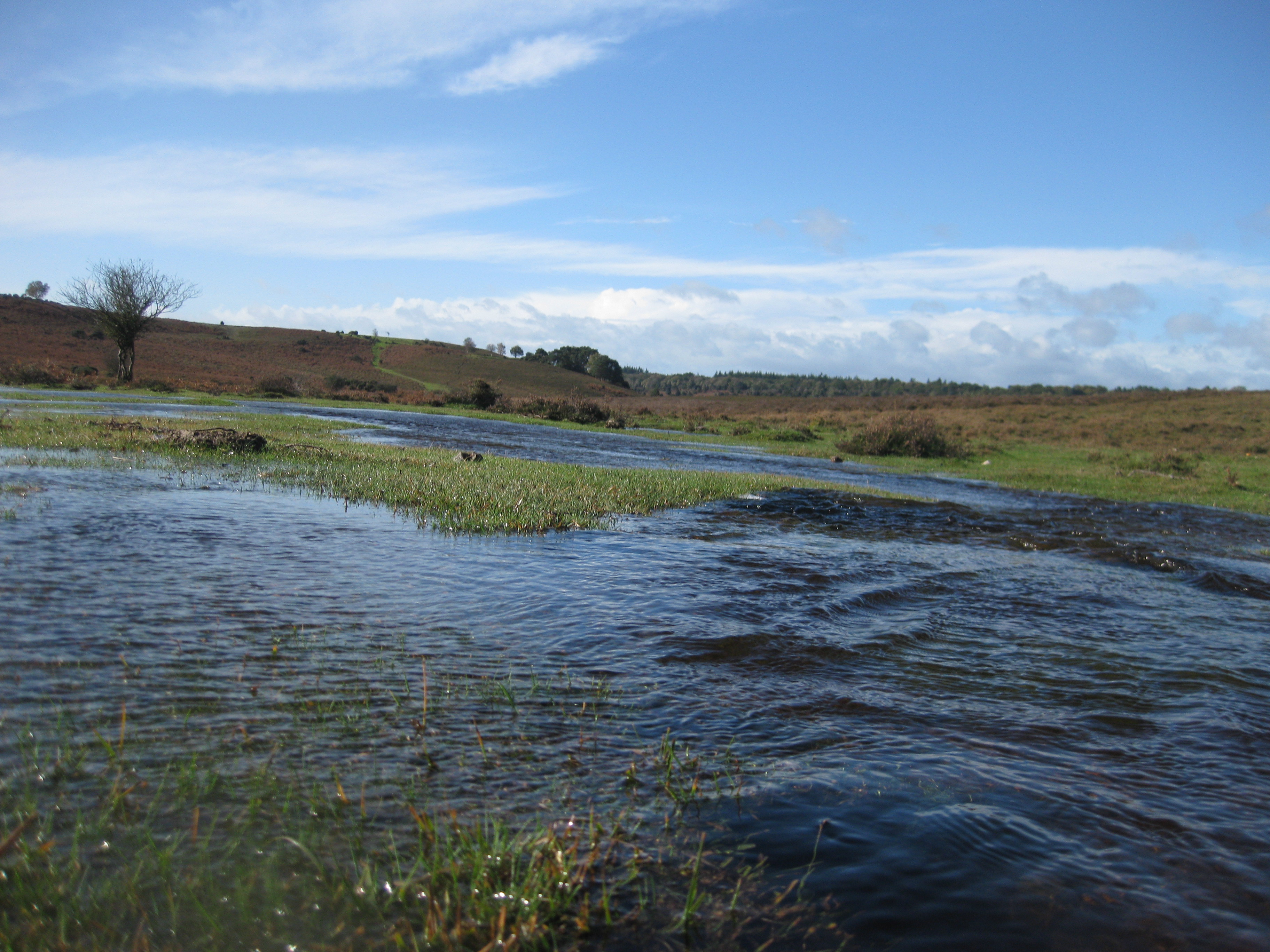
In modern times too it is often helpful to have an indicator that shows the way when the reliability of the path to be travelled is in doubt. On a recent trip to visit a fellow commoner, under grey skies and in slamming rain, as I crossed the swollen ford into the village a group of cyclists were eyeing up the flood waters and clearly fancied their chances of getting across on their bikes. On seeing me approach in my 4X4 they decided to watch my progress to get an idea of the depth of the water. As I drove slowly but determinedly through the rapids a small bow-wave formed over the vehicle’s bumper. The audience observed my manoeuvre with an almost scientific interest. With their calculations complete the decision was quickly reached that they ought to dismount and walk their bikes over the nearby footbridge. It was a good job they did. If the depth hadn’t put them off crossing the ford the speed that the water was travelling certainly should have. According to the Royal Life Saving Society two feet (60.96cm) of water moving at enough speed can wash away a car, whilst only six inches (15.24cm) can take you completely off your feet. After safely crossing the ford via the footbridge the little group eventually pedalled off disconsolately but soaked with nothing more treacherous than the falling rain.

Water flow after heavy rain.

The New Forest catchment is fed by unconnected streams that begin in areas of bog and heathland mire.

Posted in New Forest | Tagged , , , , , , , , , , , , , , , , , , | Comments Off on New Forest: Wet! Wet! Wet!

New Forest: harvesting holly for Christmas.

Many trees on the New Forest display a distinct 'browse-line', over which ponies cannot reach.

Many trees on the New Forest have a distinct ‘browse-line’, over which ponies cannot reach.

Last month (posted December 2015), as I made my way into the New Forest to check on my free-roaming ponies, I came across several contractors harvesting holly for the Christmas trade. This winter activity has long been a legitimate part of commoning and has always been a ‘ticket-of-leave affair’ regulated by the Forest authorities. In times past the holly would be sent up on the train, from places like Fordingbridge railway station (which closed in 1964), to London to be sold to the retailers for decorating their stores. It was a sign that Christmas was coming. According to one Victorian eyewitness; “many of the butcher’s shops in London owe their brightness at the festive season to the New Forest, to the mutual advantage of butcher and forester.” But this seasonal colour was not just reserved for the London shops. In 1892 Lyndhurst shops were described as,

Just now wearing a very gay and seasonable appearance, many of the shops being decorated, amongst them the butchers seem determined to keep up their prestige. Mr. J. Strange has a splendid display; Mr. Taverner has also a capital show, their shops being tastefully decorated with holly and ivy.’

The celebrations at the New Forest Workhouse Union, Lyndhurst, would be reported in the newspaper each Christmas, which one year commented on the particularly striking use of Forest evergreen as ‘being prettily decorated, the adornments presenting a fresh and bright appearance.’ Harvesting the evergreens was also an important source of income, particularly for the New Forest Gypsies, who ‘know well to cut the best berried branches early before the birds spoil them.’

A flock of seagulls or a herd of ponies?
As I watched the contractors cutting the holly I could see herds of ponies following on behind like so many flocks of seagulls after the plough. The ponies were taking advantage of the fallen foliage and leaf scraps for a quick and easy meal. They were doing a great job of hoovering up where the men and the trailers had been. Holly, like gorse, is a prickly meal but one that the free-roaming ponies will eat over the winter when there’s not a lot else growing. However, not all holly leaves are prickly. If you stand under a holly tree and look up you will see that above the browse-line, the point where the ponies cannot reach beyond, all the leaves of the holly are smooth. It was these leaves that were being dropped by the men and were being eaten by the ponies. The ponies must be familiar with this curious aspect of human behaviour because as soon as they spied the vehicles and trailers making their way down the tracks, the ponies began to follow behind just as sure as if someone had rung a dinner bell. The lucky ones who managed to get there first and tucked in for the feast must have felt that Christmas had come early!

Traditional healthland management practices are appreciated by the ponies who benefit from the cutting and harvesting activities.

Traditional healthland management practices are appreciated by the ponies who benefit from the cutting and harvesting activities.

Please note: Only contractors licensed by the Forestry Commission are permitted to cut and remove holly (and other vegetation or herbage) from the New Forest.

Posted in New Forest customs, New Forest pony | Tagged , , , , , , , , , , , , , | Comments Off on New Forest: harvesting holly for Christmas.

New Forest: the bully-boy Conqueror, hunting and warfare.

In medieval times a forest meant an area preserved for royal hunting, and not a wooded area as it does today.

William the Conqueror created the New Forest, in about 1079, for royal hunting.

William the Conqueror is a source of fascination to me. As the man who created the New Forest, his motives and actions also continue to be debated by many historians and scholars. For some he was the first medieval conservationist, as by his policies and laws he attempted to preserve animal species, ancient woodland and large tracts of habitat; and for others he is a tyrant who laid waste to villages, towns and cities, causing the deaths of many thousands of people, particularly in the north. By all accounts William the Conqueror was a man’s man, who was crowned King of England on Christmas Day in 1066. His physical description indicates that he was about 5 feet 10 inches tall, which was above average height for the period, of great strength of arm, and with a deep, gravelly voice. When he wanted to marry Matilda of Flanders she is said to have refused him haughtily, perhaps because he was illegitimate by birth and, therefore, not worthy of a woman of noble descent. He was not happy about her decision. In one account he pulled her off her horse by her long braids and in another he threw her violently to the ground, all in view of her family and their servants. William was not above getting physically violent when it came to getting his own way. At only 4 feet 2 inches tall, Matilda is recorded as England’s smallest queen (according to the Guinness World Records), which in the circumstances perhaps makes William I one of the realms biggest bullies. Apparently his rough wooing worked with Matilda though, and they were married, had a large family, and when she died he was said to have sunk into a deep depression.

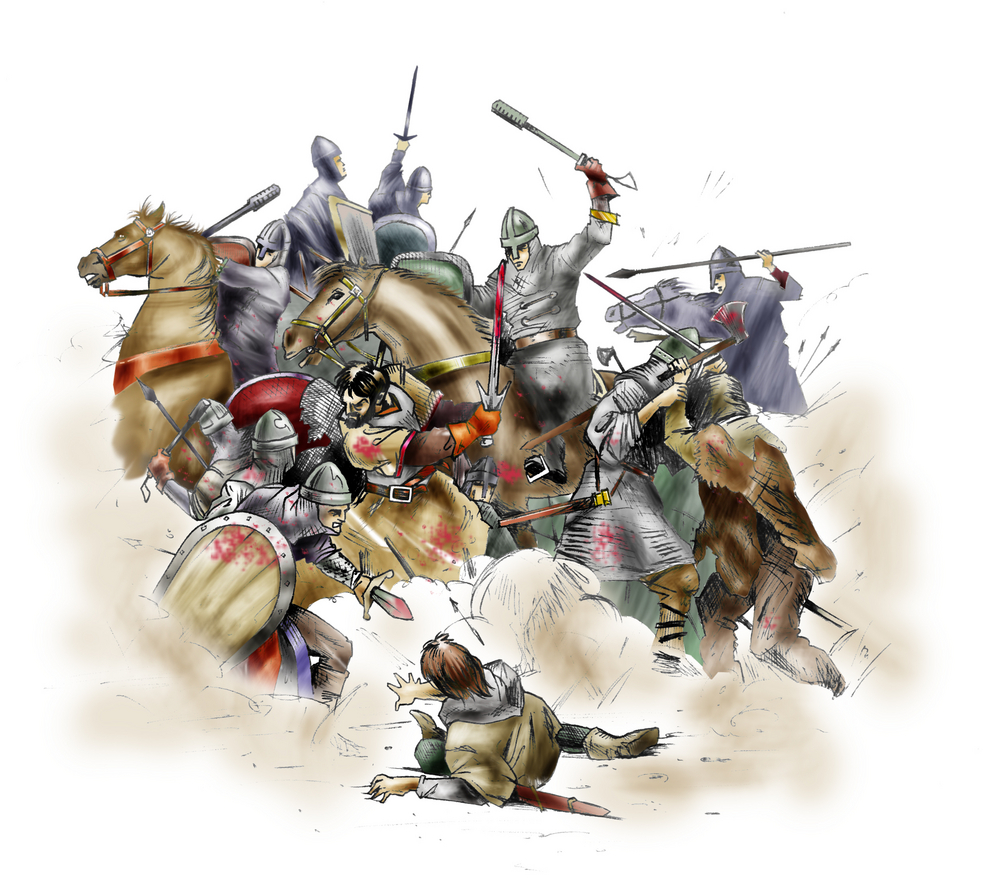
Medieval hunting was a practice for warfare
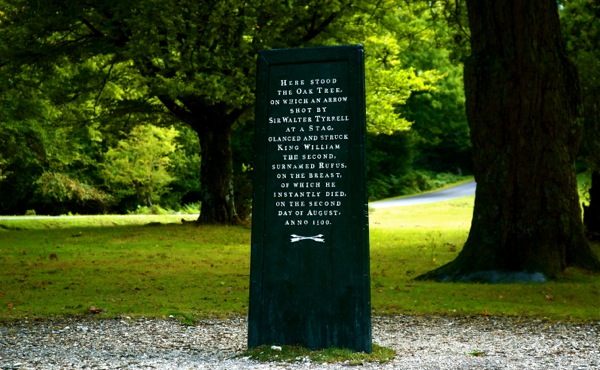
As King William I he established the New Forest, in around 1079, as a royal hunting preserve and created harsh laws to protect the venison (game animals) and the vert (the vegetation that they fed on and which gave them shelter). So keen was he on hunting that the Anglo-Saxon Chronicle reported: ‘He made many deer-parks; and he established laws therewith; so that whosoever slew a hart, or a hind, should be deprived of his eyesight. As he forbade men to kill the harts, so also the boars; and he loved the tall deer as if he were their father’. Hunting in medieval times was not just about putting food on the table, especially for the nobility. Red deer were the favoured prey of the hunters, particularly the large, mature stags, and there were plenty living in the New Forest back then. A healthy stag could be chased for upwards of thirty miles giving good sport to his pursuers. Such a long pursuit depended upon an unenclosed landscape that was free of fences and other man-made obstacles. The New Forest was ideal terrain for this. More than sport though, hunting was a method of practicing many of the skills required for battle. Hunting required preparation and planning, good horsemanship, the ability to handle weapons and a fair amount of bloodlust. It was also very dangerous. King William’s second son, Richard, and third son, William, were both killed whilst hunting on the New Forest as was his grandson, also called Richard. Medieval commentators saw these deaths as divine judgements on William I as a man and a king. But in reality just as in warfare, hunting carried the risk of death only because sometimes nature fought back!

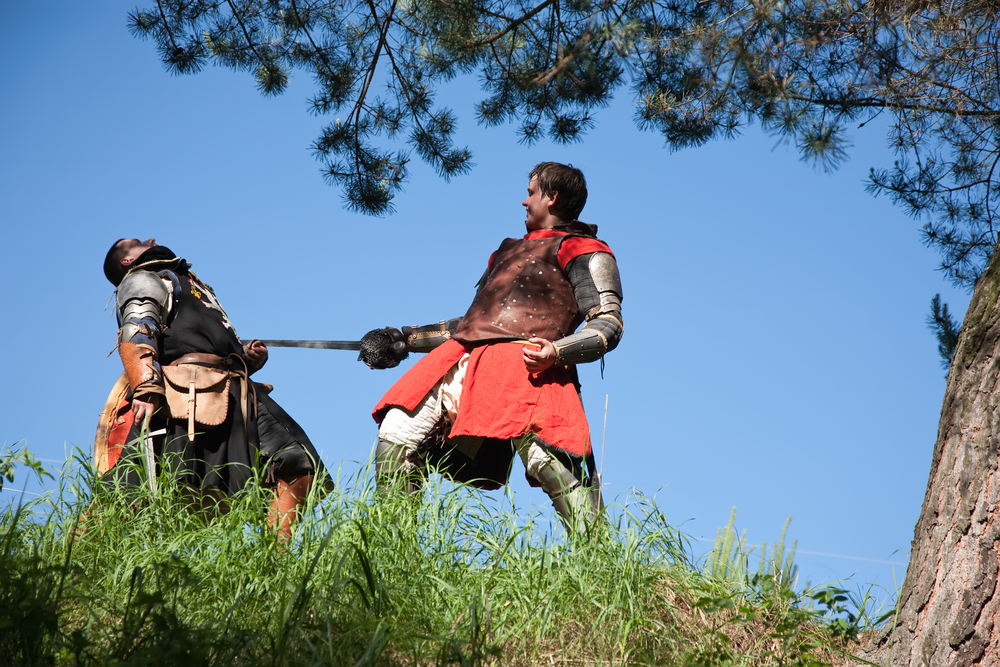
Medieval hunting was used as a practice for warfare, where knights could practice their skills.

Medieval hunting was used as a practice for warfare, where knights could hone their martial skills.

Posted in New Forest | Tagged , , , , , , , , , , , , , , , , , , , | Comments Off on New Forest: the bully-boy Conqueror, hunting and warfare.

New Forest: ‘animal aware’ road users.

The 'wild' ponies use the New Forest road system at all times of the year, day and night.

The ‘wild’ ponies use the New Forest road system at all times of the year, day and night.

In 1903 at Brook occurred the first death of a New Forest animal, a pony, caused by a motor vehicle. Since then livestock injuries and fatalities have become a sad but regular statistic. Information about road traffic incidents, involving commonable animals – ponies, cattle, pigs and sheep – is recorded by the Verderers of the New Forest and shared with the New Forest National Park Authority. The results are published and make grim reading. However, when official records began in 1956 annual deaths were around three times what they are today. There was a huge rise in numbers in the 1960’s, with 1962 being exceptional at 313 animal deaths that year. (That’s almost one a day!!) Of course back then the perambulation of the New Forest was not fenced and animals could get onto the A31, A35, and A337 roads. There was also no traffic restriction on the open Forest and, if your vehicle could get there, you could drive (or camp) virtually anywhere.

Meaures to reduce animal road deaths
During the 1960’s the fragile and irreplaceable qualities of the New Forest began to be recognised. The perambulation of the Forest was fenced and gridded by 1964, and by the mid-1970s the A31, A35 and A337 were also fenced. In 1971 the whole Forest was notified as a Site of Specific Scientific Interest (SSI) and this led to, among other things, the creation of designated car parking areas and restrictions of access onto the open Forest. The number of animal deaths on Forest roads began to reduce and by the beginning of the 1980’s numbers stood around 120 per year. Further measures to reduce animal road deaths, such as a Forest-wide 40mph speed limit in the early 1990’s, were introduced, and so by the year 2000 there were 90 animal deaths recorded. Last year (2014) 68 animals were killed on New Forest roads – 43 ponies, 14 cows, 1 sheep and 10 donkeys.

Glow in the dark animals
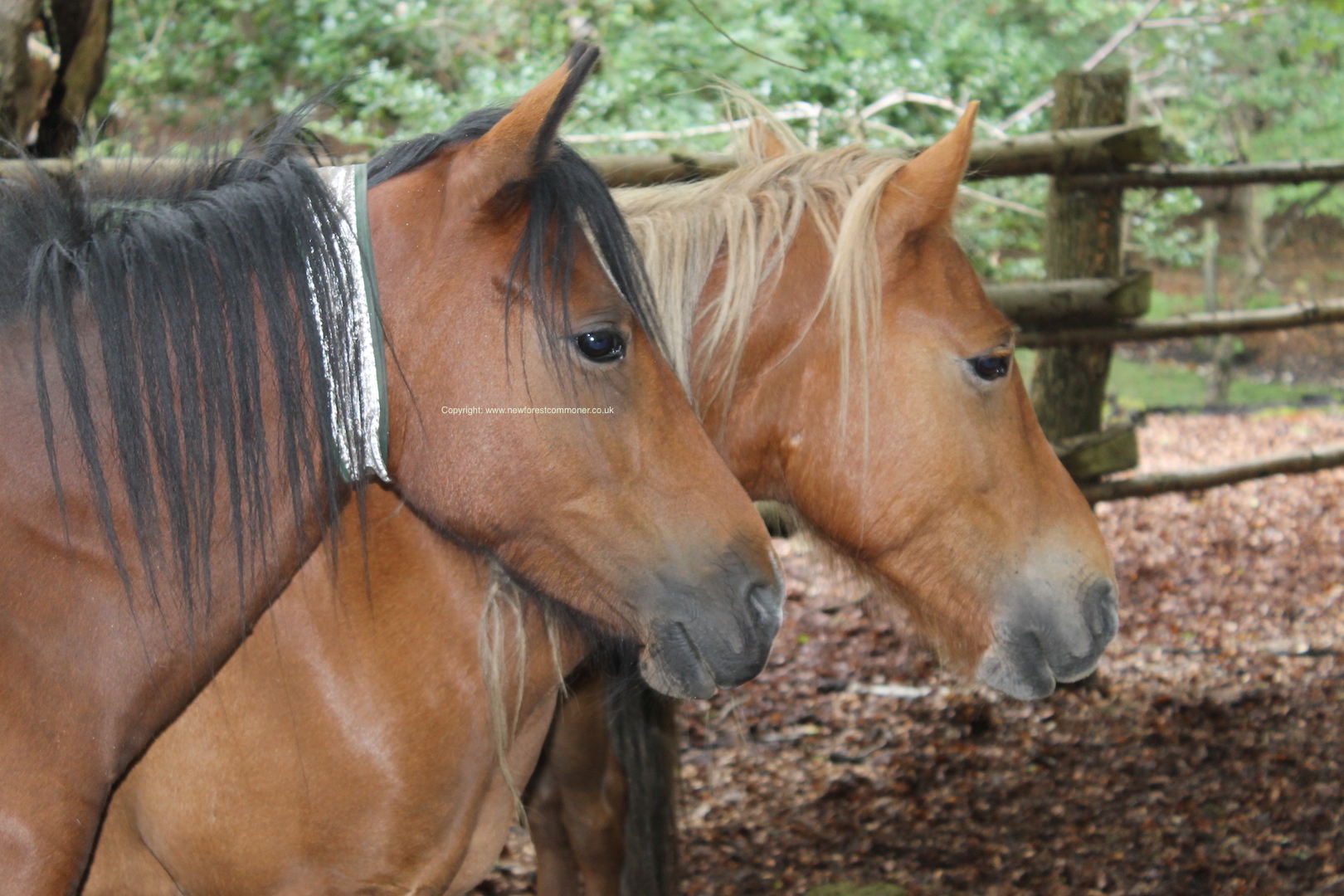
Although numbers of animal road deaths have been reduced they still represent more than one a week. There is no room for complacency, and many national, county and local organisations are continually involved in initiatives to reduce incidents further. These initiatives include driver awareness training, speed enforcement operations, reducing the growth of roadside scrub, installing barrier fencing to prevent animals crossing at blind spots, and introducing traffic calming measures. There have also been attempts by the commoners, who own the free-roaming animals, at reducing the number of animal deaths on the Forest roads. Because most of the accidents occur at night florescent, high-viz collars, which glow in the dark under vehicle headlights, are fitted to many of the free-roaming Forest ponies, to warn drivers of their presence. But the collars are not infallible. They are designed to detach if the pony gets caught up in undergrowth, so that the animal is not choked or strangled. So not all ponies wear them.

Animal aware road users
The value to the tourism economy, local business and our cultural heritage of having free-roaming animals is widely recognised. The New Forest is special because of the presence of the commonable ponies, cattle, pigs and donkeys. Other national parks, with free-roaming livestock, are also concerned about levels of road traffic incidents and are currently experimenting with painting large stripes of luminous paint directly onto the animals. I’m not sure how practical that would be to implement as, for example, the ponies shed their coats on a regular basis. One would also need to be able to find them, catch them and paint them just as often. It will be interesting to see the results and study the implications of this initiative. All New Forest agencies and organisations are in agreement, however, that educating road users to be ‘animal aware’ is the key to solving this problem and reducing animal deaths even further. The commonable animals have right of way on the Forest roads and will not get out of your way, even if they have seen you coming (1). Save an animal in the New Forest by reducing your speed to under 40mph, giving them a wide berth and being animal aware when using Forest roads.

The high-viz reflective collars enable the ponies to be visible at night.

The high-viz reflective collars enable the ponies to be visible at night.

Posted in New Forest, New Forest Animal Road Traffic Accidents, New Forest pony | Tagged , , , , , , , , , , , , , , , , , | Comments Off on New Forest: ‘animal aware’ road users.

New Forest ponies: search and find or hide and seek?

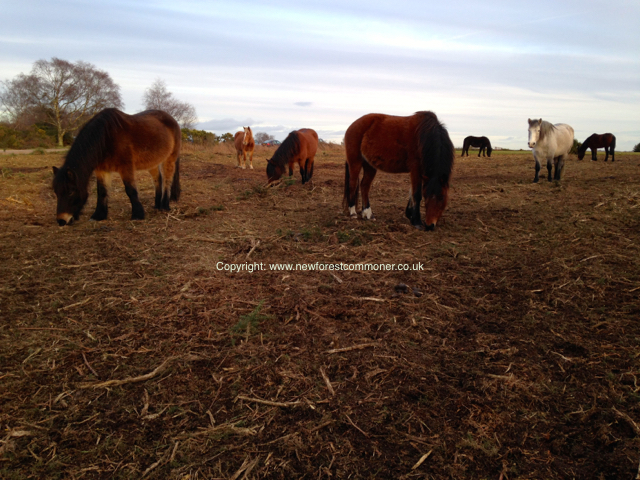
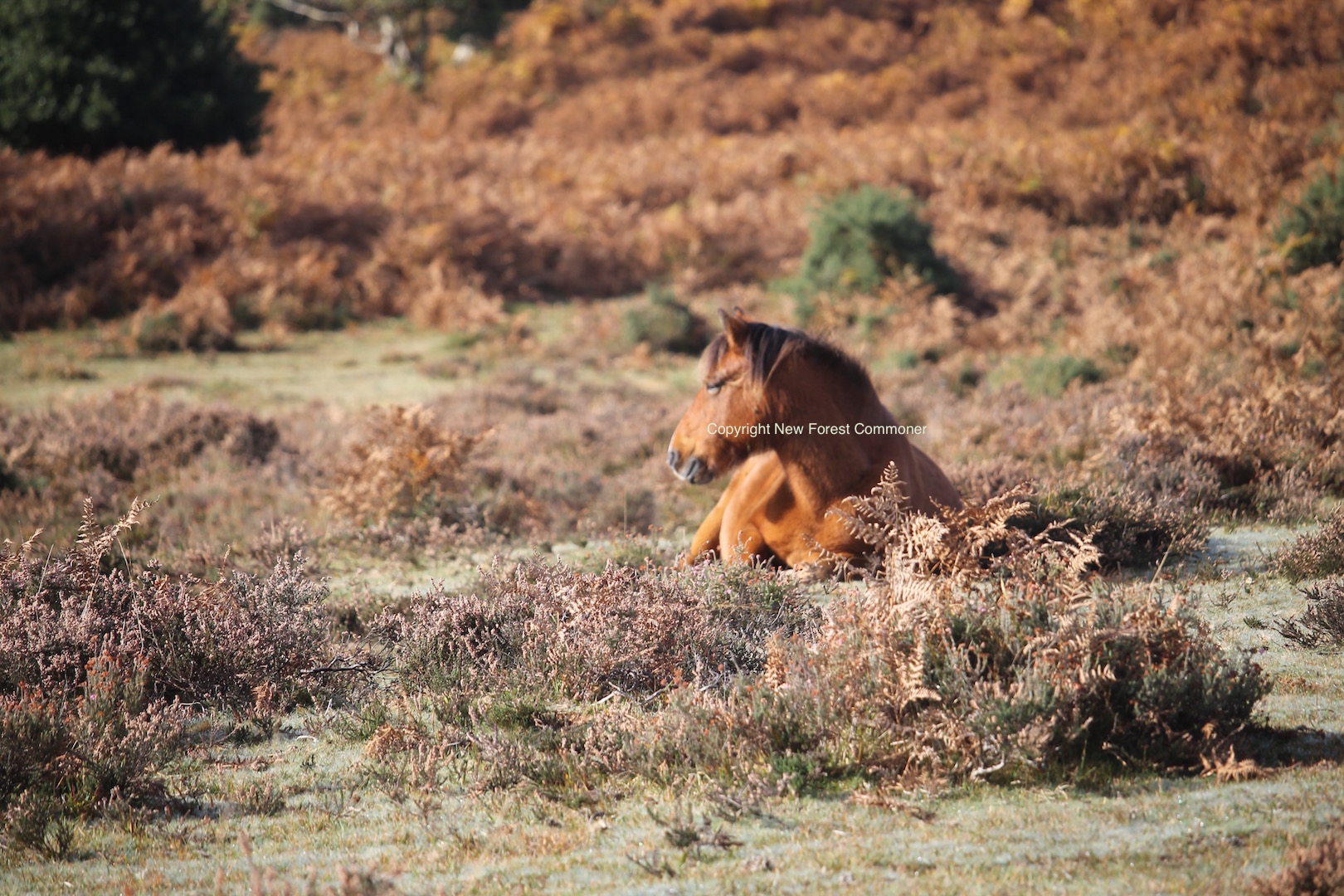
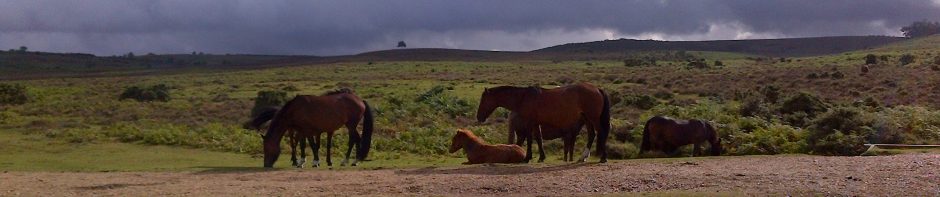
The ponies are well-adapted to living on the New Forest, which includes  good camouflage.

The ponies are well-adapted to living on the New Forest, which includes good camouflage.

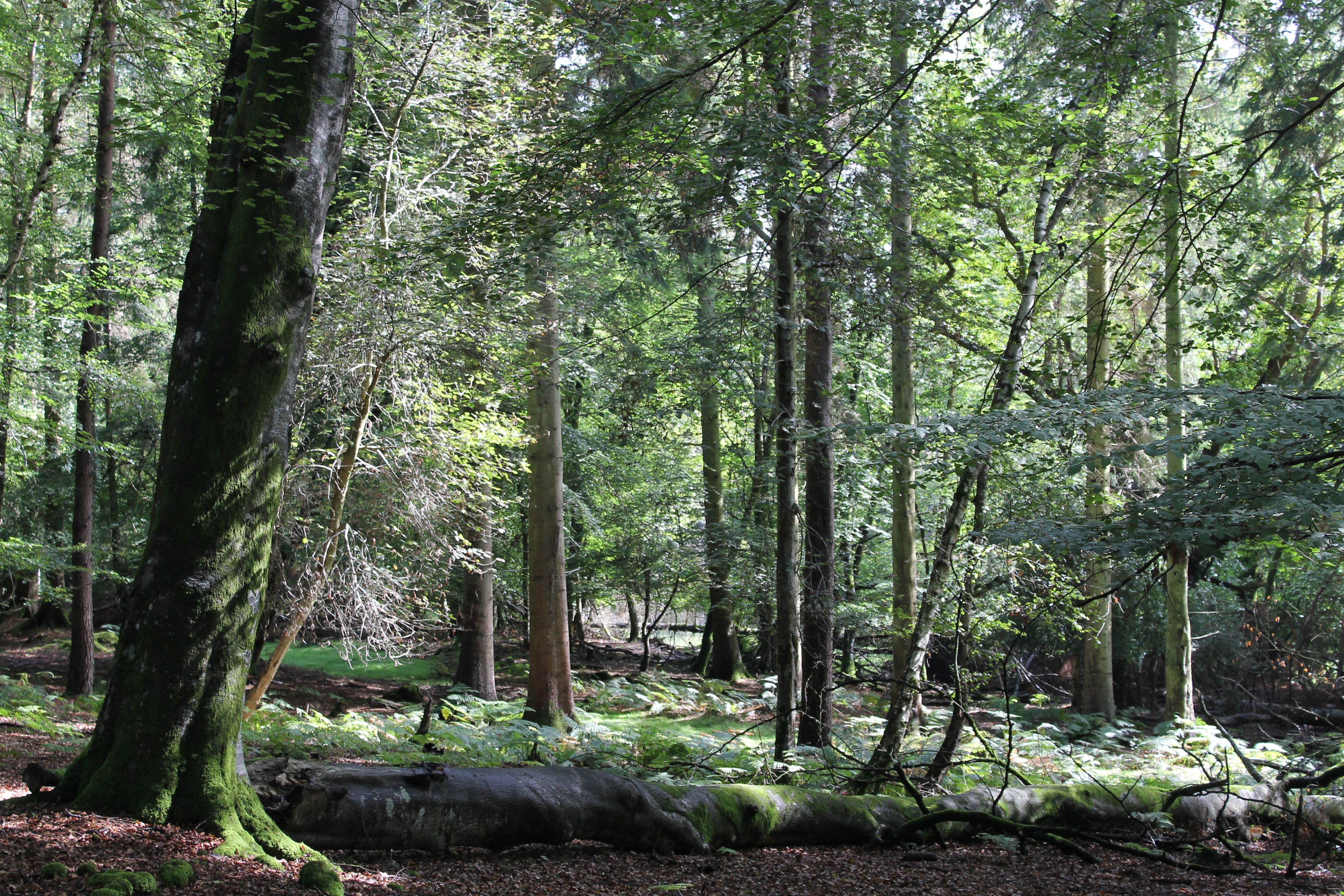
The New Forest has taken on a completely different look and feel since the onset of late autumn. Many of the birds that were regularly encountered over the summer months have, like the tourists, migrated elsewhere. The atmosphere is tranquil as I go out in search of my free-roaming ponies, to find and check on them. Only the weather shows signs of turbulence and disquiet at times. The landscape is beginning to reveal itself under the wilting bracken and the hues of umber that stretch away into the distance are broken up by the skeletal frames of the trees, stands of holly and the irregular clumps of gorse. The New Forest is a stunning even in the bleak midwinter. It is getting much easier to spot the ponies though, without the dense tree canopies that shielded them from the summer sun. Even the fallow deer are more visible. The rutting season is over and the fawns will have all been weaned by now, which means that the adults can turn their minds to fattening up for the winter. Their spotted chestnut-coloured coats are swapped for plain brown-grey in the winter. They stay together in herds and will forage for acorns and beech mast amongst the leaf litter on the forest floor. When you see one deer you can be certain that there are others nearby. This also applies to the ponies. Being herd animals if you can find one then the others will not be far away.

Ponies playing ‘hide and seek’
In a ‘wilderness’ setting for a prey species, such as ponies and deer, there is safety in numbers. The multiple sets of ears, noses and eyes that will be alert to danger. It also helps to be perfectly camouflaged against the terrain and sometimes it is only when they move that the pony, deer or even cow, can be seen. Every now and then though, I find myself going off to investigate what turns out to be a fallen tree that just for a moment resembled the familiar outline of an equine form. Its slick, bare trunk fleetingly reminiscent of the wet, shining coat of a bay pony; and was that the flick of a foal’s tail I saw? No. It was a strand of fallen ivy that twitched in the wind. It’s not an uncommon mistake to make, I’m told reassuringly. Are the ponies playing hide and seek with me? Apparently, one just has to keep trying. Yet some of my commoning friends have an almost uncanny ability to know where their ponies are. They seem to have a ‘pony-finding-gene’, which I can only surmise must have been passed down to them by their commoning parents along with the colour of their eyes and shapes of their faces. Such is their knowledge of the New Forest terrain, seasons, weather patterns and pony behaviour. It is little wonder then that some visitors to the Forest have observed an almost symbiotic relationship between the commoners and the Forest. Nevertheless, I have been assured that I too could accomplish a decent level of this understanding but not without a little practice, a lot of patience and a bit of trial and error.

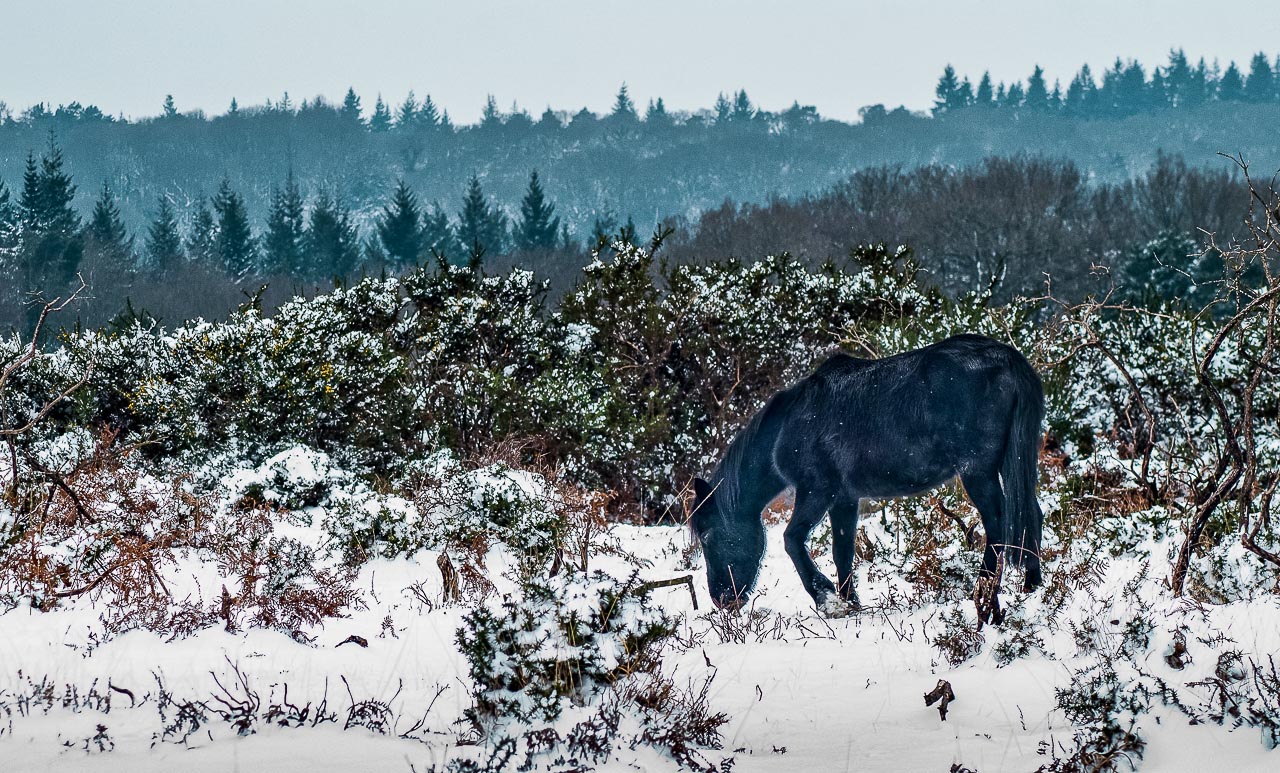
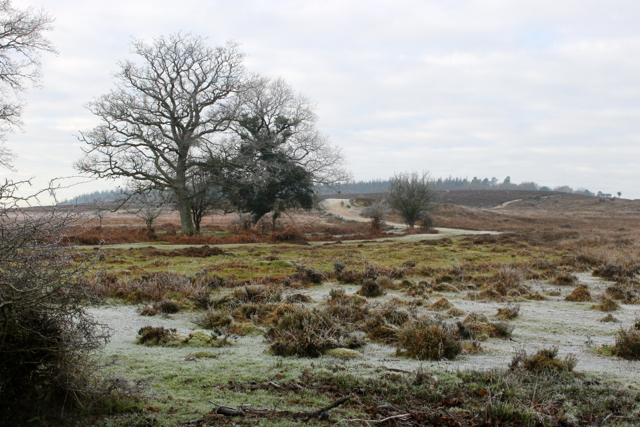
The New Forest is a stunning landscape even in the bleak wintertime.

The New Forest is a stunning landscape even in the bleak wintertime.

Posted in New Forest, New Forest flora & fauna, New Forest pony, Uncategorized | Tagged , , , , , , , , , , , | Comments Off on New Forest ponies: search and find or hide and seek?

Why did the New Forest pony cross the road?

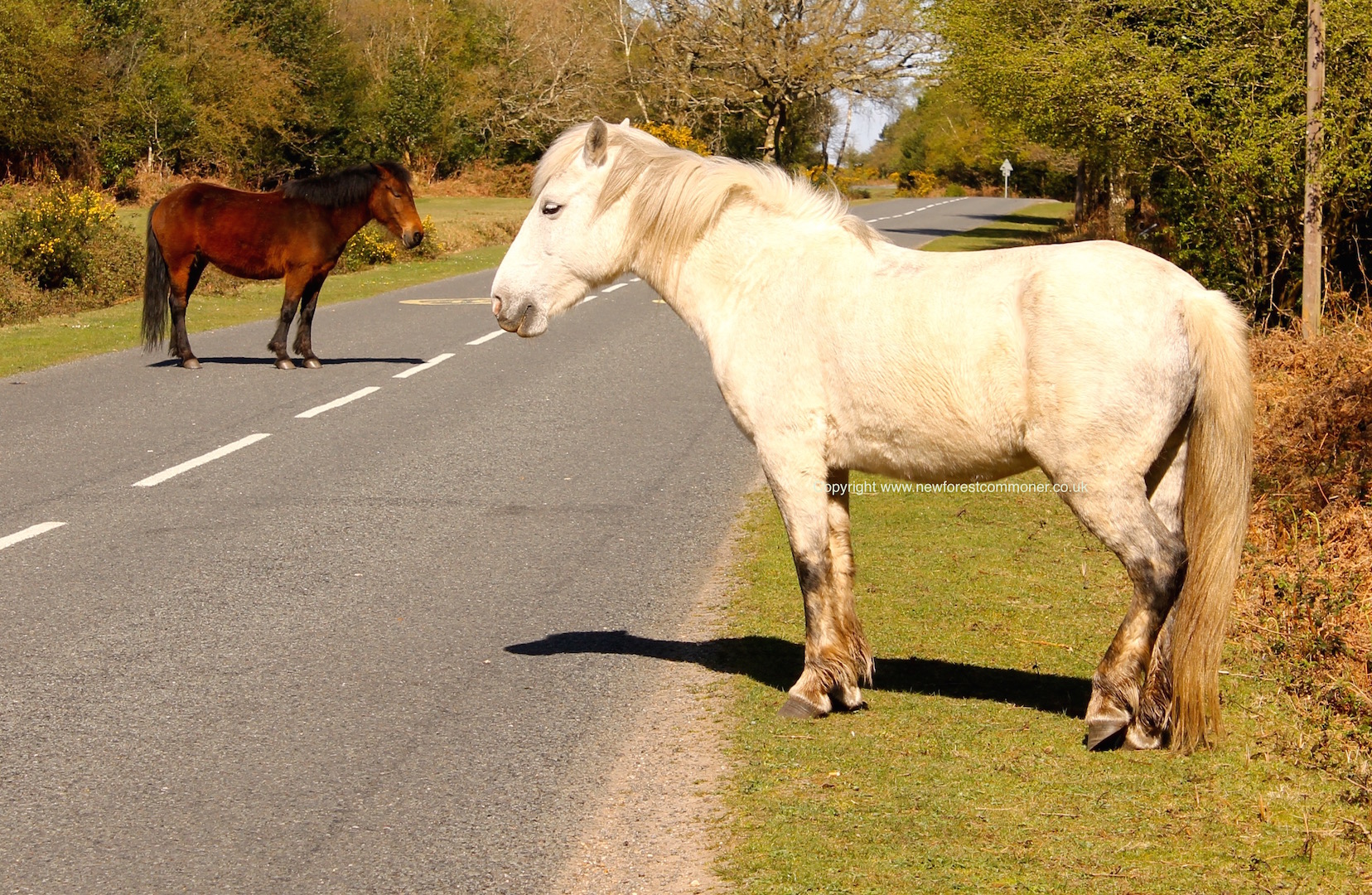
The 'wild' ponies use the New Forest road system at all times of the year, day and night.

The free-roaming ponies use the New Forest road system at all times of the year, day and night.

When travelling across the New Forest have you ever wondered why the free-roaming ponies will cross the road in front of you, even if they have seen you coming? Their hearing is excellent and they have good all-round binocular vision, even when grazing. Their night-vision is also good too. So, it isn’t because they are unaware of your presence. There’s obviously something else causing this behaviour and it’s all to do with the way their brains function. We, as human beings, are able to conceptualise and anticipate a problem in advance and adapt our behaviour to influence the outcome, but ponies cannot. A pony is not able to perform any feats of logical interpretation or abstract thought. They do not have the ability to rationalise their actions or have any sense of future events. The emotion they are feeling at that particular time will determine how they behave. If the grass looks greener over the other side of the carriageway, or if they want to go and join a herd-mate, then they will cross the road whether you are there or not. They live only in the moment and for the immediate satisfaction of their needs.

Predator and prey – life, the universe and everything!
New Forest ponies, like all equines, are a prey species and much of their mental processing capacity will involve identifying and avoiding ancestral predator enemies, such as wolves. (Yes, we know there are no wolves on the New Forest but the pony’s instinctive reactions haven’t quite worked that out yet!) Their brain function is hard-wired to react quickly – conscious thought takes too long to process – and the fight or flight mode is constantly ticking along in the background. It may seem obvious to say, but ponies only run away from things that frighten or threaten them. Cars are not an ancient predator species and the ponies are not afraid of them. The equine brain size is not, as some maintain, the size of a walnut but is actually fairly large. Most of its function though is busy operating the pony’s acute senses, avoiding predators, controlling the speed and direction of its feet, analysing the body language of other animals (including people), and searching for food, water and shelter, for example. With all this survival activity going on in the brain there is very little room for them to ponder life the universe and everything!

Memory and learning ability
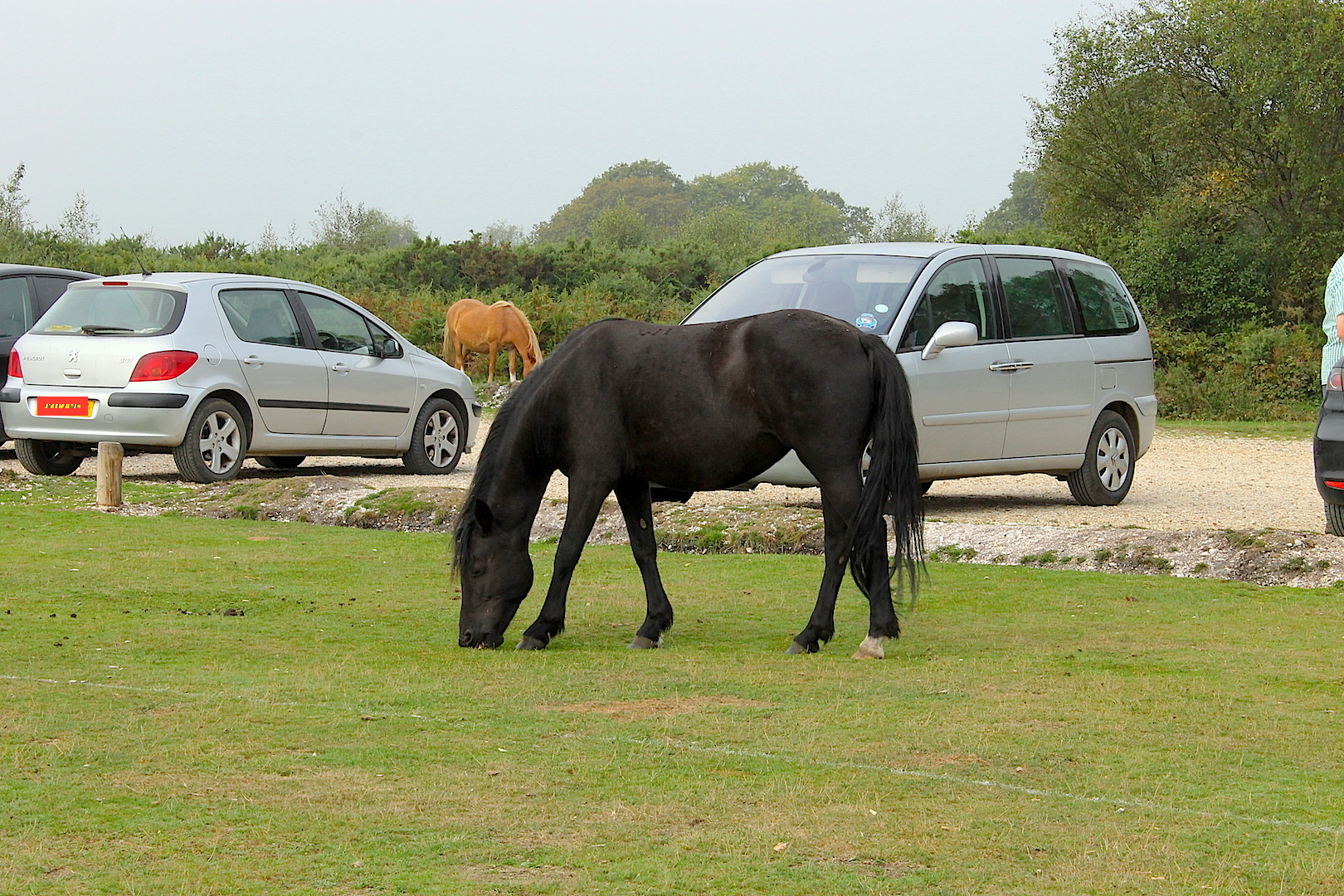
However, the free-roaming New Forest ponies do have very efficient memories and learning ability. This is a basic necessity for surviving on a large open range where there are a variety of habitats and resources. The ability to remember where to find food, water and shelter, especially when times are hard, is essential. Many free-roaming New Forest ponies remember where ‘home’ is and will often make regular return trips to their commoning owner’s holding, sometimes just to check-in. Much of this territory mapping knowledge, along with further life skills, is learned from their mothers and other herd-members. To domesticate and train a horse or a pony we manipulate its learning and memory skills, with positive reinforcement, and overcome their natural fears using a mixture of persistence, repetition and reward. Only when the unusual becomes mundane, such as a having a rider on its back, or an object of fright becomes a familiar aspect of their environment, will the animal accept it. This explains why the New Forest ponies are seemingly content to graze close to the roadsides, even during busy periods of traffic. Not only are they unafraid of vehicular traffic, because it is a regular feature of their daily lives, but the visitors who feed them from their cars, in the car parks or on the verges are positively training them to accept and remember vehicles as friendly allies.

Visitors who feed New Forest ponies are teaching them not to fear humans or cars.

Visitors who feed the free-roaming New Forest ponies are teaching them not to fear humans or cars.


Bibliography: 
Waring, George. H: Horse Behaviour: The Behavioural Traits and Adaptions of Domestic and Wild Horses, Including Ponies. (1983)
Budiansky, Stephen: The Nature of Horses. (1998)
Gill, Elaine: Ponies in the Wild. (1994)
Weston, Sarah: No Fear, No Force: A guide to handling and training unhanded and semi-feral foals in an ethical and gentle way. (2009)

Posted in New Forest, New Forest pony | Tagged , , , , , , , , , , , , , , , , , , | Comments Off on Why did the New Forest pony cross the road?

New Forest: mucky talk!

Living ‘wild’ means that ponies cannot be managed in the same way as domesticated horses and ponies but they are managed nonetheless.

Living ‘wild’ means that New Forest ponies cannot be managed in the same way as domesticated horses and ponies, but they are managed nonetheless.

Being a commoner enables me to practice a method of farming that pre-dates recorded history. The ancient commoner would have orally passed on his or her learning and wisdom to the next generation. This ensured that the chain of folk-knowledge, about managing livestock and the resources of the Forest, would continue through those who followed after. Even today scientific studies and ‘painstaking quantification [regarding the social behaviour and ecology of the Forest ponies and cattle] has ‘only’ served to confirm much that has been common knowledge or opinion among commoners for generations’.[1] The commoners tend to take a pragmatic approach to stock management and will solicit natural forces to help them share the responsibilities for their animal’s health and wellbeing. Living ‘wild’ means that ponies cannot be managed in the same way as domesticated horses and ponies, but they are managed nonetheless. The Agisters, who are employed by the New Forest Verderers to assist in the management of commoners’ stock, patrol the Forest regularly often on horseback making sure that the welfare of the free-roaming ponies, donkeys, cattle and pigs is maintained.

Toilet training for ponies
The ponies, having themselves been descended from semi-feral ancestors, are hardy and well adapted to the environment. They range widely and know where to find food, water, and shelter in their territories. It is even said that they know where on the Forest to find the health-giving herbs required to provide them relief from parasites and to prevent illness. Within their territories the ponies will also ‘manage’ their own grazing by selecting latrine areas, which all animals use for their toilet needs, leaving large areas of grass free of dung. The only exceptions to this are generally foals until they have been ‘toilet trained’ by their mothers and herd-elders. Adopting this method of equine induced land management means that internal parasites can be better avoided because rarely do ponies graze the latrine areas. The free-roaming ponies are not routinely wormed with chemical wormers to kill internal parasites, as is the case with domesticated animals. However, if any of the free-roaming ponies show signs of a ‘worm burden’ due to parasitic infestation they are wormed with the appropriate drug treatment. Generally, it is the young stock that are more prone to certain conditions because they haven’t yet learned how to properly self-medicate on the natural remedies of the Forest. The autumn drifts present an excellent opportunity to round up the ponies and check them for health. Any animals that are thought to be in need of treatment, including worming, but have failed to come in will be caught in a colt-hunt which, although it uses similar techniques to the large-scale drifts, is only used for catching individual animals.

Mucky talk!
Because the free-roaming ponies are not given regular doses of wormer, which contain drugs designed to kill internal parasites, the composition of their droppings is not toxic to the microorganisms, fungi and insects that depend upon the excreted animal waste as a food source. These many species of dung-eaters will themselves become food for the many species of bats, birds, and foxes, for example, which are resident in the New Forest. As a result of their benign composition the droppings decompose a lot faster from the ground than those of animals treated with wormers and, as a result, the latrine areas do not become overly soiled. I’ve noticed that the domesticated ponies on my holding have their toilet areas too and since adopting worm-counts, where samples of dung are sent to be laboratory analysed for the presence of parasite eggs, rather than routine chemical worming, I have not only improved my pasture but, if I can collect it in time, the quality of the manure that then goes onto the garden.

The next generation of foals born on the Forest follow an ancient lineage.

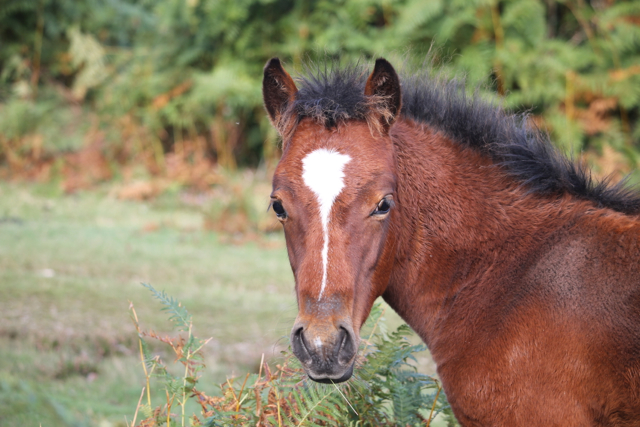
New Forest foals learn from their mothers, including good toilet habits!

[1] Tubbs, Colin R, The New Forest: History, Ecology & Conservation, Lyndhurst, 2001, p136.

See also:

The Distribution of Excreta on New Forest Grassland Used by Cattle, Ponies and Deer Author(s): P. J. Edwards and S. Hollis Source: Journal of Applied Ecology, Vol. 19, No. 3 (Dec., 1982), pp. 953-964 Published by: British Ecological Society Stable

Treating Cattle with Ivermectin: Effects on the Fauna and Decompsition of Dung Pats Author(s): M. Madsen, B. Overgaard Nielsen, P. Holter, O. C. Pedersen, J. Brochner Jespersen, K. -M. Vagn Jensen, P. Nansen and J. Gronvold. Source: Journal of Applied Ecology, Vol. 27, No. 1 (Apr., 1990), pp. 1-15. Published by: British Ecological Society.

Posted in New Forest, New Forest pony | Tagged , , , , , , , , , , , , , , , , , | Comments Off on New Forest: mucky talk!

New Forest: the truth about the ‘wild’ ponies.

Although New Forest ponies are referred to as ‘wild’ the herds are actually a mixure of semi-feral and domesticated animals that are owned by local people with Rights of Common.

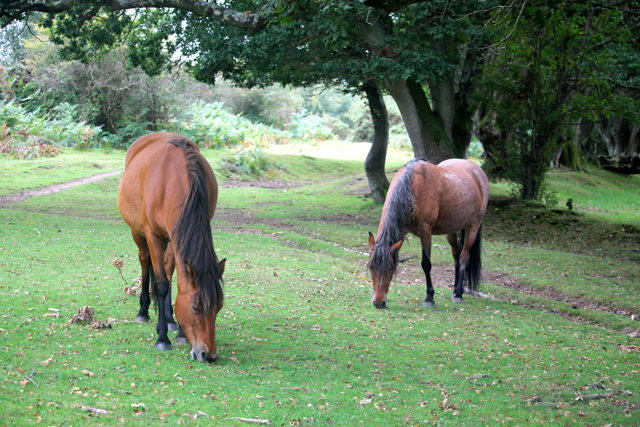
Without doubt one of the best things about visiting the New Forest is seeing the ponies that inhabit the heathland, woods and lawns wandering freely about. Although the New Forest ponies are often referred to as ‘wild’ this is not, strictly speaking, a true description. Wild horses are ownerless and untouched by human hands, whereas every free-roaming pony on the New Forest is owned by a local person with Common Rights, and will have some degree of contact with, or frequent exposure to, people. The New Forest pony herds, rather than being wild, are actually a mixture of semi-feral animals that are wary of the presence of humans: and domesticated stock that do not fear them.

Convenience of domesticated livestock
One of my commoning friends spent much of their childhood in the company of their family’s free-roaming ponies. They would take a bridle with them onto the Forest catch up one of the ponies, which they knew to be domesticated and safe to ride, and climb up onto its back. After galloping around, jumping the heather and generally having a good time, they would ride home and release the pony to make its own way back to its territory and herd-mates. In times past, before the widespread use of the motorcar, it was not unknown for commoners to ‘borrow’ one another’s animals. If they needed to hitch up a cart for a trip into town and a neighbour’s pony was conveniently close-by they would use that rather than going in search of their own. Such was the level of co-operation and reciprocity between the commoners. It also helped that they were able to recognise each other’s stock and know which ponies were workable and which ponies were not. This was usually as a result of horse-trading or swapsies between each other.

All ‘wild’ New Forest ponies are owned
The often-repeated assumption that New Forest ponies are wild and ownerless has led people to commit ‘horse-rustling’ and actually steal one. Many years ago a little girl was found leading a very tame pony from off the Forest, along one of the main streets in town, towards a housing estate. A commoner, who happened to be passing, recognised the pony and asked the little girl where she was taking it. “Home”, of course was her reply. Like all little girls she had wanted a pony of her own but hadn’t realised that she had chosen one that was actually the property of someone else. Of course, the pony in question seemed very willing to follow her. Such is the biddable and friendly nature of the New Forest pony once it is properly trained! The pony was, of course, promptly returned to its owner and the Open Forest where it belonged. However, other incidents of ‘horse theft’ are much more disconcerting. Last April (2014) two men were seen bundling a miniature Shetland pony mare into a dark coloured van, parked on the verge of the Lymington to Beaulieu Road, (B3054) between Bull Hill and Norley Wood Cross Roads. The pony in question, like all the free-roaming New Forest ponies was micro chipped and branded with its commoning owner’s identification number. It is believed that this, and the publicity surrounding the theft, may have persuaded the thieves to return the pony because several weeks later she reappeared close to Hatchet Pond, not far from where she was taken. Police are still appealing for information about the identify of the thieves.

Every free-roaming pony on the New Forest is owned by a local person with Common Rights.

Posted in New Forest, New Forest Commoner, New Forest pony | Tagged , , , , , , , , , , , | Comments Off on New Forest: the truth about the ‘wild’ ponies.

New Forest: tales of the unexpected

The New Forest boast many ghost stories, tales of spectres and supernatual creatures.

The New Forest boasts many tales of spectres and supernatural creatures.

As most people know,  All Hallows’ Eve or Halloween celebrations have their origins in a festival for the dead that involved rituals to remember and pay respects to dearly departed loved ones, saints or martyrs. These rituals included observances such as attending church services, placing lighted candles on graves and abstaining from eating meat. The history of this festival is fascinating and the cause of much argument between various organised religions, including Christians and Pagans, who each claim it as their own. However, contemporary celebrations are now greatly influenced by American culture and many people dress up in costumes, watch scary movies, go ‘trick or treating’, make lanterns out of pumpkins and tell ghost stories. Today’s Halloween celebrations are rather more secular than religious, and frivolous rather than sombre.

Ghost stories told by smugglers
However, in times past it was genuinely believed that the dead could rise from their graves to torment the living. Many spine chilling ghost stories are told in and around the New Forest concerning eerie mists on the heathland, black dogs and spectral coaches pulled by headless horses. But many of these tales have their origins in less than supernatural activities. Smugglers often used the cover of ghostly phenomena to carry out their nefarious ‘free trading’ activities. It would have suited them to allow people to believe that the sound of carriage wheels or hoof beats in the dead of night were caused by unearthly creatures seeking souls to carry away to the underworld. Indeed, strange lights and weird noises floating across the heathland, bogs and woods would have carried a similar occult explanation and would have been a terrifying warning to keep people away. One of the most popular places for hiding smuggled contraband, for example, was the churchyard. To avoid the risk of prying eyes the smugglers would have encouraged hair-raising tales of the predatory undead, vampires and demons stalking among the graves for human prey.

Tall tales of the dead
Many New Forest inns and public houses were meeting places where smugglers would plan their free trading activities. During these meetings ghost stories would have been invented, passed on or embellished by the free traders and their accomplices. Local people who may have witnessed some of the illegal night-time activity would also have created tales of supernatural phenomena, or borrowed those in circulation, in order to be able to speak, without recriminations, of what they had seen. Thus in the New Forest many spectral encounters, if investigated, could be attributed to this factor. The ghost of a black horse that is said to haunt Plain Heath, near Holmesley Enclosure; the phosphorescent mists reported around Deadman’s Bog; and the shades of monks said to walk about the ruins of Beaulieu Abbey, could easily be explained as ‘keep out’ notices from smugglers. But other Forest residents were also keen to take advantage of the dearly departed and make some money in the bargain. One report, from 1936, relates the story of an old Forester who would take tourists to see the ‘Highwayman’s Grave’, where a desperate brigand and his horse were alleged to be buried. The canny old man had developed a small income from taking people to what was actually the resting place of a soldier’s favourite hunter. Apparently he admitted to profiting from people’s willingness to believe in tall tales by saying: “Many and many a sovereign and ten shillings ain’t I ‘ad for showing people!”

Churchyards were used by smugglers to hide contraband because people were frightened of these places at night.

Churchyards were used by smugglers to hide contraband because people were frightened of these places at night.

Posted in New Forest | Tagged , , , , , , , , , , , , , , , | Comments Off on New Forest: tales of the unexpected

New Forest: racing the cows

Cattle on the New Forest are accustomed to vehicles, especially when they're used to dispense hay.

Cattle on the New Forest are accustomed to motor vehicles, especially when they’re used to dispense hay.

Being a commoner is never dull. My commoning friends not only share their adventures with me but also, on occasion, provide me with opportunities to have a few of my own! I was visiting a friend and fellow commoner recently when we decided to go out on the Open Forest to check on some ponies. The weather was fine and, although it had been raining heavily earlier that day, visibility was generally good. We managed to find most of the animals we had set out to look for and began to make our way back to the comfort of the farmhouse kitchen and a well-deserved mug of tea. However, first we needed to make a small detour. My friend wanted to check some cows in one of their fields close to the holding. They hadn’t been seen that day and there was a worry that they may have got out. The field in question was large and also situated on a very steep slope. The cows were nowhere to been seen and we thought that, chances were, they’d be grazing at the very top of the field, out of sight over the rise. We agreed that it would be too much effort to walk up the hill to find them and so decided to drive, to save our legs.

Skillful 4×4 driving
Getting up to the top of the hill on wet grass and muddy soil required a bit of welly on the accelerator pedal but with some skillful driving and the four-wheel drive engaged we managed to get to the top. The cows were all there, beyond the crest of the hill, and very fine specimens of bovine beauty they were too. However, they soon became rather excited on seeing us and began to surround the car. My friend explained that the cows were accustomed to being fed hay from the back of the vehicle and obviously thought that’s what we’d come to do. This posed a bit of a problem getting out of the field because the cows were expecting fodder and would consequently follow the vehicle. We needed to get the car out of the field but without letting the cows out. So we hatched a cunning plan. We would drive down the hill as fast as we could, stop at the bottom, I would jump out and open the gate, the car would drive through and I would shut the gate before the cows got to the bottom of the hill. On the count of three off we went.

Racehorses with horns!
Now, no one told me that cows can run, and I mean ‘run’. They moved as quickly as racehorses with horns! The car sped off down the hill with a herd of twenty beasts galloping in hot pursuit. The bottom of the hill was getting ever closer and I was poised in the passenger seat ready to jump out to open and close the gate. I felt the brakes being firmly applied and knew that I had seconds to act but the car just kept going. With brakes fully applied we slid in thick mud through the gate, pinging it wide open, and out the other side. The cows were still coming. I jumped out and closed the gate in time. I can’t remember how long we laughed about it. I think we were still laughing when we had to lift the gate off its hinges to put it back on the correct side of the fence posts. Even though it had a slight bow in the middle it closed properly. The cows looked a bit put out though. We nevertheless dried our eyes and then went off to wet our whistles with that promised mug of tea.

New Forest Gate-Oct2015

Posted in New Forest, New Forest cattle, New Forest Commoner | Tagged , , , , , | Comments Off on New Forest: racing the cows