New Forest: dog-days and mad dogs

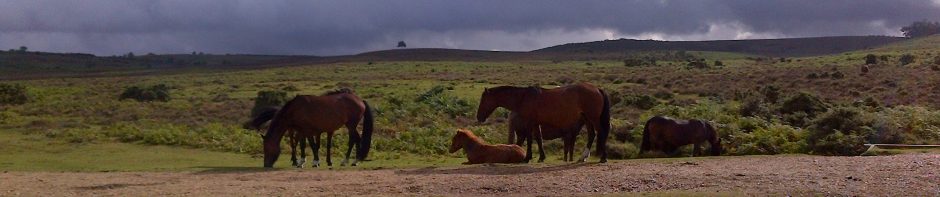
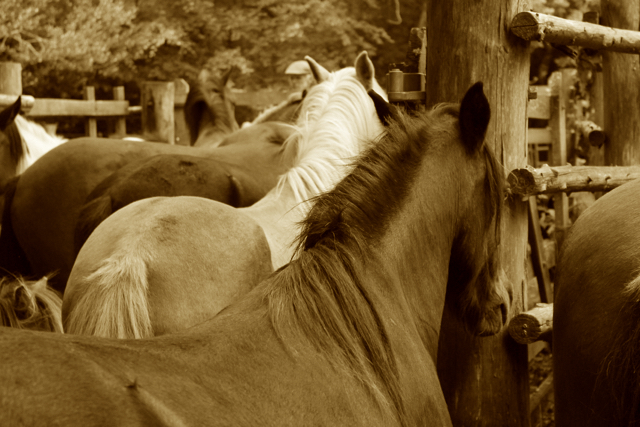
Diseases, such as rabies, were a constant concern for farmers and commoners.

Diseases, such as rabies, were a constant concern for farmers and commoners of free roaming stock.

In July 1826 it was reported in the newspapers that a six-year old child had died of hydrophobia, the dread disease otherwise known as rabies. The child and his mother were walking alone in the New Forest when a rabid dog attacked them, biting the boy’s face. The dog was chased into Fordingbridge that same day, where it was duly killed. Sadly, the little boy developed the disease and died within a month of the attack. Rabies, once widespread in Britain, is a viral disease that affects domestic and wild animals, and is usually spread through the bites and scratches of infected people and animals. Symptoms include hyperactivity, excited behaviour, increased production of saliva and the tell tale hydrophobia (fear of water). In times past the threat of rabies was often met with panic because people didn’t really understand its causes. As a result there were no effective public health policies to target the disease and with many dogs let free to roam in villages, towns and cities it was impossible to contain and so the spread of rabies continued unchecked.

Dog-days and mad dogs
In a series of letters, printed in the Southampton Herald during 1837, Southampton veterinary surgeon W. C. Spooner recommended public health strategies to prevent the disease, such as controlling the number of stray or loose dogs. He advised against killing dogs on account of them having fits, as this occurrence was not always caused by rabies, and recommended keeping alive dogs suspected of the disease to see if they actually developed the symptoms. Keeping a suspected ‘mad dog’ until it either developed rabies or did not, he believed, would greatly assist the victims of its bite in knowing if they were in danger of later contracting the disease. Spooner argued that rabies was not caused by hot weather during the ‘dog-days’ (hottest days of the year), which was a widely held belief because rabies seemed so prevalent in the Mediterranean and desert countries. Any animal bite he recommended to be cauterised, excised or treated with silver nitrate, rather than using some of the remedies that had come to his attention, such as bathing in the sea at Southampton and dog owners cutting a tendon on the underside of a young dog’s tongue as a form of disease prevention. (Interestingly, the World Health Organisation recommend washing the bites and scratches, caused by infected animals, thoroughly for a minimum of 15 minutes with soap and water as a first response treatment for rabies.)

The Dogs Act 1871
In 1877 a rabid dog attacked children in a school in Shirley, which resulted in the death of a nine-year-old girl. The doctor giving evidence at the coroner’s court remarked on the high numbers of cases he had attended in the area where people had been bitten by dogs. The coroner at the girl’s inquest called for the local authorities to address the issue of the great number of dogs roaming at large in the town. Prompted by the attack and the subsequent death of the little girl, Spooner wrote to the newspapers again, under the pseudonym ‘Prophylactic’. It would seem that his previous advice had gone unheeded and he had actually been ridiculed for his beliefs in the prevention and treatment of rabies. By this stage in his life he was an eminent veterinarian and author of many books about animal husbandry, breeding horses and the agricultural capabilities of the New Forest. He repeated the information he had provided 35-years earlier and begged that people take notice. Nevertheless, the tide of public (and scientific) opinion was turning in his favour. Whilst no one in and around the area seemed aware that in 1871 The Dogs Act had been passed, local authorities had been given power, under Section 3 of the Act, to seize, sell or destroy stray or loose dogs. At last the scourge of rabies was beginning to be addressed nationally. The discovery by Louis Pasteur of a rabies vaccination in l885 and a series of Government-led public health initiatives finally enabled Britain to declare itself rabies-free in 1902.
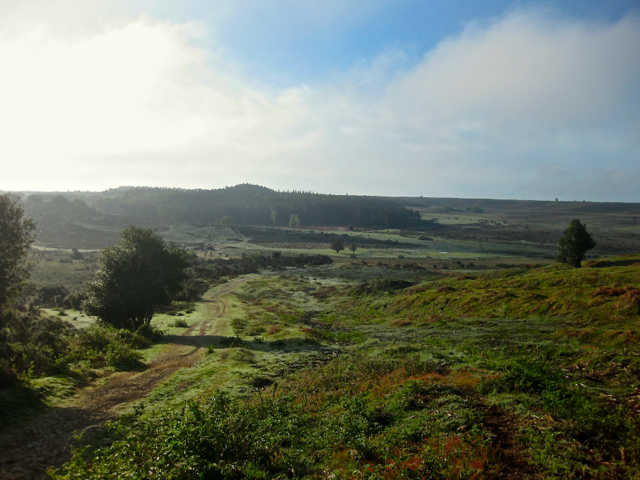
The New Forest is a landscape of irreplacable habitats that supports a diversity of wildlife.

Britain was first declared rabies-free in 1902.
Posted in New Forest | Tagged , , , , , , , , , , , , , | Comments Off on New Forest: dog-days and mad dogs

New Forest: lapwings reward the early riser

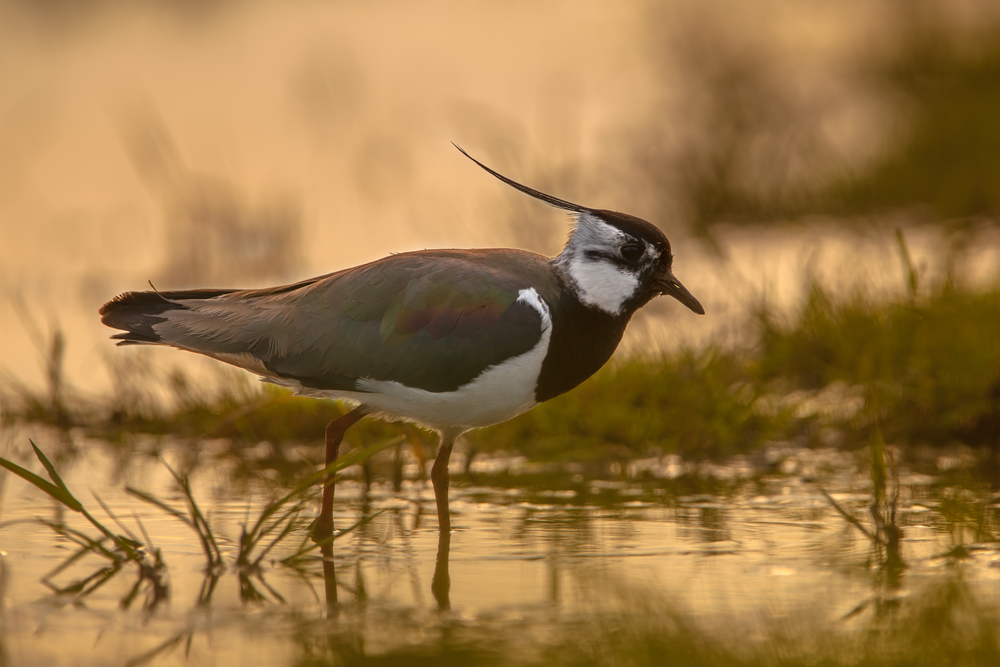
The lapwing is a regular visitor to the New Forest.

The lapwing relies on the wet heathland habitats found on the New Forest.

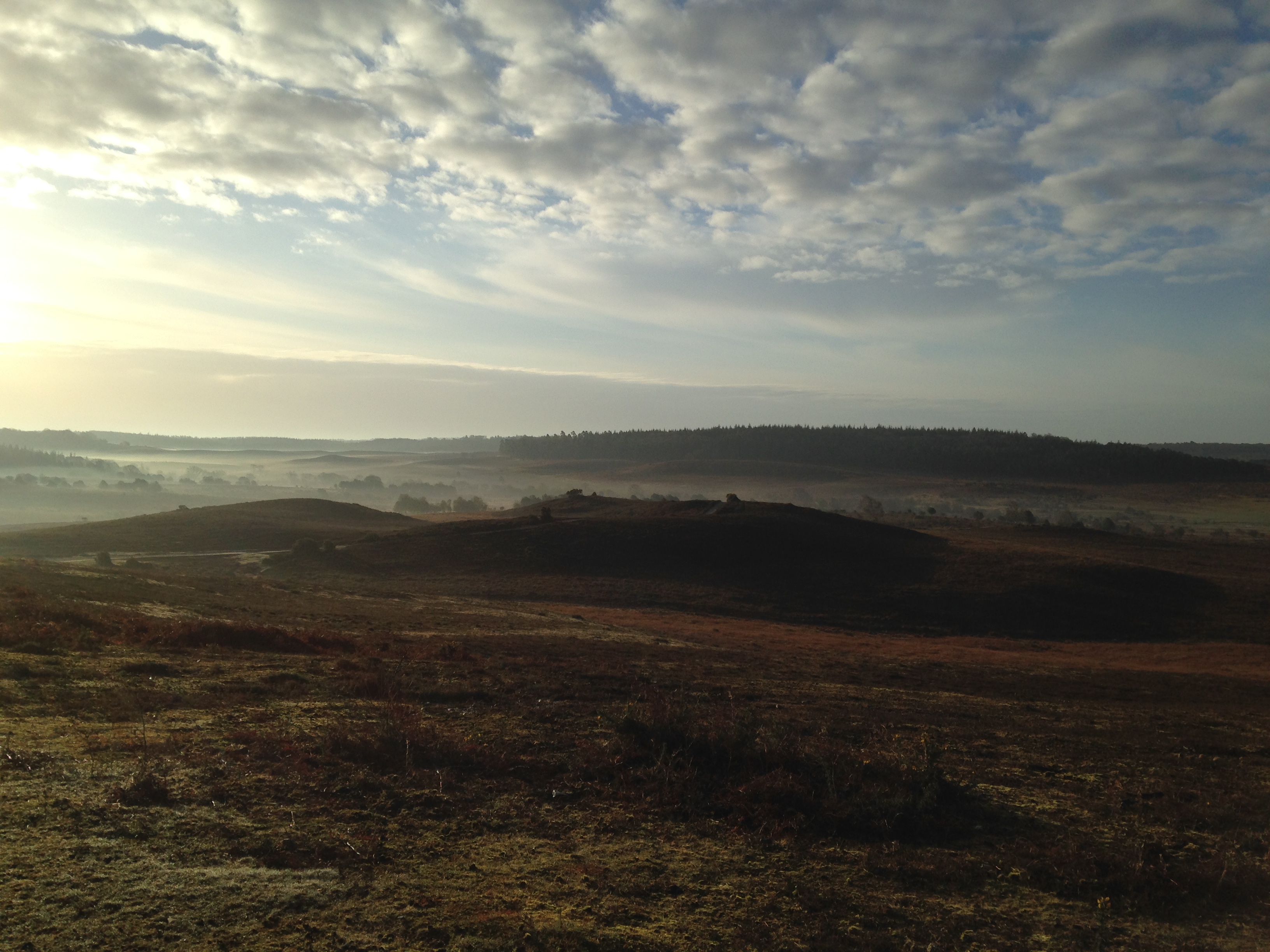
I’m really enjoying my walks on the New Forest at the moment. I start very early in the morning, when there are few people about, and often arrive just in time to see the sun appearing over the horizon. As the mist rises from the valleys the sound of the dawn chorus permeates the chill, damp air. This melodic spring repertoire is a pleasant start to the day and a gentle way to waken my senses. As I walk the tracks and footpaths I listen out for the lapwing (Vanellus vanellus). It’s a sound that reminds me of my childhood and brings back many happy memories associated with the countryside. I love to hear the plaintive “peewit” cry of its flight-song as it drifts across the misty skies and I watch as the bird circles its nesting grounds in the eerie half-light of dawn. The lapwing is easily recognisable due to its upsweeping black crest and petrol-coloured plumage. It has many vernacular names, including chewit, dotterel, green plover, peasiewheep, teewhup, ticks nicket, toppyup, and tuefit, which is testimony to its long association with the countryside throughout the British Isles. The wetland sites of the New Forest, such as the mires, bogs and wet heathland, are critically important in providing valuable habit for lapwing populations. The intensive grazing of the ponies and other land management techniques, such as controlled burning, help to maintain the habitat on which these birds depend.

Lapwing superstitions and stories
Its name – lapwing – is supposed to derive from the sound its large wings make when in flight, or from its strategy of drawing predators away from its nest by trailing its wing as if it were broken. It was this form of defence that, according to superstition, makes the lapwing an unlucky bird for those that hear it. In southern Scotland covenanters hiding from the forces of Charles II were given away by the cries of the lapwings defending their nests. The lapwing is, therefore, given credit for being the watchdog for other wading bird species. In some communities the lapwing’s cry of “peewit” is heard as “bewitched”, making people believe that it is associated with witchcraft and sorcery and in others it was believed that lapwings contained the spirits of people ‘who still haunt the earth, in consequence of something that troubles them.’ Catherine Earnshaw, the heroine in Wuthering Heights, is concerned at one point that Heathcliff has killed lapwings and stuffed their feathers in her pillow and begins ‘removing its contents in handfuls’.

Our feathered friends
Not all the stories about lapwings are ominous, though, and there are historical accounts of these birds being successfully kept as pets in Victorian times. In one report a young lady, who also had a terrier dog, kept a lapwing. The bird and the dog, by all accounts, were on the best of terms. The lapwing liked to occupy the kitchen garden and whenever the dog passed that way ‘he was sure to be joined by his feathered friend’. This friendship continued happily for some time until, unfortunately, the bird ‘fell a cruel sacrifice to some half-starved cat’. The biggest threat to lapwing populations in the New Forest is us -disturbance from human recreational activities, particularly dog walking. Our adored pets become voracious hunters when let off the leash. So we need to be aware of our impact on the breeding populations of ground nesting birds and support our feathered friends, from March to July, by staying on the footpaths and keeping dogs in sight and under control. This small concession will ensure that future visitors will be able to enjoy the sight and sound of this distinctive bird and the many others that share the New Forest.

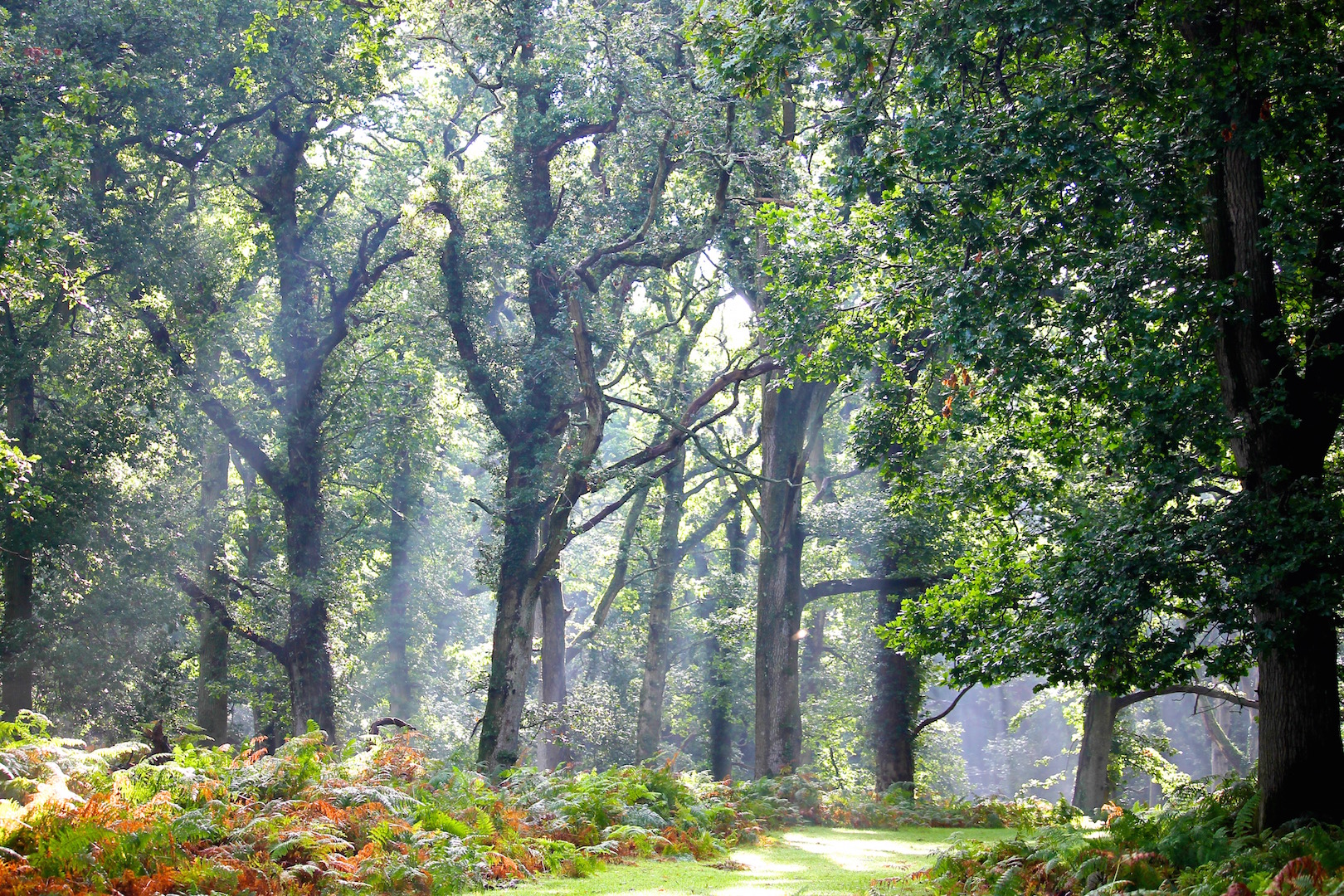
The New Forest swathed in dawn mist is a sight that rewards the early risers.

The New Forest swathed in dawn mist is a sight that rewards the early riser.

Posted in New Forest, New Forest flora & fauna | Tagged , , , , , , , , , , , , , | Comments Off on New Forest: lapwings reward the early riser

New Forest: jingling matches and donkey races

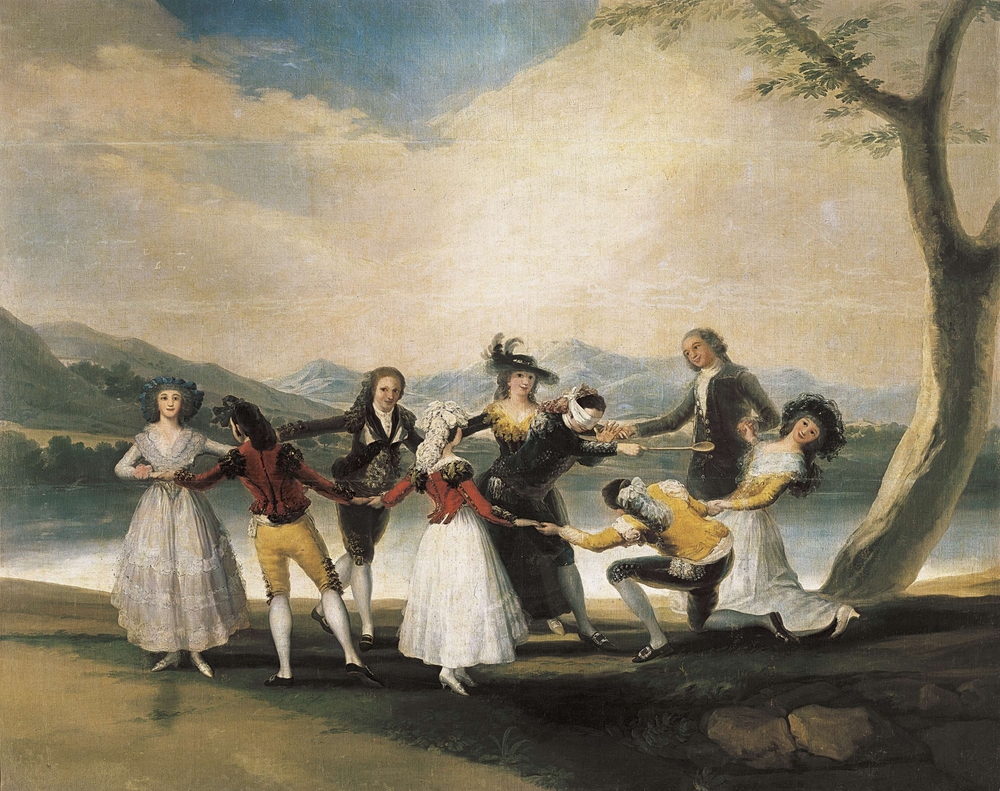
Blindman's buff was a popular game that had many variations.

Blindman’s buff was a popular game that had many variations, including the Jingling Match.

The New Forest has always enjoyed a close association with the monarchy. During the eighteenth century it was a favourite destination for George III, who would often stay with his family before moving on to the seaside town of Weymouth. As a result of this royal patronage news of the comings-and-goings of the Forest folk was very popular. In August 1793 a most peculiar sports day was reported in the London newspapers. The venue for this event was more than likely the Lyndhurst Racecourse, where ‘rustic Swains of the New Forest’ were amused by racing and other diversions. One of the sports on offer was a Jingling Match, which according to the report was a very entertaining ‘improvement on Blindman’s Buff’, which was a popular game in the eighteenth century. An area, measuring about 20 yards (18 metres approximately) in circumference, was roped off to make an enclosure into which a man ‘with a number of Bells fastened on him’ had to elude a group of players who were blindfolded. The blindfolded players had to follow the sound of the bells and if they were able to capture the jingler within the time allowed, which was believed to be a quarter of an hour, they won prize money, but if not he kept the cash. There was, apparently, much amusement from all the jostling and frequent falls of the blindfolded men.

The day’s amusements
There were also a series of donkey races held, ridden by women, which resulted in two dead-heats. Women in the late eighteenth century would have been generally very petite, so making excellent jockeys for donkey raceing. Apparently the races afforded much sport, as anyone who has ever witnessed a donkey race can testify. For the men, there were pig catching contests where the winner was the man who could hold the pig by its tail. There is no mention of prizes or, indeed, if the pig was greased, which has often been done to make the task of catching the pig more difficult. The object of the day seems to have been to entertain the crowds, and by all accounts it was a large turn out. ‘There were near one hundred carriages on the Course’ observed the reporter. The day’s amusements were finished off with an elegant dinner at the Crown Inn, Lyndhurst, to which the Lord Warden of the New Forest presented a brace of bucks, and another gentleman gave a turtle, ‘the former was of the finest flavour, and the latter most admirably dressed.’ Many ‘fashionable families’ attended from the local area, as well as ‘visitors from Southampton’. The Crown Inn referred to in the article is probably the current Crown Manor House Hotel, which is located in Lyndhurst’s High Street. The Lyndhurst Racecourse, though, ceased functioning in the late nineteenth century but its grounds were used briefly for the New Forest pony sales and then as part of the course of the Lyndhurst Golf Club, which still exists today.

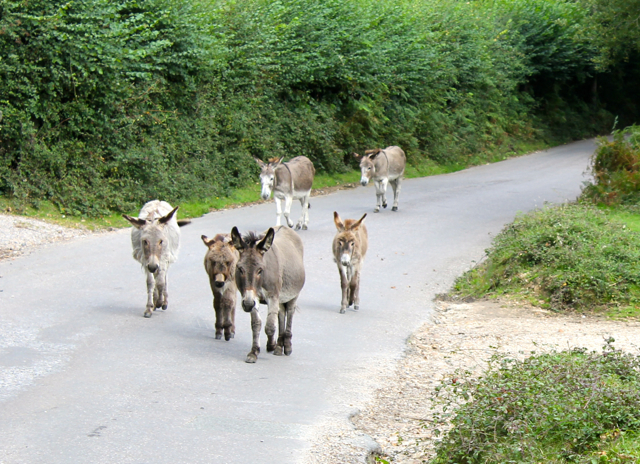
The courting behaviour of the free roaming donkeys cause the vicar of East Boldre to complain to the Verderers.

The Lyndhurst sports day of 1793 included donkey races, with women as jockeys.

Posted in New Forest, New Forest customs | Tagged , , , , , , , , , , , , , , , , , | Comments Off on New Forest: jingling matches and donkey races

New Forest: annual colt and stallion inspections

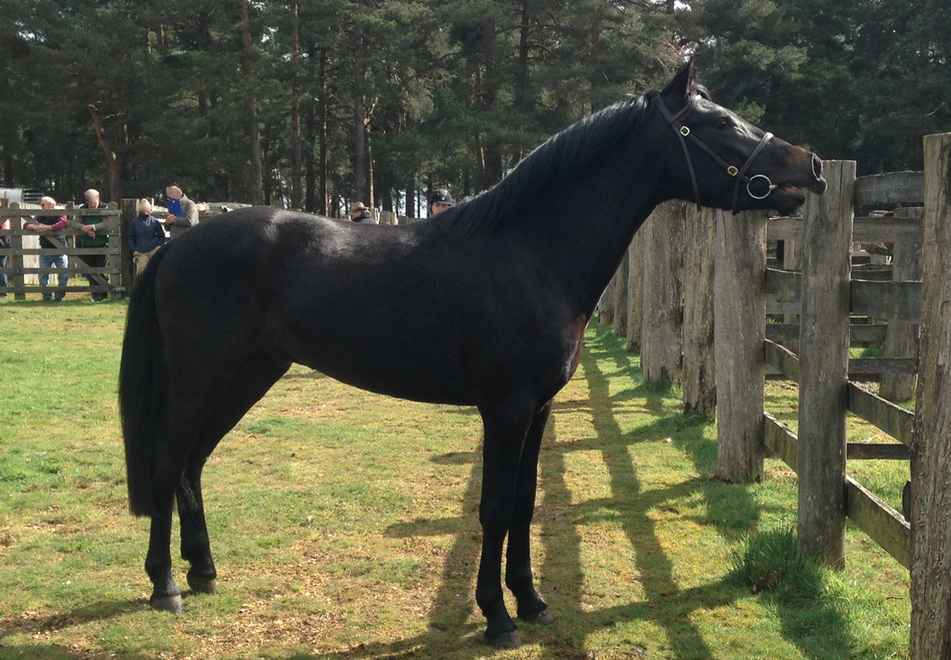
Every year inspections are held to select colts and stallions that will sire future New Forest ponies.

Every year inspections are held to select colts and stallions that will sire future New Forest ponies.

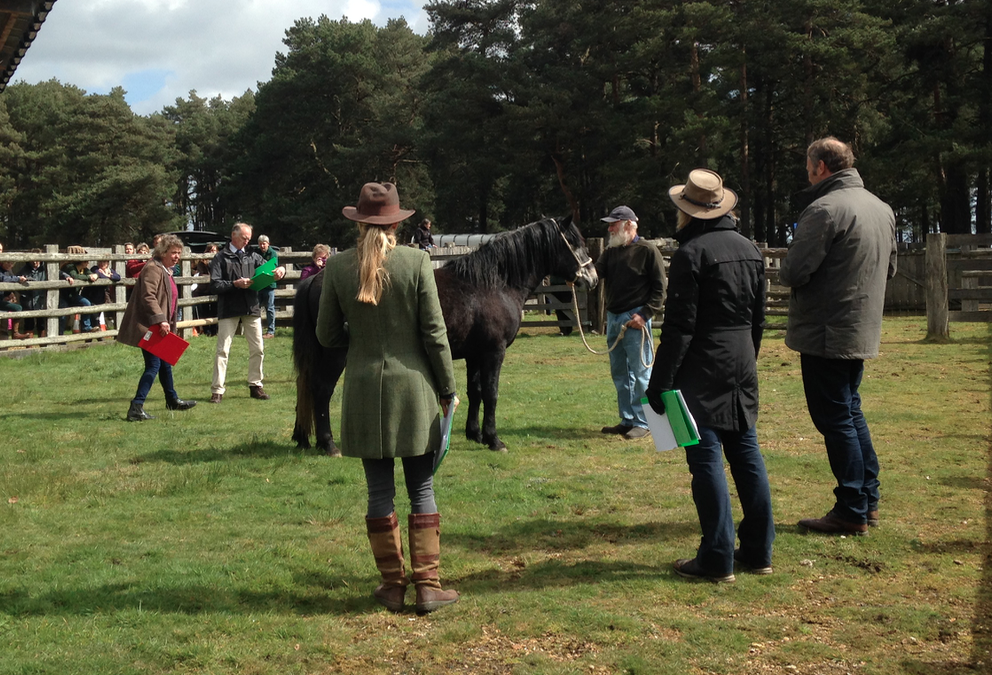
I attended the annual Stallion Inspections at Beaulieu Road last weekend, to watch the selection process for the colts and stallions that will sire future generations of New Forest pony. The weather was forecast for sunny intervals and, when the sun did reveal itself, was pleasantly warm. On arrival it is of course necessary to queue at the catering wagon for breakfast. This is also the best place to catch up with people and hear the latest news whilst ordering the obligatory coffee and bacon-butty. The air is filled with the noise of the stallions, as they neigh to one another, and the general commotion as horseboxes arrive and more ponies are unloaded. I picked up a Schedule, which has the names of the ponies waiting for inspection and information about their breeding, and walked around the holding pens to view them. Some of the owners wait with their ponies and it is always nice to talk to them and hear something about the character of the animal, as well as assessing their looks.

Forest Colts, Stud Colts, and the Verderers Inspection
The inspections are carried out by a panel that consists of representatives from the New Forest Pony Breed & Cattle Society, the Verderers of the New Forest, and the New Forest Commoners Defence Association. On this particular day there were three main classes, which were for Forest Colts, Stud Colts, and the Verderers Inspection. The proceedings began with the inspection of the Forest Colts and Stud Colts. These two-year old animals will either be kept for use as stallions in the future or, for those not making the grade, gelded and used for other purposes, such as riding ponies. After an initial standing inspection the colts show off their paces. They are led around the ring by their handlers and then asked to trot on the lead-rein. Once this section is completed they are turned loose where they can move freely around the show ring. Once at liberty the colts canter, prance and cavort about, thereby demonstrating the fluidity of their movement and their physical agility. Some of these ponies will have made a good impression on me, as I viewed them in the holding pens, and this exercise gives me a chance to make an overall judgement. I have my favourites of course but I’m not sure if the official judges share my opinions. After this the Verderers’ Inspection takes place. The ponies in this class were four-year olds that have already been licensed as stallions. They were judged according to their suitability to run on the Open Forest with the free-roaming mares. This year 15 stallions will be released to roam with the mares for four weeks from Monday 9th May until Monday 6th June. The ponies selected at this inspection will go forward into the Stallion Scheme, where they will be amongst a herd of New Forest stallions kept specifically for use on the Open Forest. Ensuring that the quality of the New Forest pony breed is maintained, as well as preserving the diversity of bloodlines, is of paramount concern to the panel of inspectors and all concerned.

When is a pony on the New Forest not a New Forest pony?
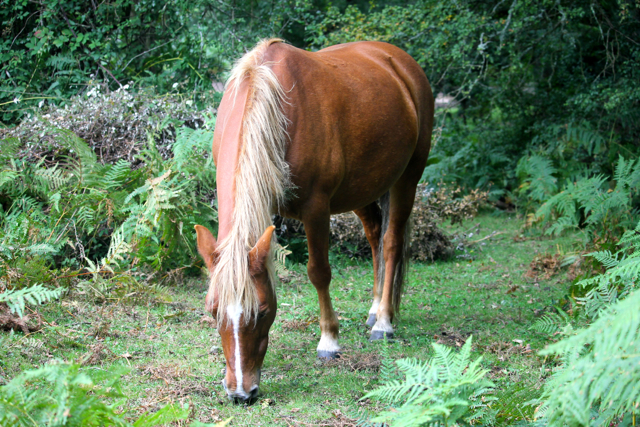
The inspectors are looking for the standard qualities that make the New Forest pony breed, such as sloping shoulders, strong hindquarters, good bone structure, clean straight limbs and round feet. The ponies should be of a working-type, with the look of all-round ability about them. New Forest ponies can be any colour except piebald (black and white), skewbald (brown, black and white), spotted, or cremello, which is a creamy-colour with blue eyes; they must not have white markings anywhere other than on the lower part of their legs or on their faces. There are other types of ponies grazing on the Open Forest, including the coloured gypsy-type and even Shetland ponies, which have often made their way into tourism brochures and websites where they have even been incorrectly described as New Forest ponies. It is a common mistake. Not all ponies on the New Forest are New Forest ponies. But for those advocates of this icon of the New Forest and native breed of British pony, its stamp is unmistakeable.

The colts are

The colts are turned loose to show off their paces – or stand and neigh to their friends!

Posted in New Forest, New Forest pony | Tagged , , , , , , , , , , , , , , , | Comments Off on New Forest: annual colt and stallion inspections

New Forest: pony breeding through the ages.

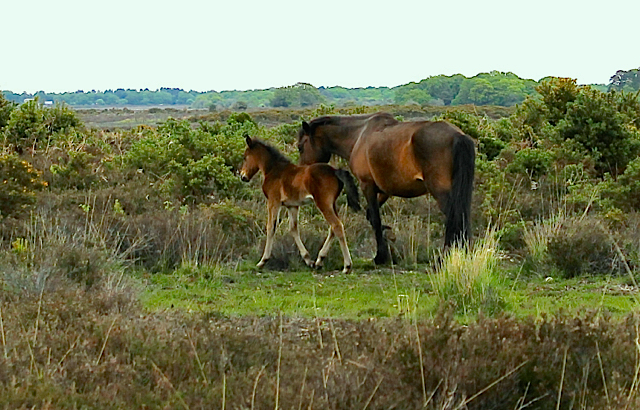
When the stallions are at large on the New Forest the  wild pony herds exhibit much excitement.

Only approved, licensed stallions are permitted to roam free on the New Forest.

Anticipation is mounting across the Forest, as the annual Stallion Inspection approaches. Owners will currently be working with their ponies to ensure that they are prepared for the show ring and can walk and trot whilst being led and are able to stand squarely for the confirmation inspection. The pony’s behaviour, as well as his looks, is considered in the final stallion licensing decision. It’s a tense time for those putting their animals forward but a worthwhile process that has been safeguarding the quality of the New Forest pony breed for generations. History has shown, however, that horse breeding has not always been so carefully managed. In the Middle Ages, for example, the breeding of horses was a fairly haphazard affair and mares and stallions would have generally roamed free on common land where nature could take its course. Horses in those days were not identified by their breed or pedigree but by their use or appearance. A destrier, for example, was a warhorse that would have been highly prized by knights and mounted men-at-arms; often referred to as a ‘Great Horse’, destriers were in fact no more than 15-16 hands* high. A knight would have also ridden a courser, a cheaper version of the destrier, for hunting and warfare and ridden a rouncey for general-purpose use. A palfrey, described as a docile type of riding horse, was suitable for a woman; whereas a sumpter was a type of packhorse used to carry baggage. There were also ambling horses, pads, cobs, hobbies, garrons and other names for the functions these horses served.

Royal and ecclesiastical stud farms
Whilst horse breeding in the main was a casual matter, stud farms did exist. Henry III, in 1217, ordered the profits from the royal stud in the New Forest be used to build Beaulieu Abbey. It was not unusual for monasteries to be involved in horse breeding and they would have been well ordered places where the mares would have been better protected from the advances of random stallions. In 1300 it was recorded that the abbot of Beaulieu kept 80 colts, horses and foals outside his enclosed land, and that the abbot of Natale had 10 horses and mares in the forest. These studs were more about producing large numbers of horses, rather than distinct breeds. Indeed, the church would certainly not have approved of the incestuous techniques of in breeding, which preserved particular qualities and confirmation points,  which were adopted in a later more secular age.

Henry VIII and the annual drifts
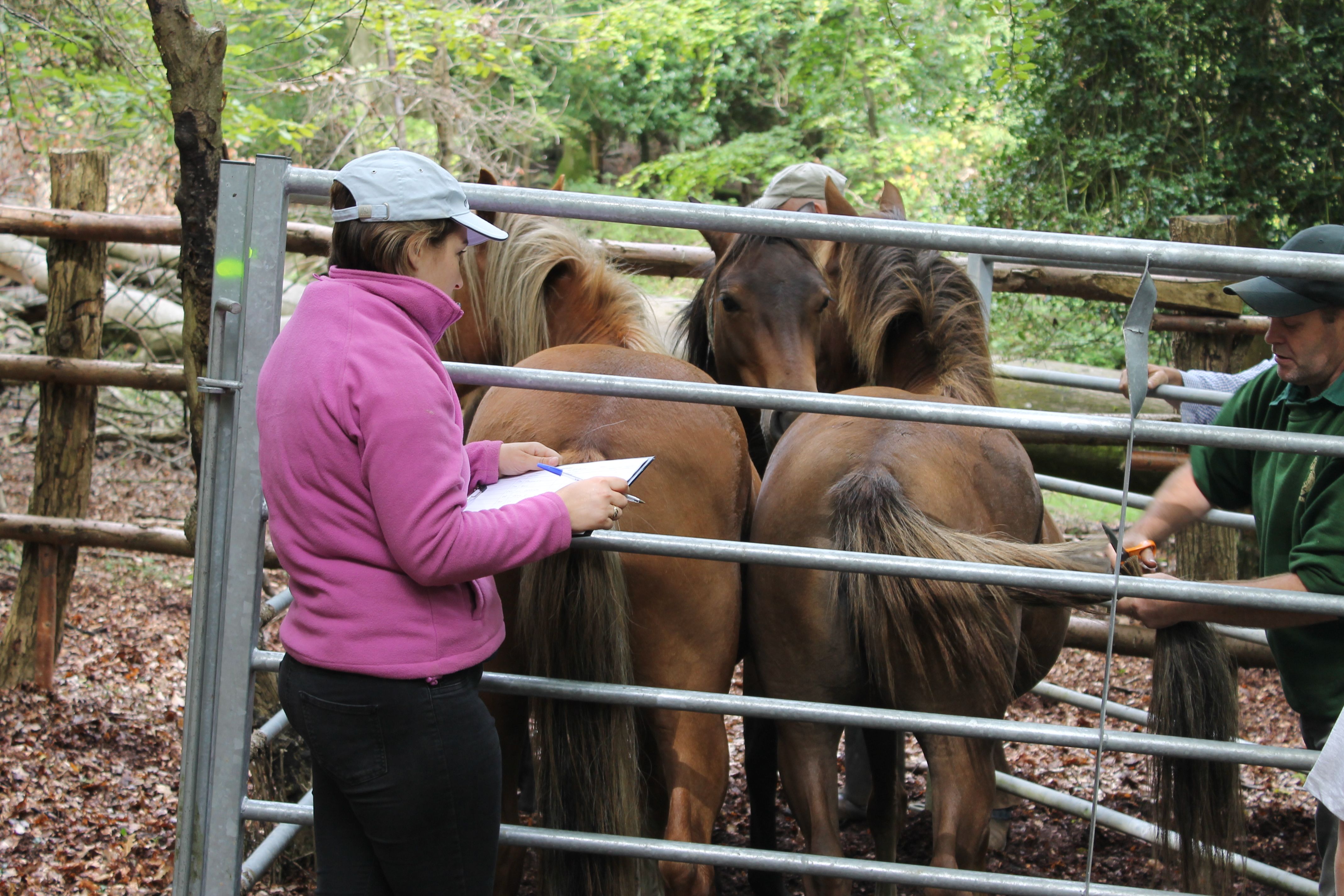
Of course, Henry VIII dissolved the monasteries during his reign in the 16th century, and the good work undertaken by the monks in producing horses came to an end. Nevertheless, in 1535 King Henry was disappointed to find that “in most places of this Realme little horsis and naggis of small stature and valeu be suffered to depasture and also to covour marys and felys of very small stature.” He passed legislation to cull under height horses and decreed that no stallion under 15 hands high and no mare under 13 hands was allowed to run free on common land. Under Henry VIII’s command an annual round up was ordered, to take place 15 days after Michaelmas, which would sort out the worthy animals from the rejects. His edict was mostly ignored and the little horse of the New Forest survived. The drifts also survived and are the basis for the modern-day round-ups that occur on the New Forest each autumn. However, its present purpose is primarily to check the ponies for health and welfare before turning them loose to return to the Forest.

The Agister cuts the pony's tail to show the owner has paid their marking fee.

During the annual drifts ponies are checked for health, marked and then released back onto the Forest.

*A hand is the measurement of a man’s hand, taken from the knuckle closest to the palm of his index finger through to the knuckle of his little finger. It was the quickest way to establish the height of a horse. Men would have placed one hand on top of the other, knuckle to knuckle, from the ground at the horses front foot all the way up to its withers counting as they went.


Posted in New Forest, New Forest pony | Tagged , , , , , , , , , , , , , , , , , , , , , , , , , , , , , , , , , | Comments Off on New Forest: pony breeding through the ages.

New Forest: £1000 reward to find hit-&-run drivers.

The courting behaviour of the free roaming donkeys cause the vicar of East Boldre to complain to the Verderers.

The free-roaming animals of the New Forest use the roads to get from A-to-B and have right of way over other road users, including  motorised vehicles and bicycles.

I attended the Verderers’ Court recently (March 2016), which is something that I try to do whenever I am able. Apart from meeting my fellow commoners and catching up with all their news, it’s an excellent way of seeing the administration of the New Forest in action. The Verderers Court is an ancient institution, which was reconstituted into its present form in 1877 by an Act of Parliament enabling the Verderers to act as the guardians of commoning, the commoners and the New Forest landscape. The Court of Swainmote, to give it its full title, is open to the public and proceedings are begun by an Agister, in traditional livery, calling ‘Oyez, oyez, oyez. All manner of persons who have any presentment to make or matter or thing to do at this Court of Verderers, let them come forward and they shall be heard. God save the Queen!’ (A presentment is a formal presentation, made by commoners or other members of the public, to the Court concerning Forest matters.)

Hit-and-run incidents involving commonable animals
Before proceedings began at this month’s meeting, however, the Official Verderer stood to give formal notice that the Verderers intend to pursue all drivers involved in hit-and-run incidents affecting commonable animals to the full penalty of law under current animal cruelty legislation, which could include a jail sentence. His statement was given in response to recent incidents where drivers of motor vehicles have fatally injured animals and then left them in agony and distress. At the beginning of the month, in the same incident, two donkeys were abandoned with appalling injuries, one with broken limbs and the other with internal damage; while more recently a New Forest mare was knocked-down and left to die on the Cadnam to Fordingbridge road. The Official Verderer declared that the commonable stock is grazing the New Forest by right, whereas people are driving the roads by privilege.

£1000 reward to find hit & run drivers
The Official Verderer stated that there was no excuse for such incidents and urged drivers involved in accidents with Forest animals to phone the police immediately or, in the event of having no phone or mobile signal, to call at the nearest house to summon help. He said that in one case, where an animal had been hit by a car, the driver had continued on to a dinner party where the others guests, concerned on hearing about the incident, urged the driver to report it. The Official Verderer explained that ‘unnecessary suffering occurs when an injured animal is left without treatment for any length of time that can be avoided’, and he said that whilst damage to a garden fence could be reported within 24 hours it was not acceptable in the case of a Forest animal. In such cases prosecution for animal cruelty would be sought and that a reward of £1000 is offered for information leading to the successful conviction of drivers failing to stop and report an accident involving a Forest animal.

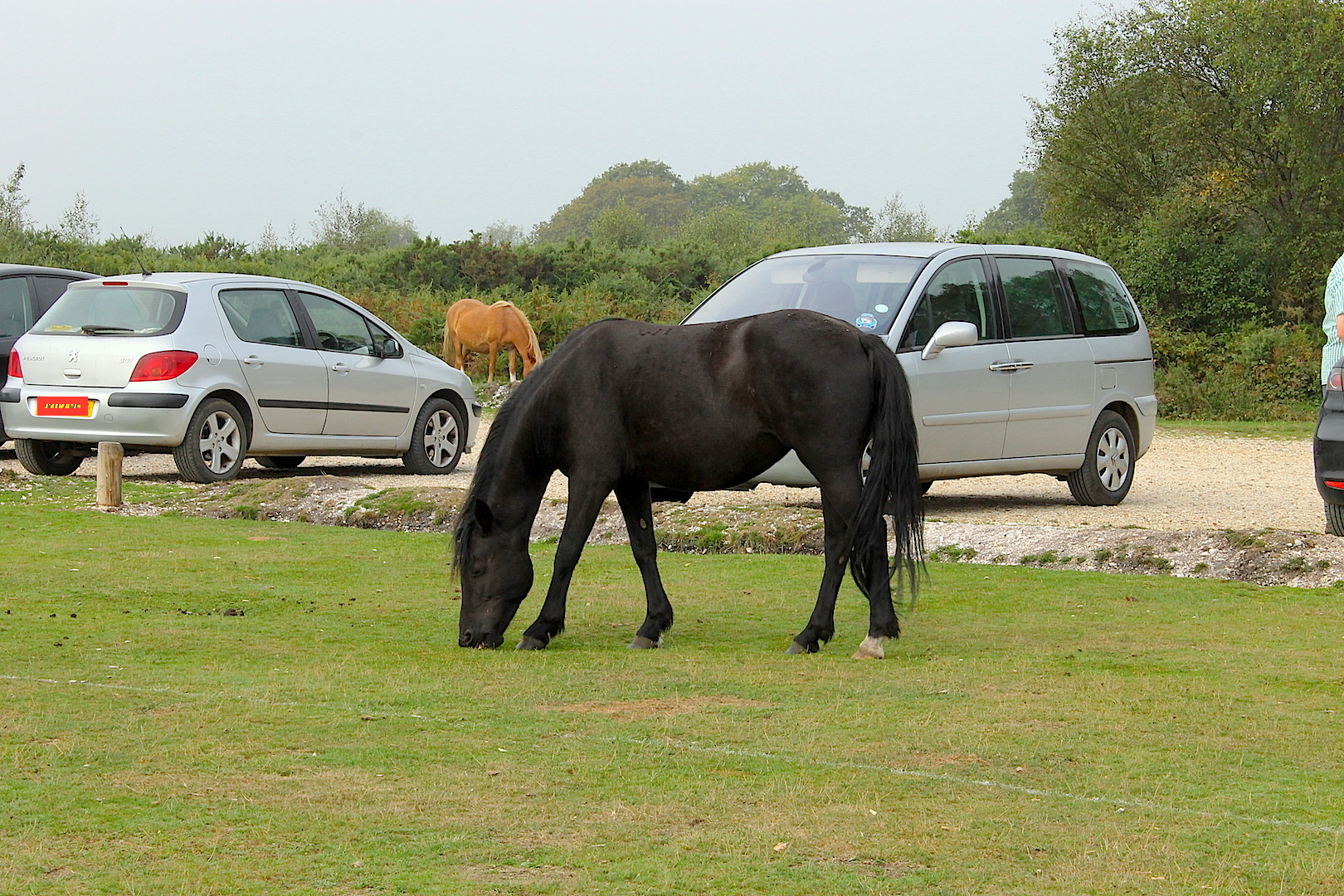
Visitors who feed New Forest ponies are teaching them not to fear humans or cars.

Visitors who feed New Forest ponies are teaching them not to fear cars and are enticing them into the car parks where they can be in danger from vehicular traffic.

If you find a sick, injured or dead pony, cow, donkey, pig or sheep call the Verderer’s Office on 02380 282052 during normal office hours; or 02380 283141 at other times. For sick or injured deer, ring the Forestry Commission on 0300 067 4600 (24 hours).

Posted in New Forest, New Forest pony | Tagged , , , , , , , , , , , , , , , | Comments Off on New Forest: £1000 reward to find hit-&-run drivers.

New Forest: Easter and the coming of spring.

In 1709 proposals were made to clear the New Forest and build a township for refugees.

A connection with nature is essential for our mental, physical, intellectual and emotional health.

The Easter holidays have a big impact on the New Forest. They traditionally mark the beginning of springtime and the time of year that many visitor attractions open their doors to welcome guests at the start of the season. Tourism is one of the most important economic activities on the New Forest and is a major source of employment for local people. The accommodation providers, pubs, restaurants, retail outlets, transport operators and other local businesses, for example, will all have busily prepared for the thousands of people who will flock to the area during the spring break. Many visitors who come are in search of much needed rest and relaxation, whilst others are keen to exploit the opportunities for more energetic ways of restoring their batteries. But whichever way they go about it leisure and recreational activities are now probably the most significant ways that people of today interact with nature.

Being out-of-doors
Gone are the days when everyone was familiar with the farming calendar and the importance of the Countryside Code*; or grew vegetables and kept chickens, geese, ducks and pigs in their yards and gardens. We are no longer immersed in the circle of life, of watching creatures being created, born and dying. Nor do we understand the growing seasons, of what produce is available when and what can be grown locally or what is imported. Our species was never designed to be as disconnected from the rest of the natural world and its processes as we are now. We spend a fraction of the time out-of-doors and interacting with nature when compared to our ancestors. Whether we recognise it or not, those moments when we can look at trees, feel the wind and rain on our faces, smell the aroma of the warm earth after summer rain, or see wildlife in its natural setting are vital to our mental, physical, intellectual and emotional health and welfare.

Springtime breeding
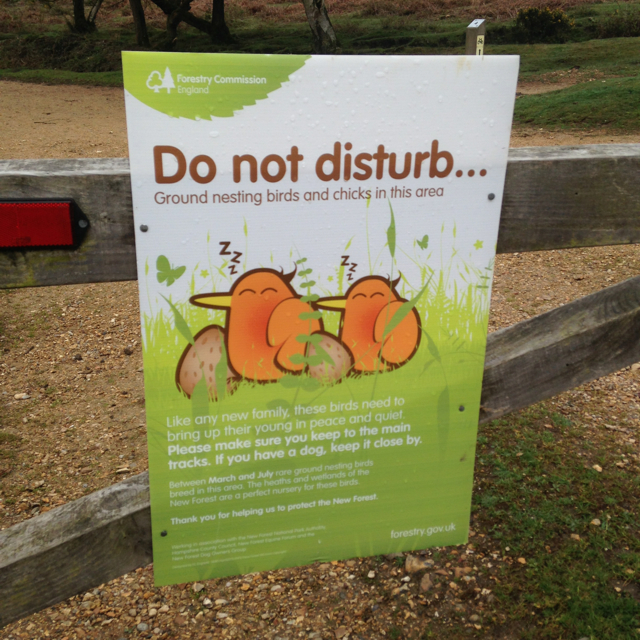
But as necessary as these moments are to us, to the wildlife that shares the New Forest environment the availability of, and access to, its natural resources are a life or death reality. Easter also marks the beginning of essential springtime breeding activity of many species of wildlife on the Forest. From now until July the ground-nesting birds, small mammals and reptiles, for example, will be attempting to reproduce. It is crucial that we do not disturb them and do all that we can to support them. Adopting simple strategies, such as staying on the designated footpaths or cycle tracks, keeping your dogs close to you when walking them, and not leaving litter, or even picking up litter even if it’s not yours, will go some little way to protecting the wildlife of the New Forest and preserving its ecology for future generations of visitors.

Take care when on the New Forest not to disturb ground nesting birds from March until July.

Take care when on the New Forest not to disturb ground nesting birds from March until July.

*The Countryside Code explains how people can enjoy the countryside responsibly.

Posted in New Forest, New Forest flora & fauna | Tagged , , , , , , , , , , , , , , | Comments Off on New Forest: Easter and the coming of spring.

New Forest: squirrel-pie anyone?

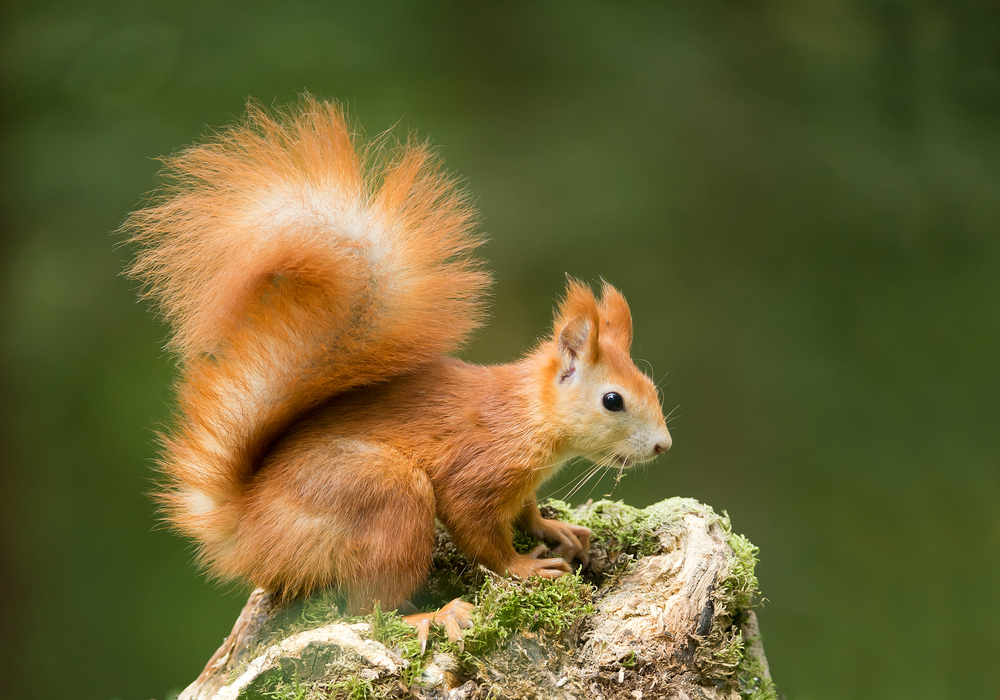
The New Forest was once home to a vast population of red squirrels.

The New Forest was once home to a vast population of red squirrels (Sciurus vulgaris).

Like it or not, the history of the New Forest is firmly interconnected with the practice of hunting. It was for this purpose that William I established the landscape as a Royal Forest, in the eleventh century. While most people associate royal hunting with medieval game species, such as wild boar or red deer, modern hunting is more often connected with the fox. However, in times past the New Forest was also renown for its squirrel hunts. The Forest was once home to a vast population of red squirrels (Sciurus vulgaris), whose numbers were controlled because of the damage they caused to the trees. Men armed with ‘snogs’, which were basically pieces of wood with lead weights wired to the ends, would throw the weapon into the tree to knock the squirrels down. Red squirrels, by all accounts, would make a tasty meal provided that there was more than one in the pot!

A case of squirrel hunting
A case connected to squirrel hunting occurred in the Lyndhurst Petty Sessions in 1889, when four men were summoned for, and pleaded guilty to, the wilful damage of fir trees in Hazeley Wood. The damage had occurred whilst the men, ‘with loaded sticks, which broke off the boughs of the trees’ were out squirrel hunting. The Chairman of the bench presiding over the prosecution asked why the old Forest custom was being interfered with. The Deputy Surveyor, at that time, explained that whilst he had no objection to the hunting of squirrels he did not want this activity conducted in the enclosures, which were for the growing of trees, ‘where even shooting is not permitted’ by gentlemen with licenses. He reported that complaints had been made to him about ‘squirrel hunting on Sundays, as the men who were out made a tremendous noise, and around Lyndhurst it was quite like pandemonium. It was so bad that respectable people were afraid to walk about in the Forest because of the conduct and language used by the men there engaged in squirrel hunting.’ The Deputy Surveyor, therefore, asked the bench to rule against squirrel hunting in the enclosures and on Sundays. The defendants were consequently each fined 2s 6d, and the costs. They were further warned not to make any disturbance in the Forest or to disgrace Sundays in future. Their experience no doubt served as a warning to others.

Invasion of the grey squirrels
Sadly there are no longer any red squirrels in the New Forest. Their demise was not as a result of hunting but due to the introduction and subsequent invasion of the non-native grey squirrel (Sciurus carolinensis) in the late nineteenth century, which ousted the smaller, native species from its homeland territories. As well as being bigger and able to store more fat to see them through leaner winters, the grey squirrel also carries the Squirrel pox virus to which the red squirrel has no immunity. Even though attempts were made to supress grey squirrel numbers, by the middle of the twentieth century they had begun to dominate the New Forest, as in other areas, and the red squirrel was eventually evicted. Locally the red squirrel is now confined to Brownsea Island, near Poole, and the Isle of Wight.

Eat them to beat them!
The grey squirrel though has few supporters among the Forest folk. Apart from their detrimental impact on the red squirrels they also heavily predate on birds eggs and their chicks, and cause serious damage to the Forest’s trees. It is a nationwide problem that has earned the grey squirrel, which number over 2.5 million, the status of ‘pest’. One of the solutions to the grey squirrel infestation has been an ‘eat them to beat them’ approach that has called upon mainstream celebrity chefs, such as Jamie Oliver, to include grey squirrels in their recipes. Sporting and wild game chefs, such as Hugh Fernley Whittingstall of River Cottage and chef Pascal Aussignac, of Michelin-starred Club Gascon, have long advocated using grey squirrel meat as a free-range alternative. However, environmental journalist George Monbiot caused outrage amongst animal-lovers last year by preparing and cooking a grey squirrel on BBC TV’s Newsnight programme, which perhaps suggests that wild squirrel meat is not destined to become a supermarket staple just yet. Would you be tempted to a slice of squirrel-pie, sup on squirrel-stew, or perhaps try a taste of squirrel-sausage?

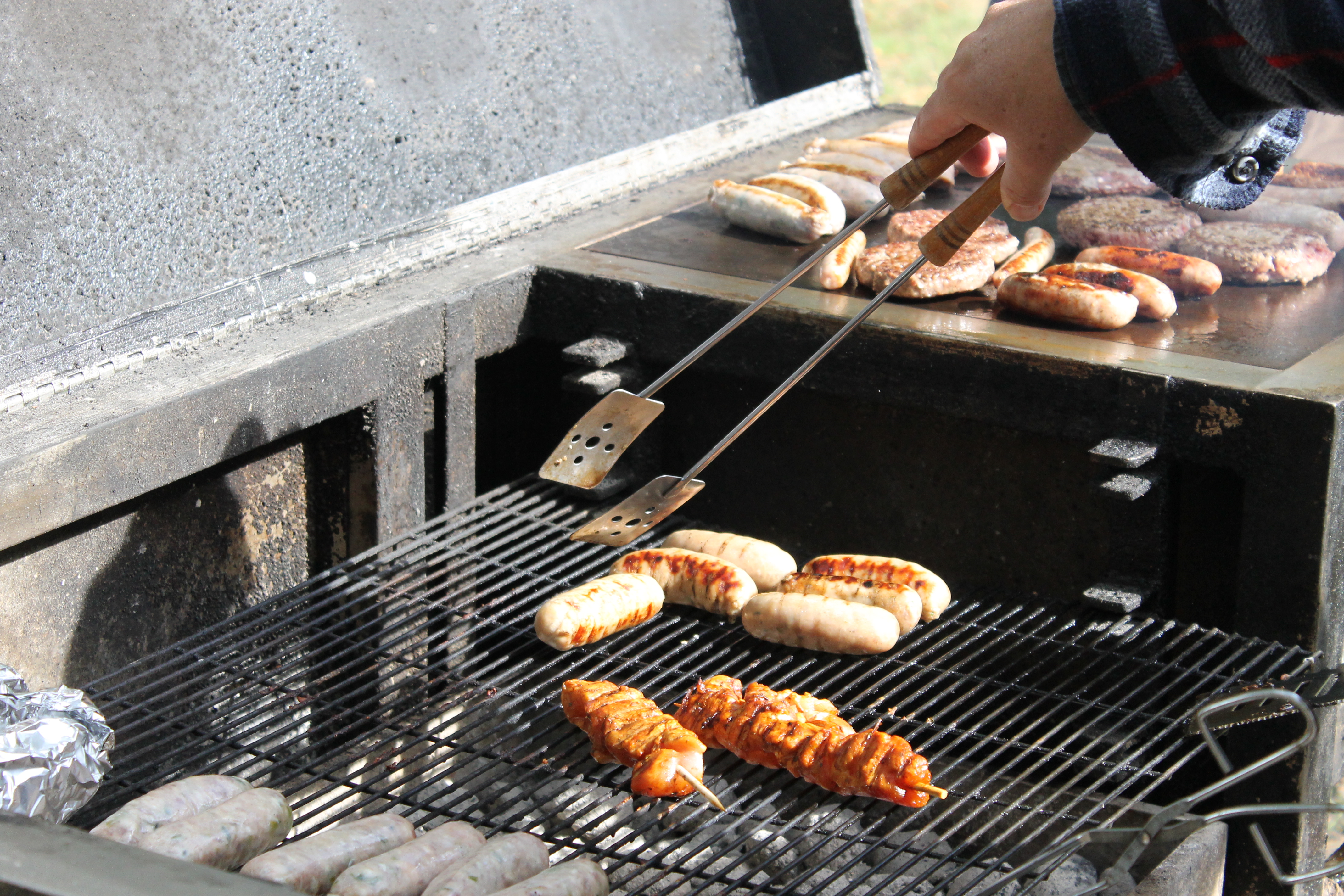
Wild meat is a popular free-range alternative to intensively farmed meat.

Wild meat is a popular free-range alternative to intensively farmed meat.

Posted in New Forest, New Forest customs, New Forest flora & fauna | Tagged , , , , , , , , , , , , , , | Comments Off on New Forest: squirrel-pie anyone?

New Forest: four pony scheme 1890

Only ponies habituated to the New Forest are turned out.

In 1871 the New Forest pony was described as ‘lath-legged, small-bodied, and heavy-headed’.

In the last decade of the nineteenth century efforts were made to improve the breeding of the New Forest pony to fulfil a ready market for ‘the large class, daily increasing, who use good ponies in light carts instead of larger horses and carriages.’ In an age that was entirely horse-drawn this was an important development and those whose livelihoods relied on producing good saleable ponies were quick to respond. It was generally agreed that ‘nowhere is there a larger stock of brood mares of a hardy, active and wiry stamp’ although it was recognised that ‘thirteen hands high is the height that appears best suited for the district, or rather that Forest feeds allows…[but] when bought young and run on better pasture, another hand is often added by natural growth.’ However, the size of the New Forest pony wasn’t as much an issue as its looks. One commentator remarked in 1871 that the ponies were ‘lath-legged [meaning that the pasterns were straight and upright, the fetlocks short, the legs straight and flat], small-bodied, and heavy-headed.’ It was therefore decided that immediate action was needed to breed a pony more attractive for light-harness work.

New Forest Pony Association
Those tasked with improving the New Forest pony agreed that it was easier to change the stallion, which could produce 50 foals in a year, than it was to change the mare, which could only produce one. Therefore, in 1890 the New Forest Pony Association introduced the ‘Four Pony Scheme’ for the purpose of ‘keeping four suitable stallions in-hand or to run in the Forest.’ (Breeding in-hand requires the close supervision of the stallion and mare together, whereas turning the stallion loose on the Forest, where he could roam free and select mares of his choice, would allow nature to take its course.) Generally speaking, the higher the value of the stallion or mare, the more likelihood that a higher level of supervision to their courtship would be required – after all investments needed to be protected and valuable mares needed to be sheltered from the ‘scrub’ stallions.

The Four Pony Scheme
The first stallion to join the ‘Four Pony Scheme’, in 1890, was Sprig of Shillelagh, an ex-Irish Steeplechaser, who was kept at Harrow Farm, Bransgore, to service visiting mares. The following year Exmoor, Hebridean, Blue Roan, West Highlander and Brockenhurst Joe joined him and were turned out on the Forest ‘in various quarters and kept in pasture during the winter season.’ According to reports Blue Roan and Hebridean both died in the Forest in the early autumn of 1892, ‘having done good service.’ Unfortunately the report does not mention exactly how the two stallions died but it was recorded that Blue Roan had been earlier ‘knocked about’ by another horse, to such an extreme that the offending animal had to be removed from the Forest. To the scheme was also added Abeyan and Yurasson, two purebred Arabian stallions loaned by Her Majesty Queen Victoria, who were kept at stud by Lord Montague of Beaulieu and David Jones of Warborne, in Boldre, respectively.

Pony Stud Book Society
A report of 1892 declared that the pony owners who used the Association’s stallions were ‘well pleased with the produce obtained, the more so as the [stud] fee paid was nominal only.’ The scheme was, apparently, also increasing the numbers of pony owners who were subscribing to the scheme convinced, no doubt to participate, by the prices that the improved progeny were fetching in the sales ring, ‘which were considerably above what is generally obtained for the ordinary stock’. Consequently an approach was made by the Pony Stud Book Society in 1892 about recording the bloodlines of the best Forest ponies and there was much debate about the best way of going about this task. One suggestions was that the best Forest mares ought to be paraded at the annual show where their suitability to be entered into the studbook could be decided. But to much laughter and shouts of ‘Hear! Hear!’ the response given was that although ‘it was a good suggestion, … it would exclude some, as many a good mare would see her owner further before she is brought to a pony show.’

Since 1930 only purebred stallions have been permitted on the Open Forest to sire the next generation of New Forest pony.

Since 1930 only purebred New Forest stallions have been permitted on the Open Forest to sire the next generation of New Forest pony.

Posted in New Forest, New Forest pony | Tagged , , , , , , , , , , , | Comments Off on New Forest: four pony scheme 1890

New Forest: the great mouse invasion 1814

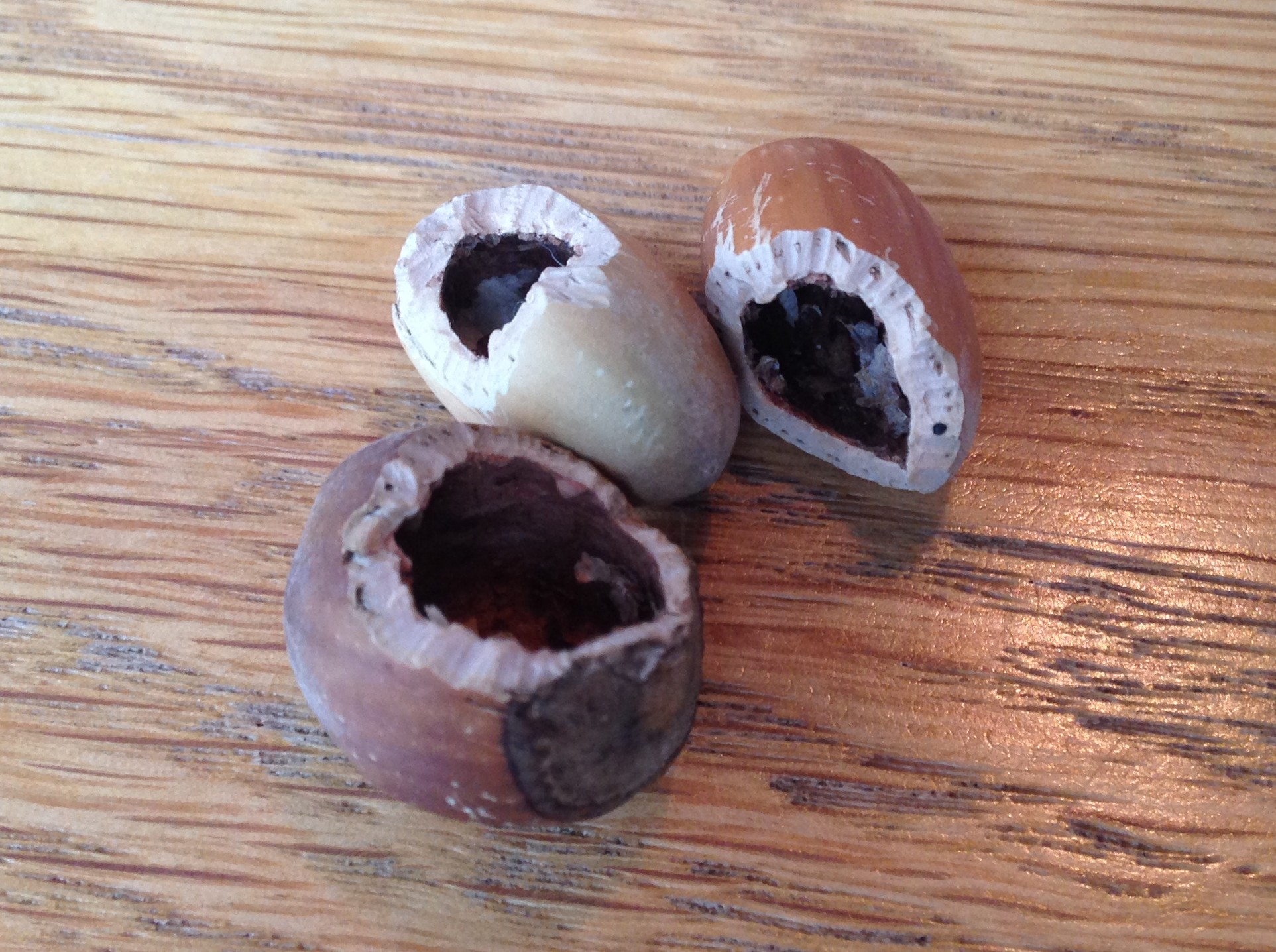
The pattern of gnaw-marks in these hazelnut shells are consist with those of a wood mouse.

The pattern of gnaw-marks in these hazelnut shells are consistent with those of a wood mouse.

Whilst moving bales of hay from the barn recently I noticed in one of them an imprinted circular shape that was about the diameter of a coffee mug. In the shallow impression were several empty hazelnut shells. Each of the shells had a circular hole gnawed in the top, through which some creature had eaten the nut within. On my holding there is a large patch of hazelnut trees that produce an abundance of nuts, but each year it is generally a race to see who will get to the ripened fruits first, me or the squirrels. My discovery seemed to suggest that there was yet another rival vying for a share of the autumnal spoils. I was excited at first to think that I might have a dormouse (Muscardinus avellanarius) resident on my holding but further investigation revealed the culprit to be only a wood mouse (Apodemus sylvaticus). Unlike the dormouse, which is protected species, wood mice, also known as field mice, are one of the most numerous of the small mammals. According to one estimate there is one wood mouse for every two people in the UK*, which is good news if you are a tawny owl or fox, for example, which relies upon the small nocturnal rodent as an important source of food.

The great mouse invasion
Mice, and other animals (including the pigs at pannage season) feast on the nuts, acorns and mast produced by the trees in the New Forest. The trees make their fruits in order to reproduce and their strategy for dealing with the feasters is to produce more fruit than the animals can eat. Fingers, or rather, twigs crossed! However, in 1814 Lord Glenbervie wrote to Sir Joseph Banks, the famous naturalist who took part in Captain James Cook’s first great voyage (1768–1771), asking for advice and apprising him of the most astonishing circumstance that had occurred in the Forest of Dean and the New Forest concerning ‘an account of the unexampled devastations committed by Field-Mice, during the years 1813 and 1814.’ Apparently the number of mice, which were reported to be in the tens of thousands, far exceeded the availability of food and the mice had begun eating the Forest’s trees. This ‘plague’ of ‘pernicious little animals’ was reported to have caused widespread loss of tree plantations as the mice ‘devoured the bark of the young plants, all round from the ground to the height of about six inches, and in many instances gnawing the root itself through and through.’

Solutions to the swarm
Solutions to the great mouse invasion involved several tactics, some of which appeared quite desperate. Cats were released into the forests but, while they certainly roamed ‘a considerable distance’, no one was sure if they had satisfied themselves with the mice they had caught without hunting for others; various poisons, such as arsenic, were tried and mixed up into a kind of paste with grease, flour and cut glass, but although the bait was taken there was little evidence the poison had been effective;  mousetraps were used but being made of wood swelled up in the damp of the forest and became useless; large swathes of bushes, ferns, furze and rough grass were cleared to expose the mouse runs to the larger predators and birds of prey but it proved so time consuming and costly that this tactic was abandoned. The most effective defense against the mouse swarm was to dig small pits into which the mice fell and couldn’t get out from, where they were collected in their hundreds. Foxes, stoats, weasels, kites, hawks and owls were all said to have gorged on the glut of mice.  Unfortunately none of the reports explain why the great mouse invasion began or indeed how it ended but seasoned forest keepers and woodsmen said that they had never seen anything like it before.

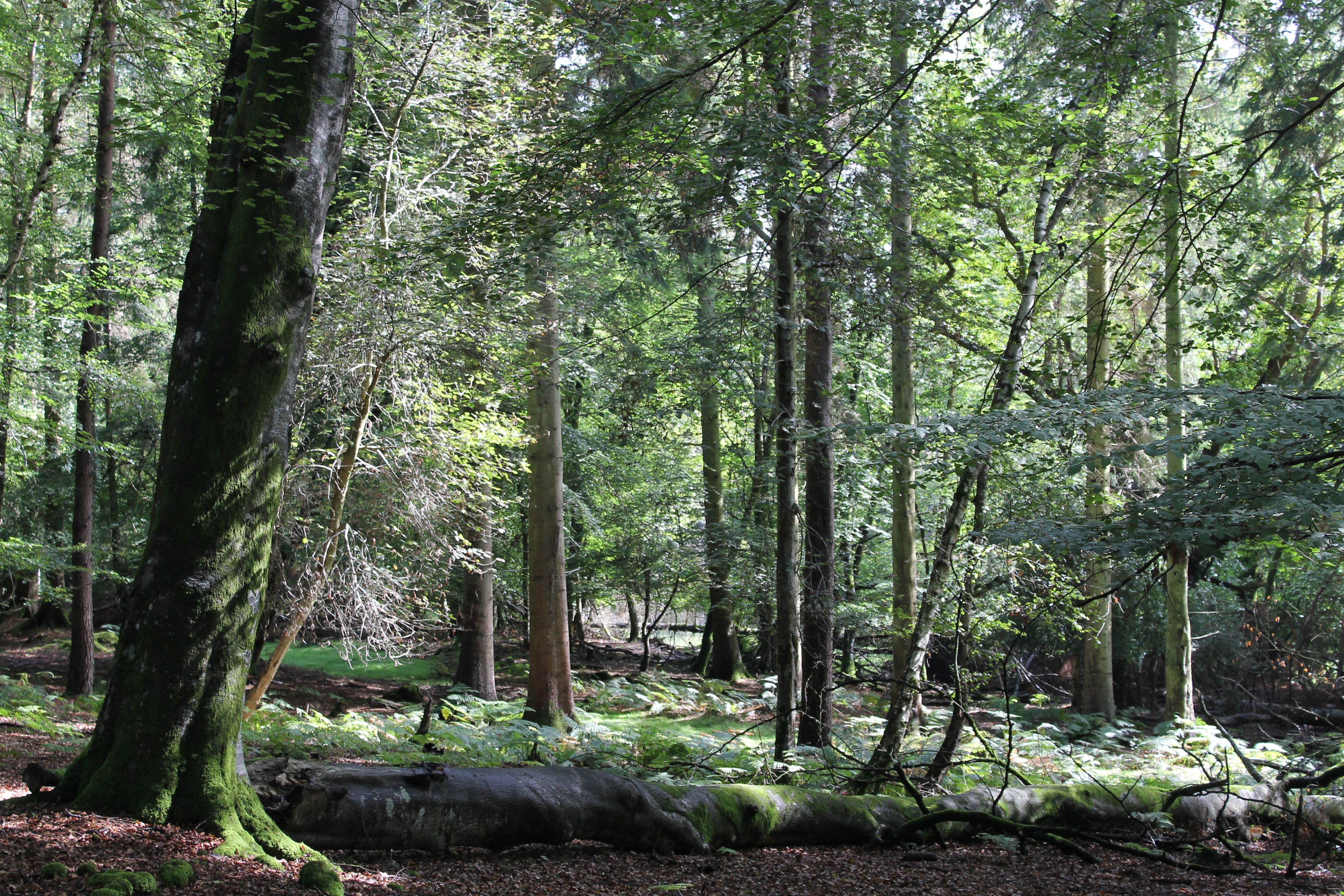
In medieval times a forest meant an area preserved for royal hunting, and not a wooded area as it does today.

Wood mice (Apodemus sylvaticus) are noctural residents of the New Forest.

*BBC Wildlife: http://www.bbc.co.uk/nature/life/Wood_mouse


Posted in New Forest, New Forest flora & fauna | Tagged , , , , , , , , , | Comments Off on New Forest: the great mouse invasion 1814