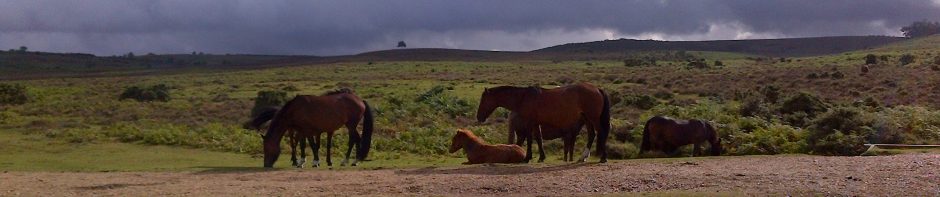
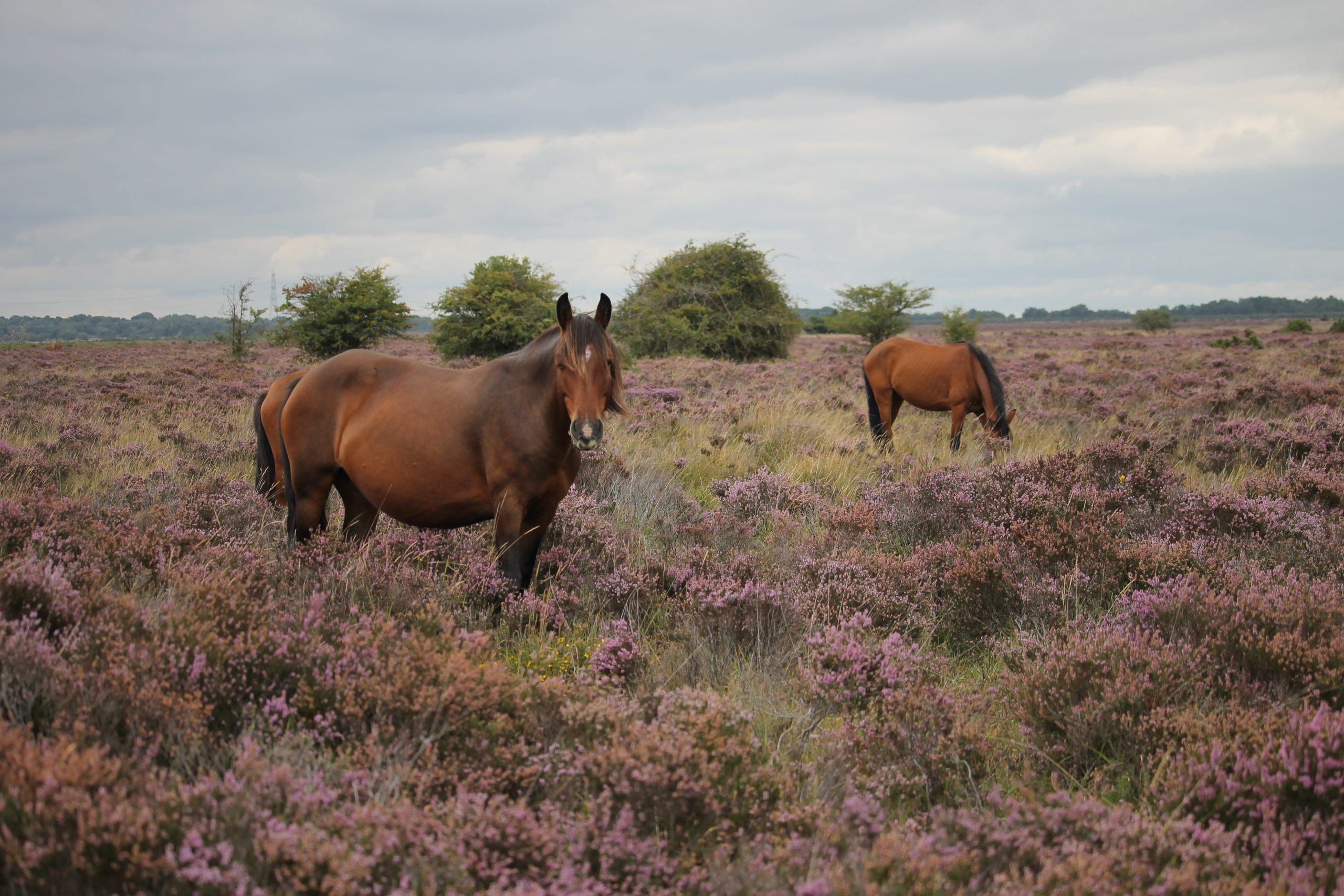
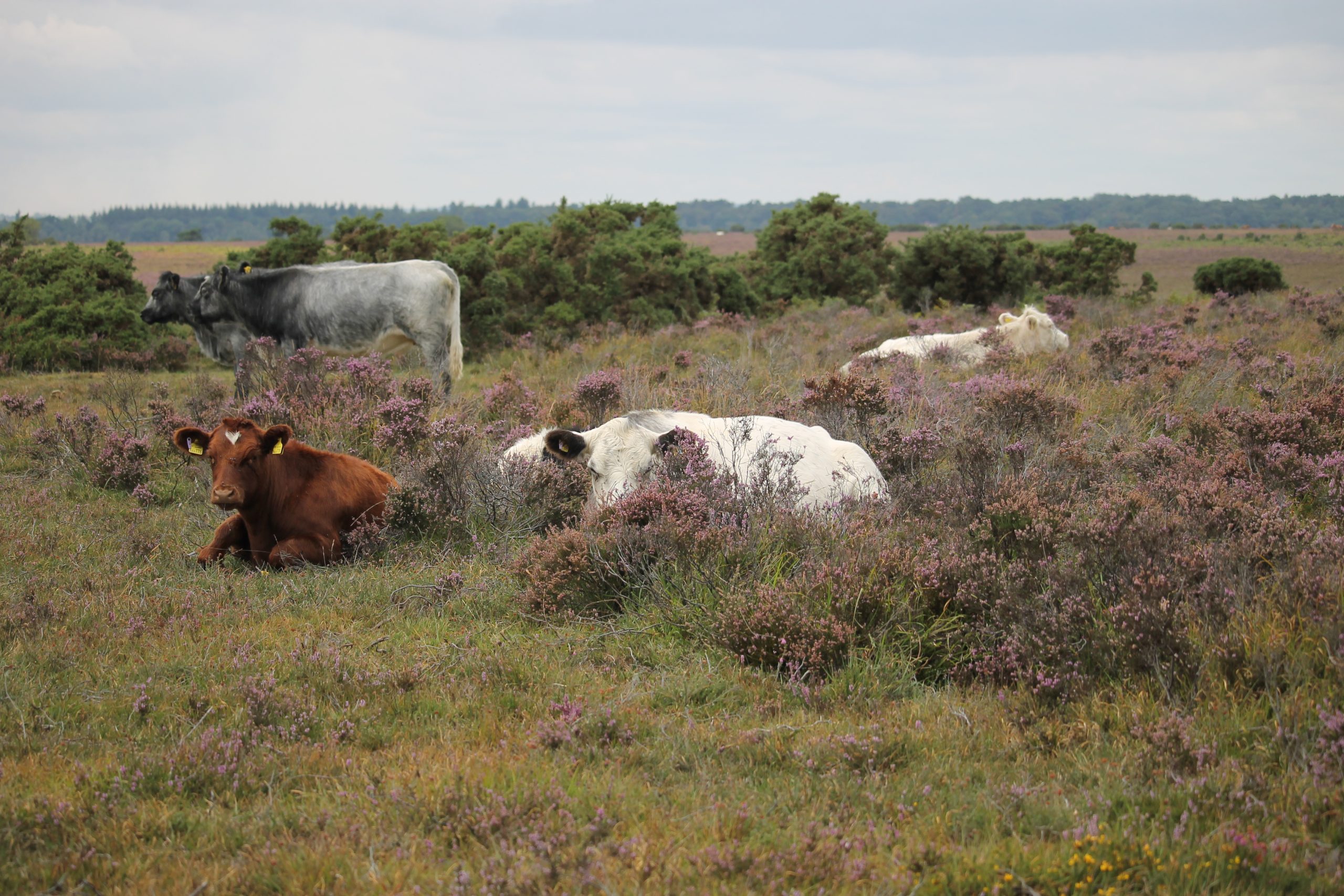
The New Forest is one of Europe’s most significant cultural landscapes, where centuries of traditional livestock grazing have shaped both its ecological character and biodiversity. Designated as a National Park, a Site of Special Scientific Interest (SSSI), a Special Area of Conservation (SAC), and a Special Protection Area (SPA), the New Forest supports internationally important habitats including lowland heath, acid grassland, ancient woodland, valley mires, and wetlands. Central to maintaining these habitats is the practice of commoning, whereby local people with ancient rights (commoners) graze livestock such as ponies, cattle, donkeys, and pigs, on the open forest. Grazing is not merely a traditional land use but a fundamental ecological process that sustains habitat diversity, ecosystem functioning, and landscape resilience.
Livestock grazing acts as a natural disturbance mechanism that prevents ecological succession. In the absence of grazing, open habitats gradually become dominated by coarse grasses, bracken, gorse, and eventually scrub and woodland, which reduces habitat heterogeneity and threatens species adapted to nutrient-poor, open environments. Grazing animals selectively consume vegetation, creating a mosaic of different sward heights and plant communities. Such structural diversity provides niches for numerous plant and animal species and is recognised as a key driver of biodiversity in semi-natural ecosystems.
The different grazing species contribute complementary ecological functions. New Forest ponies preferentially graze grasses and maintain short swards across heathlands and lawns. Cattle consume taller grasses and browse woody vegetation, helping suppress scrub encroachment and maintaining open woodland glades. During the autumn (dates are announced at Verderers Court), pigs are released under the traditional practice known as pannage, where they feed on fallen acorns and beech mast. This practice not only reduces the risk of acorn poisoning in ponies and cattle but also influences nutrient cycling and seed dispersal. Together, these livestock create a dynamic grazing system that cannot easily be replicated through mechanical vegetation management.
Plant biodiversity within the New Forest is closely linked to grazing intensity. Moderate grazing prevents competitive grasses from dominating while allowing less competitive species, including characteristic heathland plants such as heather (Calluna vulgaris), cross-leaved heath (Erica tetralix), tormentil (Potentilla erecta), and heath bedstraw (Galium saxatile), to persist. Grazing also maintains species-rich acid grasslands that support diverse flowering plants, lichens, mosses, and fungi. Many of these habitats are considered nationally or internationally scarce, making appropriate grazing management essential for their conservation.
Grazing benefits for invertebrates
The influence of grazing extends beyond vegetation to invertebrate communities. The structural variation created by livestock provides suitable habitat for pollinating insects, spiders, grasshoppers, and butterflies. Dung deposited by grazing animals supports specialised dung beetles and flies, which play important roles in nutrient recycling and provide food resources for birds and mammals. Many rare invertebrate species within the New Forest depend directly or indirectly on grazing management, demonstrating the importance of livestock in sustaining ecosystem complexity.
Bird populations also benefit from grazed landscapes. Open heathlands maintained by livestock provide breeding habitat for species such as the Dartford warbler (Curruca undata), woodlark (Lullula arborea), and European nightjar (Caprimulgus europaeus). Short vegetation improves foraging opportunities, while varied vegetation structure offers nesting and shelter sites. Similarly, amphibians and reptiles, including the smooth snake (Coronella austriaca) and sand lizard (Lacerta agilis), require the habitat mosaic maintained through continuous grazing.
Livestock grazing also contributes to ecosystem processes such as nutrient cycling and soil health. Through grazing and dung deposition, nutrients are redistributed across the landscape rather than accumulating within dense vegetation. Moderate trampling creates patches of bare ground that facilitate seed germination and increase plant diversity. Hoof disturbance also forms shallow depressions that temporarily retain water, creating microhabitats for aquatic invertebrates and amphibians. While excessive grazing can damage soils, the relatively low stocking densities associated with traditional commoning generally promote ecological resilience rather than degradation.
Grazing benefits for landscape
From a landscape perspective, grazing preserves the distinctive open character for which the New Forest is internationally recognised. Without livestock, rapid scrub invasion would alter visual landscapes, reduce accessibility, and diminish the cultural heritage associated with commoning. The continuation of grazing therefore supports both ecological conservation and the preservation of a living historic landscape where traditional land management remains economically and socially relevant.
Climate change presents new challenges for the New Forest, including altered rainfall patterns, increased temperatures, and the spread of invasive plant species. Grazing may enhance ecosystem resilience by maintaining diverse plant communities that are better able to adapt to environmental change. Diverse vegetation structures can improve water infiltration, reduce wildfire fuel loads by limiting excessive biomass accumulation, and support ecological recovery following climatic disturbances. Consequently, adaptive grazing management is increasingly recognised as an important component of conservation strategies under changing environmental conditions.
The long-term sustainability of the New Forest depends upon maintaining viable commoning communities. Declining numbers of active commoners, economic pressures on livestock farming, and increasing recreational use all threaten the continuation of traditional grazing systems. Conservation organisations increasingly recognise that protecting biodiversity requires supporting the social and economic systems that enable grazing to continue. Financial incentives, habitat management schemes, and public awareness initiatives all contribute to safeguarding this unique relationship between people, livestock, and landscape.
In conclusion, livestock grazing is a keystone ecological process that underpins the biodiversity, ecosystem functioning, and cultural identity of the New Forest. Through controlling vegetation succession, maintaining habitat mosaics, enhancing nutrient cycling, and supporting diverse plant and animal communities, grazing sustains one of Britain’s most valuable protected landscapes. Continued investment in traditional commoning practices and adaptive grazing management will remain essential to conserving the ecological integrity and heritage of the New Forest for future generations.


You must be logged in to post a comment.