New Forest: the arrival of ‘Doctor Green’

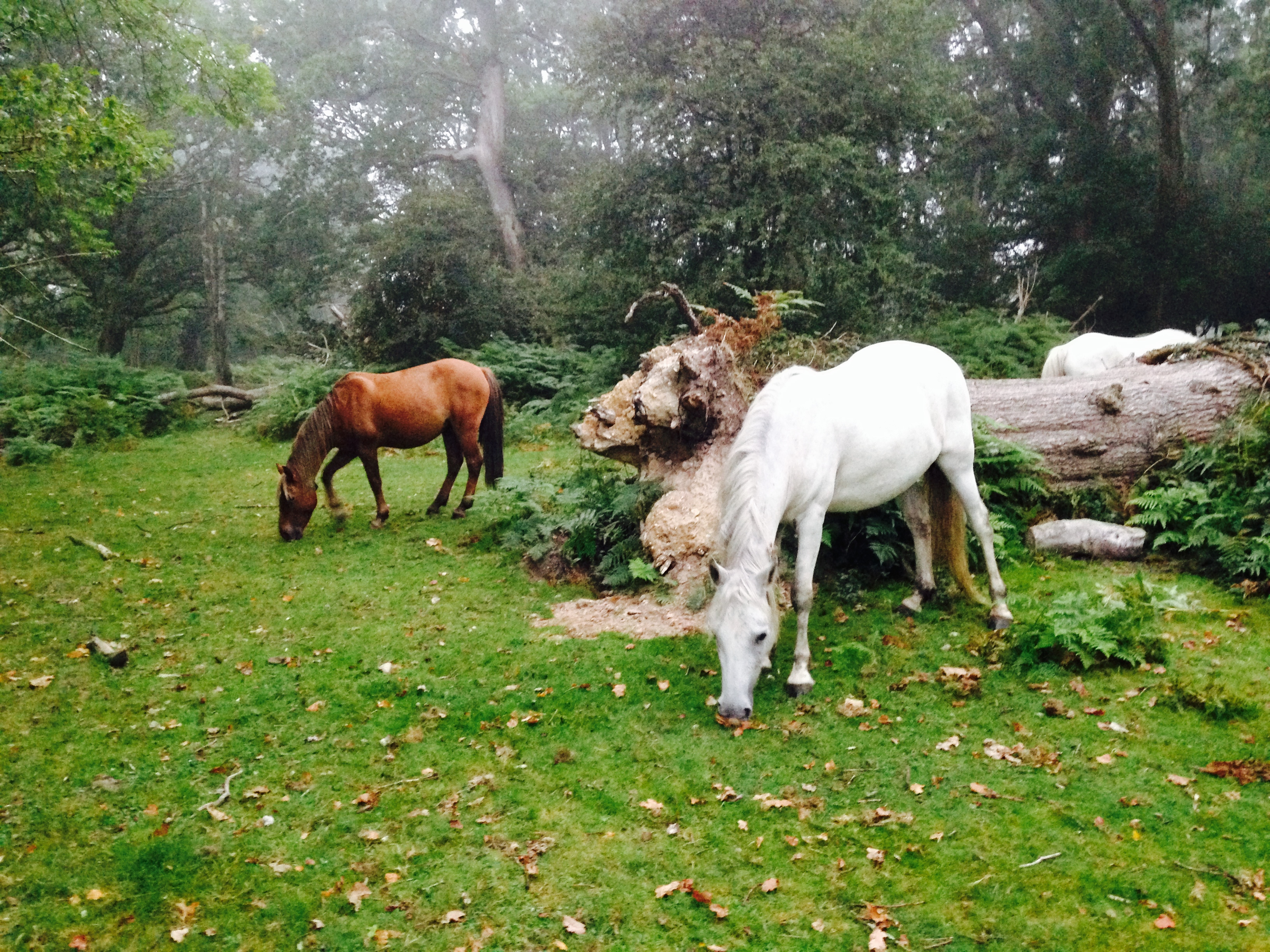
With the warmer weather and longer days upon us more visitors are coming to the New Forest to enjoy its scenic beauty, tranquil atmosphere, wildlife and, of course, the free-roaming ponies. The ponies, quite rightly, have been given the title of ‘Architects of the Forest’ because their grazing and browsing patterns (and even their dung) has a significant influence on the growth, absence and occurrence of many plant species. This subsequently affects the number and diversity of insects, birds and other animals that depend upon the habitats created by the New Forest ponies.

The arrival of ‘Doctor Green’
At this time of year many of the ponies will be looking rather thin, which is a result of living in the ‘wild’ over the winter months, and visitors should not be unduly concerned by their condition. There are mechanisms in place to ensure that ponies do not starve or that animals in really poor condition are given proper care. The oncoming flush of spring growth should ensure that the arrival of  ‘Doctor Green’ can provide a much-needed tonic to counteract the deprivations of their winter diet.

The importance of furze
During the cold season nature’s bounty is much declined. Generally speaking the grasses and other forms of forage lose their nutritional value from September to March each year. The ponies take advantage of the heather, holly and gorse bushes to maintain them through the winter. Gorse (Ulex europaeus), for example, is related to the domestic pea or bean family and, if conditions are right, will provide adequate nutrition to keep the ponies ticking over until the arrival of spring. The ponies carefully browse the tips of the prickly bushes to nibble on the tender shoots. The Old English name for gorse is ‘Furze’ and around the New Forest you will find many place names or businesses that have furze in the title, including the RHS Chelsea 2012 show garden GOLD award winners, Furzey Gardens. Proof of just how import this shrub is to the ecology and economy of the New Forest.

Body condition scores
At every Verderer’s Court, which is open to the public, the Senior Agister gives a report on the health and welfare of Forest livestock and also the work that his team are doing to ensure that the well being of the free-roaming animals is being maintained. The Agisters use the score system recommended by DEFRA, and endorsed by the National Equine Welfare Council, when determining the condition of a particular animal. The scores run from 5 (very fat) to 0 (very poor). Whilst it is probably not possible, or indeed favourable, to achieve a score of 5, a more realistic target is between 3-4. Animals with lower scores are dealt with at the discretion of the Agisters and variables, such as time of year, weather conditions and vegetation growth are influential factors in deciding the outcome of each case. However, anyone concerned by seeing an animal in particularly poor condition should contact the Verderers’ office in Lyndhurst as soon as possible, during normal opening hours, so that the animal can be inspected and assessed by an Agister.

Body condition scores recommened by DEFRA

Pony-conidtion-scores

The flush of spring grass will ensure 'Doctor Green' will act as a tonic.

The flush of spring grass will ensure ‘Doctor Green’ will act as a tonic.

To contact the Verderers’ office please call 02380 282052, during normal office hours. If you are phoning to report an animal in poor condition please include a detail description of the animal(s) concerned, and the precise location where they were seen, as vague descriptions and imprecise details of locations are almost impossible to follow up.

Posted in New Forest, New Forest pony | Tagged , , , , , , , , , , , , , , , , | Leave a comment

New Forest: ‘talking’ with wild ponies

The beauty of the New Forest is a stunning backdrop in which to practice commoning. The open heaths, ancient woodland pastures and valley mires have been shaped by the commoner’s free-roaming animals. The animals, in their turn, have been shaped by the landscape and are ideally suited to life in the wild. I love watching the ponies in their family herds, and I am beginning to recognise individuals and their character traits. They maintain a nonchalant, but watchful, attitude as I pass by them when out walking or riding on the Forest. Being around domesticated horses and feeling comfortable in their presence has given me an advantage in developing a certain degree of ‘horse sense’, which has been invaluable when dealing with their ‘wild’ counterparts.

Body language
Knowing the subtle (and sometimes downright obvious) clues given off by a horse’s body language goes a long way to developing a mutual understanding and respect. Our own body language too, including attitude, mood and volume can impact on a semi-feral pony and magnify the results disproportionately. Any sudden move or burst of volume on our part, even if it is to attempt a hug or give a cheer in praise, can be interpreted by them as the prelude to a predator attack! They will use all the instinct and learning that Nature and their mother’s gave them to get away from you, even if it means biting or kicking you.  The last thing you want is an animal that either has no respect or any confidence in you. It is imperative to get the language right.

Horse whisperers
Fortunately modern technology has made the dissemination of best practice in horsemanship freely available for those who want to learn about ‘talking’ with horses. There are endless tracts on the Internet and even videos on You Tube. I have read books written by people with incredible intuition with horses – the so-called ‘horse whisperers’. Monty Roberts, Ray Hunt and Buck Brannaman are the obvious mentions. But I am also aware of practitioners who work on a practical level with owners and their horses. Sarah Weston, who is also from the New Forest, is a good example and a true advocate for semi-feral and wild ponies. Her methods of socialising and befriending unhandled, poorly handled or manhandled ponies are, thankfully, being more widely adopted to the benefit of the ponies.

The Commoner’s pound
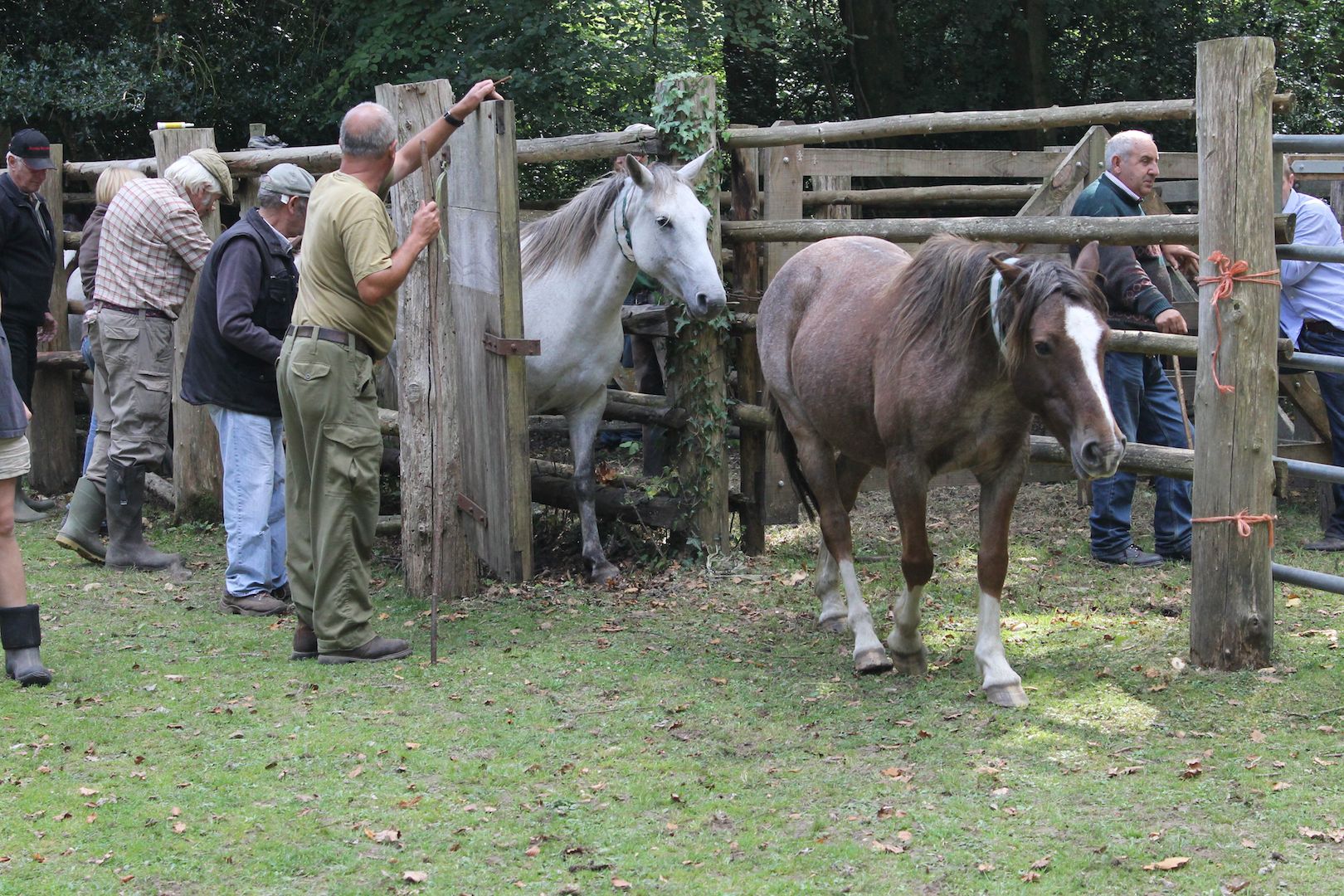
This week I brought my two mares in for worming. Some very experienced commoners helped me. These are young ponies that have had the minimum of human contact. I was impressed by the calm and quiet manner in which the ponies were handled. Generations of commoners have been handling wild ponies and they have passed on the knowledge and practice of how to get the best results. We herded them into a small compound, which had a chute at the end. The whole contraption looked like something you would see in a cowboy film. It is of sturdy wooden construction high enough to prevent ponies trying to climb over the top of it but low enough for the commoners to be able to attend to the ponies from above. There are many of these ‘pounds’ dotted around the Forest. They are used regularly by the commoners in times of need like this and also during the annual drifts.

Quickly, quietly and calmly
When the mares were in the chute thick poles were placed behind them and in front of them to keep the ponies in one place. One of the commoners quietly and nimbly climbed up the outside of the chute and very gently stroked the bay filly lifting her head ever so slightly. Before the little creature had time to resist she’d been wormed. Using a paste squirted by syringe into her mouth she will be protected against internal parasites until the next wormer is due. The process was repeated with the chestnut filly. When we had finished the poles were quietly removed, the chute door was opened and the ponies were released. There was no mad scramble to get out. No wild galloping away. There was so little to remark about the whole incident that, hopefully, their experience of gentle handling done quickly, quietly and calmly will mean that they will not be afraid to come in next time we have to catch them up again.

Timber compounds are used to hold the ponies whilst they are being treated.

Timber compounds are used to hold the ponies whilst they are being treated.

The 'wild' ponies of the New Forest receive veterinary medicine when necessary.

The ‘wild’ ponies of the New Forest receive veterinary medicine when necessary.

For more information about Sarah Weston visit: http://www.logicalhorsemanship.co.uk

Posted in New Forest, New Forest Commoner, New Forest pony | Tagged , , , , , , , , , , | Leave a comment

New Forest: interdependence of commoners, animals and nature.

The practice of commoning, which has existed uninterrupted for over a thousand years, is still the dominant influence over the Forest’s ecology, economy and community.

The practice of commoning, which has existed uninterrupted for over a thousand years, is still the dominant influence over the Forest’s ecology, economy and community.

Becoming a practising commoner has opened my eyes to a new ways of experiencing the countryside and a traditional pastoral economy. Learning about the interdependence of the free-roaming animals, the commoning system and the flora and fauna of the New Forest has meant that my journey of discovery is endlessly fascinating and completely absorbing. Keeping and managing ‘wild’ ponies requires a much higher dependence on Mother Nature than any form of animal husbandry I have ever known. Any intervention on my part, in the care and maintenance of my ponies, is entirely supplemental. They will never wear rugs, be kept in a stable, or wear horseshoes. Their physiological adaptations to the environment, after generations of living in the wild; their knowledge of where to find food, water and shelter, which was passed on to them from their mothers and their mothers before them; and, their incredible versatility and intelligence means that they can survive happily roaming free on the New Forest.

Following ‘wild’ horses
My role, as their owner, is limited to checking regularly on their well being and working with the Agisters and other commoners to ensure the welfare of all the free-roaming Forest ponies and other commoning stock. The relationship I have with my mares does not involve riding them or even petting them because it is mostly conducted from a distance and generally on their terms. However, the enjoyment I get from them is learning about the character and habits of ‘wild’ horses, such as trying to identify the herd heirarchy, their favourite haunts, or just following their progress and simply being in their presence. Going out to find them in the ‘wilderness’ of the Forest is always an adventure and an opportunity to learn more about this fascinating landscape.

Commoning activities and international importance
The system of commoning, which involves turning out ponies, cattle, donkeys and pigs to roam freely, is a historic practice and one that plays a vital role in keeping the open habitats free of scrub and controlling the more competitive species, such as bracken and purple moor-grass. It is commoning that maintains the richness and variety of heathland and wood pasture habitats. Other commoning activities, such as heath burning and bracken harvesting, ensures the diversity of plant and animal species on the New Forest. The complex mosaic of habitats that comprise the New Forest SSSI includes the richest moss and lichen flora in lowland Europe, unusual fungi, scarce flowering plants and an abundance of invertebrates that are dependant upon the ancient trees and woodland. The New Forest boasts what is believed to be the highest concentration of ancient trees in western Europe. It is also home to many species of mammals and rare birds, including the Dartford warbler, woodcock and nightjar. This diversity of habitat, created by the commoning system, has made the New Forest internationally important for many species of plants, animals and people.

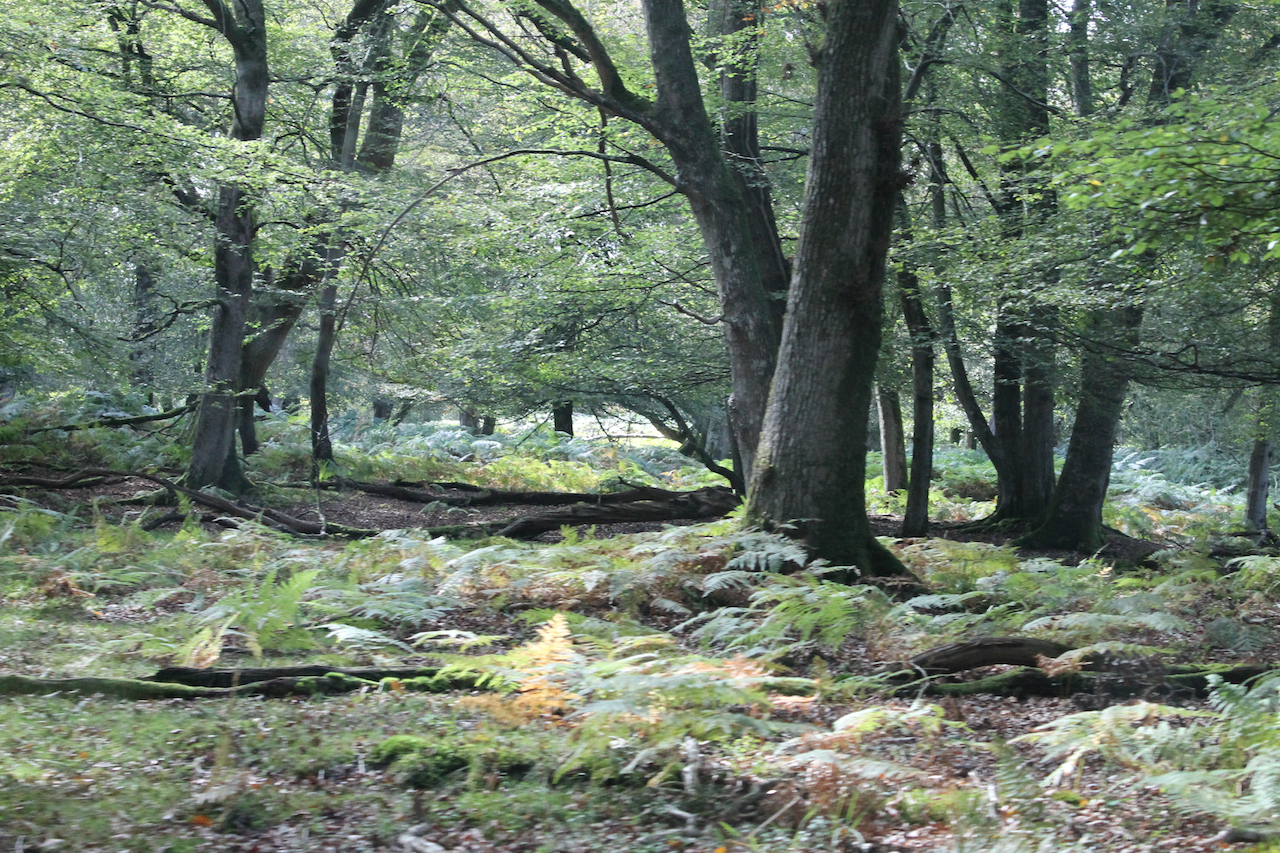
The New Forest boasts what is believed to be the highest concentration of ancient trees in Western Europe.

The New Forest boasts what is believed to be the highest concentration of ancient trees in Western Europe.

Posted in New Forest, New Forest Commoner, New Forest pony | Tagged , , , , , , , , , , , , , , , , , , , , | Leave a comment

Agisters of the New Forest

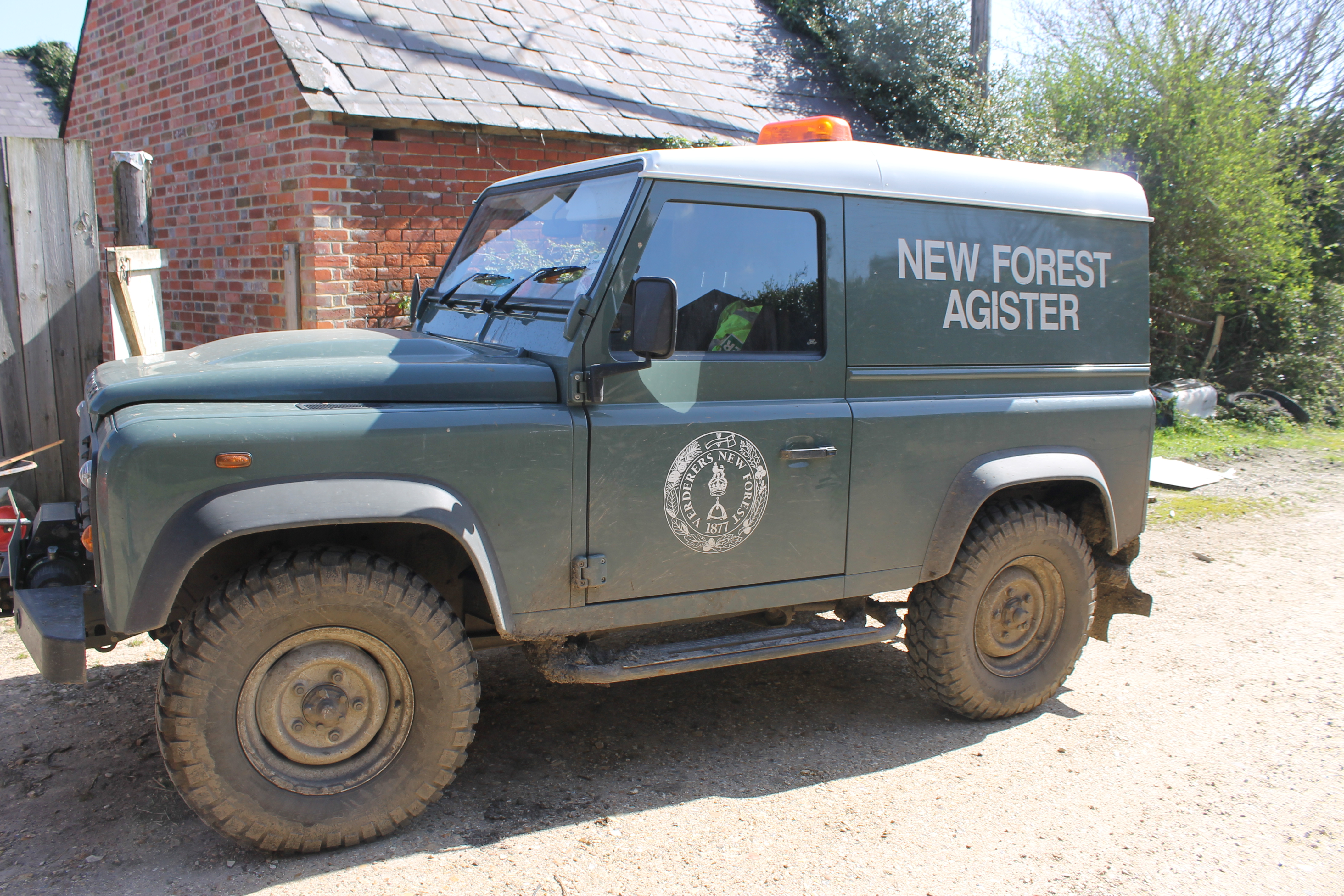
The Agisiter ensures welfare standards of the free-roaming animals are maintained.

The Agisiter ensures welfare standards of the free-roaming animals are maintained.

The practise and management of commoning on the New Forest has, since 1698, been devised and protected by Acts of Parliament. However, the history of commoning in the area predates even the creation of the ‘Nova Foresta’ by William the Conqueror in 1079. It is an ancient way of life that has been practised, usually by generations of the same families, for centuries and even has its own customs, traditions and officials, who are responsible for its management.

Atlas of Common Rights
The Verderers Court is the legal entity that administers the commoning system and regulates how the Open Forest is managed. It is part of the modern judiciary, having the status of a Magistrates Court, and is, arguably, the oldest court in the land. The Clerk of the Verderers, at Queen’s House, Lyndhurst, keeps the Atlas of Common Rights, sixteen volumes of 1/2500 Ordnance Survey maps that show the rights attached to land or property in and around the Forest. It was to these mighty tomes that I had to rely upon to confirm my ‘Right of Pasture’ on the New Forest, when applying to become a practising commoner. Once my rights were confirmed I was assigned an Agister. Agisters are employed full-time by the Verderers to assist in the day-to-day management of the commoner’s stock. It is the Senior Agister who opens the proceedings at the Verderers Court in the traditional manner with cries of “Oyez, oyez, oyez. All manner of persons who have any presentment to make or matter or thing to do at this Court of Verderers, let them come forward and they shall be heard. God save the Queen!” 

Agisters or marksmen
Each Agister is responsible for one of four districts in the New Forest, which they will know intimately. Their knowledge of the working practices and landscape of the New Forest is invaluable for novices like me, as I will very much rely on their support. They have a good network of local contacts, often being recruited from within the ranks of practising commoners, can recognise individual animals from their district and may even know their owners. The Agisters are exceptional horsemen and spend time in the saddle patrolling their areas. During the autumn drifts, which is a sort of census where the free-roaming ponies are rounded-up and checked, the Agisters will brand young stock with their owners mark and collect the grazing fees. The Agister will then cut the tails of the ponies in a way that shows the owner has paid the grazing fee. The distinctive tail-cut also indicates the district that owner comes from, rather than the district the pony was found in. It was this practice that also earned Agisters the name of ‘marksman’ because they marked the ponies and cattle.

No danger money|
The working conditions of the Agisters are tough, as they are out in all weathers and will answer emergency call-outs 24 hours a day, such as when a commoner’s animal is involved in a road traffic accident. They have even been known to come out on Christmas Day. They organise the annual drifts on the Forest, which are an important part of the commoning year. It is their control of the speed and direction of the round-ups, their knowledge of the terrain and their anticipation of the ponies reactions that contribute to a successful outcome and more ponies gathered in for the census. In times past, when the stallions ran with mares all year round, the Agisters would even be called upon to break up fights between warring males! All that, and without danger money either!


During the drifts ponies are checked for health.

During the drifts ponies are checked for health.


Posted in New Forest, New Forest pony, New Forest Pony Drift | Tagged , , , , , , , , , , , , , , , | Leave a comment

New Forest: The dawn chorus and ‘off-piste’ visitors

Much of the New Forest is a Special Protection Area (SPA), classified under the European Wild Birds Directive.

Much of the New Forest is a Special Protection Area (SPA), classified under the European Wild Birds Directive.

I’ve been taking advantage of the lighter mornings recently (March 2014) and have been getting out onto the Forest just as the sun is beginning to rise. My early forays have enabled me to experience the melodic repertoire of birdsong that is the dawn chorus. Its volume and intricacy is made all the more discernable by the lack of background noise from other human activity and provides a musical soundtrack to my walks as I navigate the misty footpaths. It is a definite indication that spring is here.

Breeding season
The reason for the ‘dawn chorus’ of course is the breeding season when the songbirds are busy establishing territories and advertising for mates. I am beginning to be able to identify their calls and, in the case of the greater spotted woodpecker, the echoes from their displays. As well as providing habitat for songbirds the New Forest is also a breeding site for many species of ground nesting birds. The UK has lost 70% of its heathland habitat making the New Forest particularly important breeding site for heathland birds such as the rare nightjar, woodlark and Dartford warbler. Much of the New Forest is a Special Protection Area (SPA), classified under the European Wild Birds Directive, which affords them enhanced protection.

Breeding and nesting birds
The survival of commoning and the associated grazing system of the New Forest, which was established nearly 1000 years ago, has been one of the most important factors in maintaining its nationally and internationally important nature and landscape conservation value. However, whilst the New Forest offers a suitable habitat there are many other factors that influence the success of breeding birds, including finding an adequate food supply, favourable weather conditions and a lack of predation. We, as visitors to this unique landscape, can also help to increase their chances of breeding success by minimizing our disturbance to them when we go out onto the Forest. The ground nesting birds particularly need our support from March through to July, where any disturbance to their breeding areas or nest sites could have disastrous consequences for their eggs or chicks. Always stay on the designated cycle tracks or footpaths, rather than wandering ‘off-piste’, and keep dogs under control.

Off piste visitors
The New Forest has 13.5 million day trip visitors each year (excluding all other types of visitor). It doesn’t take a great deal of imagination to realise the effects that this many people walking or cycling about the Forest, away from the designated footpaths or cycle tracks, will have on the wildlife. In order to sustain its natural landscape and protect the species that depend upon its myriad habitats it is necessary for us to limit any negative impact we have on this unique environment. This we can do by curbing our enthusiasm for exploring the ‘wilderness’ of the New Forest ‘off piste’ and convincing others to do the same.                                                                                                 Play: New Forest dawn chorus

The New Forest heathland is vitally important to ground-nesting birds.

The New Forest heathland is vitally important to ground-nesting birds.

Posted in New Forest, New Forest flora & fauna | Tagged , , , , , , , , , , , , , | Leave a comment

Famous New Forest inhabitants

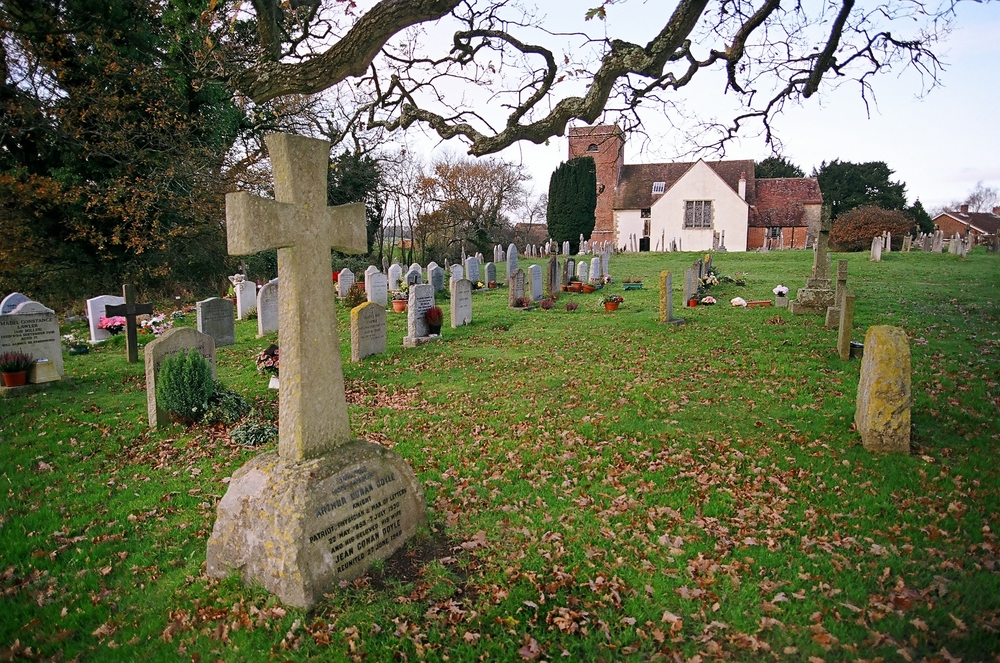
Sir Arthur Conan Doyle, creator of Sherlock Holmes, is buried in Minstead churchyard, near Lyndhurst.

Sir Arthur Conan Doyle, creator of Sherlock Holmes, is buried in Minstead churchyard, near Lyndhurst.

I recently wrote an article about ‘celebrity’ trees on the New Forest and have since received requests for information about other famed inhabitants. An obvious candidate is King William I, otherwise known as William the Conqueror, who established the Nova Foresta in 1079 as a royal hunting ground. Two of his sons, Richard, Duke of Bernay (died abt. 1081), and William II (died 1100), known as Rufus the Red, were both killed in hunting accidents on the New Forest. The Rufus Stone, which marks an approximate location of William II’s demise, is found in Canterton Glen near Minstead. The memorial mentions; ‘King William The Second, surnamed Rufus being slain, as before related, was laid in a cart, belonging to one Purkis, and drawn from hence, to Winchester, and buried in the Cathedral Church of that city.” It was left to a commoner to carry the king’s body to its final resting place because the royal entourage had fled the scene.  History has made Purkis famous. He still has descendants living and working in the Forest nearly a thousand years later.

Famous artists and writers
The New Forest has inspired writers, poets and artists. Sir Arthur Conan Doyle (1869-1930), creator of the crime fiction character Sherlock Holmes, is buried in Minstead churchyard, near Lyndhurst. He bought a house in the village late in his life to where he would escape and unwind. He even set parts of his novel ‘The White Company’ in the New Forest. The inspiration for Lewis Carroll’s ‘Alice in Wonderland’ is generally understood to be one Alice Liddell (1852-1934). She lived at Cuffnells, in Lyndhurst (now demolished) and is buried in Lyndhurst churchyard. Fans of Alice in Wonderland can visit the New Forest Centre, Lyndhurst, which exhibits a mirror from Alice Liddell’s home and see themselves through her ‘looking-glass’.  Hymn-writer Henry Lyte (1793-1847) wrote ‘Praise my soul, the King of Heaven’ and ‘Abide with me’ while he was curate at the Church of St Thomas in Lymington.

War heroes
The New Forest has even seen its fair share of war heroes. Florence Nightingale lived in Embley Park, Wellow, from 1825 until her death in 1910. She helped draw up nursing regulations for the Royal Victoria Military Hospital in Netley, now a country park, and is buried in St Margaret’s churchyard at East Wellow. Resting in one of the windows was a Scutari Cross, made of bullets from the Crimea, and beside it a framed text that was hanging in Florence Nightingale’s bedroom when she died. (The cross was stolen in 1991 and is replaced by a fiberglass replica.) T. E. Lawrence or ‘Lawrence of Arabia’ as he was better known, came to the New Forest to find anonymity as Aircraftsman Shaw and was based at Calshot from 1929 to 1931, where one of the buildings is named after him and bears a small commemorative plaque.

Famous locals
‘Old Tame’, otherwise known as Henry Tame, lived in Bolderwood and was by all accounts a bit of a character. He was as eccentric as he was long-lived! When he reached 100 years old he decided to have some new boots made but complained to the bootmaker that they were not study enough and would not last! He died in 1900 at the age of 103 years old and is buried in the Baptist churchyard, in Lyndhurst. Arguably the most famous inhabitant of the New Forest is Harry ‘Brusher’ Mills (1840-1905). He was a labourer until he reached his 40’s when he began to make his living catching snakes, which he sold to the London Zoo as food for their birds of prey. He is reputed to have caught tens of thousands of grass snakes and adders using either a forked stick or just his bare hands. He is buried in St Nicholas churchyard, Brockenhurst. The Railway Inn, where Brusher would often be seen enjoying “two or three pennyworths of rum” was renamed The Snakecatcher in his honour.

The real celebrities of the New Forest
The New Forest is a favourite holiday destination for many modern day celebrities and Hollywood A-Listers, and some have even taken up residence in the area. Obviously if you want to know who the real celebrities of the New Forest are you need look no further than the world famous New Forest ponies. Their presence draws thousands of visitors to the area each year. This native, rare breed pony has roamed freely in the area since before the time of the Norman Conquest and has shaped the ecology, history, economy and social fabric of the Forest into modern times.

Traditional management practices, particularly commoning, have conserved the ecological diversity of the Forest.

The New Forest ponies are the real celebrities of the area – their presence draws thousands of visitors to the area each year.

Posted in New Forest, New Forest Commoner, New Forest pony | Tagged , , , , , , , , , , , , , , , , , , , | Leave a comment

New Forest: Kindness can kill ponies born to be free

With spring definitely beginning to establish its influence on the landscape it is getting near the time of year when my recently purchased New Forest ponies will be going back out on the Open Forest to roam free. My two mares have stayed on back-up grazing land over the winter and have had regular rations of meadow hay to supplement their diet. The short winter days and bad weather make trips to the Forest to check on stock far more difficult. So this arrangement, whilst more labour intensive, is the best practical solution. The back-up land on my holding is essential to being a practicing commoner. There are times when it may be necessary for me to remove my animals from the Forest and having additional grazing land to keep the ponies is vitally important.

Levancy and couchancy
The custom of ‘levancy’ and ‘couchancy’, which literally means that the animals can ‘get up’ and ‘lie down’ on the land, traditionally indicated the number of animals the back-up land was able to support and thus how many were able to go out on the Open Forest. During much of the past commoner’s animals were not turned out during the period known as ‘winter heyning’.  This meant that commoners could only keep as many animals as they could maintain on their holding during the winter with the feed or hay grown on the holding during the summer (when the animals were out on the Forest). This was a traditional commoning practice and today’s commoners seem to use the same common sense approach when deciding how many animals they want to keep. By modern standards, for example, grazing land for horses/ponies is calculated at two acres for the first horse or pony and one acre for every additional horse or pony thereafter. (It has to be remembered, however, that these calculations are based on horses or ponies staying on the same pasture all year round.) If I wanted to keep more ponies than I believe my current holding can maintain I would have to search for more back-up land. Unfortunately, as many other commoners will tell you, that is easier said than done.

Born free
Before being turned out onto the Open Forest I need to start handling my ponies, to get them used to me. The Agisters, who are employed by the Verderers of the New Forest to assist in the management of Commoners’ stock, prefer the ponies to be halter-broken. It is much easier to catch up a pony if it is accustomed to being haltered and led about. But the trick is to get them familiar to being handled by me without completely taming them. These are ponies that are intended to be free-roaming and living a semi-feral life. I want to be able to approach them and catch them, if necessary, but I don’t really want anyone else to do the same. I don’t want my ponies getting too tame and coming into conflict with visitors to the Forest or accepting food from them.

Kindness can kill
One of the significant contributory factors to the high number of road deaths of ponies on the New Forest are the visitors who feed them in the car parks, or who throw food from their car windows when travelling along the roads. This brings the ponies into close proximity with cars and other vehicular traffic. The ponies do not learn to fear road traffic; unfortunately they learn quite the opposite. These well meaning people do not realise that their kindness can kill and that they are encouraging the ponies onto the roads, into traffic and harms way. Many people justify their actions by claiming that the animal looked hungry, underfed or thin. The commoners check their stock regularly and the Agisters monitor the welfare of the animals closely. However it is difficult to reassure people that the physique of a New Forest pony is natural when they are used to seeing glossy or overweight riding ponies.

Learning curve
For me this is all part of the learning curve that I am on. I am fortunate to be supported by a network of other commoners who are ‘old hands’, and can be relied upon to give sage advice and practical assistance. The New Forest Agisters are experts at dealing with ‘wild’ ponies and ensure that the best possible welfare standards for the commoners’ animals are maintained. This system of cooperation and support is enabling me to gain in confidence as well as knowledge.

The New Forest pony is perfectly adapted to a semi-feral existence.

The New Forest pony is perfectly adapted to a semi-feral existence.

The New Forest ponies roam freely across their territories.

The New Forest ponies roam freely across their territories.

NB: If you find a sick, injured or dead pony, cow, donkey, pig or sheep (other than one involved in a RTA), call the Verderers’ Office: 02380 282052 during normal office hours, or 02380 283141 at other times.

For sick or injured deer, ring the Forestry Commission on 02380 283141.

Posted in New Forest, New Forest Commoner, New Forest pony | Tagged , , , , , , , , , , , , , , , | Leave a comment

New Forest: signs of spring

The recent day of sunshine was a welcome relief from the incessant wind and rain of late. I was able to get out on my holding for a good look around in the daylight and check boundary fences and trees for any damage caused by the elements. The snowdrops were out in force in the withy patch. There are signs too of crocuses and primroses in the hedgerows, their presence announcing the coming arrival of spring. In the air too I could hear the resident pair of buzzards calling to one another. The birds on the garden feeders are beginning to vary more, with visits from blue tits, goldfinches, nuthatches and chaffinches. Even the bird song is becoming more noticeable adding a welcome cheer to the early mornings.

Muddy paddocks and hungry ponies
The paddocks, however, resemble the Somme in places but the ponies are still looking in good condition and don’t seem to be suffering unduly from the damp conditions. They stand with their backs to the wind with their tails fanned out around their legs. Their rain-soaked winter coats are soon dried off whenever there is a breeze. I am putting out hay for them to eat and they begin to congregate when they see me arrive home from work. They always seem hungry! The sound of the car driving into the barn acts like their dinner bell. I am grateful for the lighter evenings as it means that I can check them over without having to use torchlight and get a better overall impression of their health and demeanour.

Pony retirement
The lighter mornings too are also signalling the time when I can begin to go back out on the Forest before going to work. In the next few weeks I’ll start bringing my riding-pony back into work and build up his muscles (and mine) before we start going for longer hacks out on the Open Forest. He’s the most marvellous character, being totally trustworthy and reliable. I’ve been putting off replacing him, because he is such a good riding pony, but his advancing age means that this year I will probably have to retire him and find a younger New Forest pony to bring on. I have ambitions of attending the autumn drifts on horseback but, although I know he would dearly love to go, he would not be up to the rigours of the chase. So this year he and I will enjoy our usual adventures, at a sedate pace, with the added interest of seeking out and checking on my free-roaming mares.

The breeding season
My two mares, who are sisters, are due to go out on the Forest in the next few weeks and I am excited by the prospect. The little bay filly is too young to breed at present but the chestnut mare will hopefully breed successfully this year. New Forest ponies have a gestation period of eleven months, and her foal will be born in the spring next year. The New Forest stallions that roam on the Open Forest are selected by a panel of judges from the Verderers of the New Forest, the New Forest Pony Breeding & Cattle Society, and the Commoners Defence Association. The stallions that make the grade are turned out for a minimum of eight weeks from May and have a very busy two months! They are selected on the basis of physical confirmation and temperament. It is this process that ensures the New Forest pony remains a genuine all-rounder and also keeps many of the ancient bloodlines going. If, for any reason, I don’t want the services of the free-roaming stallion I can bring the mare home during the period the stallions are at large on the Forest, and return her afterwards when they are gone.

Good things to come
This year will be my first full year as a Commoner of the New Forest and I am looking forward to it with great anticipation. My diary is filling up with the dates of shows, sales and meetings. The clocks go forward next month and the days will become much longer. Who knows we might even get a summer! For now, I am enjoying the signs of spring and the anticipation of good things to come.

Mares and foals on the Open Forest.

Mares and foals on the Open Forest.

Wild ponies give birth naturally, without any human intervention.

Wild ponies give birth naturally, without any human intervention.

Photos courtesy of Paul Chambers: http://www.paulchambersphotography.com/  


Posted in New Forest, New Forest Commoner, New Forest pony | Tagged , , , , , , , , , , , , , , , , , | Leave a comment

New Forest Wildlife Forum

Living ‘wild’ means that ponies cannot be managed in the same way as domesticated horses and ponies but they are managed nonetheless.

There are plenty of ways that visitors and residents can help protect and preserve the New Forest.

I recently attended the New Forest Wildlife Forum in Lyndhurst (February 2014) where an impressive array of scientists, academics, and conservationists gave interesting and informative presentations on their work. There were representatives from the National Trust, the Freshwater Habitats Trust, the Game & Wildlife Conservation Trust, the New Forest Woodcock Group and the Forestry Commission to name but a few. The event, organised by the New Forest National Park Authority, was very well attended and delegates were treated to updates on a range of subjects including habitat restoration projects, improvements to the local catchments, species surveys, and environmental monitoring.

High-tech and low-tech
The delegates were from local interest groups, government agencies, conservation charities and, of course, me. It was heartening to see so many volunteers of all ages, backgrounds and abilities, being actively engaged by the organisations presenting their work. School children, Scout and Guide groups, University students, local businesses and retired people were among many of the different groups learning about or working to preserve the biodiversity of the New Forest. It was interesting to see the many educational and research techniques involved. There was the distinctly low-tech of clearing invasive plant species using saws and axes, to the high-tech of using radio-tracking devices on target species. The item that particularly caught my attention was a mobile phone app that records background noise and will tell you if you are in the vicinity of the New Forest Cicada*.

Protecting the Forest for the future
It was evident that if residents, visitors and other Forest users want to engage more with the natural environment of the New Forest there are many opportunities and different ways of getting involved. The participation of visitors and local people in the research and conservation of its ecology, the preservation and restoration of its natural habitats, and the monitoring and data mapping of its ecosystems is seen as fundamental to promoting the common interests and deeper understanding that will protect the New Forest for the future.

Consensus, cooperation and commoning
There seemed to be a genuine consensus among the organisations attending the Forum about being more ‘joined-up’, sharing data and best practice, in order to benefit the Forest and its environment. Of course large-scale cooperation is not a new concept to the New Forest as the Commoners have practiced the sharing of resources for over a thousand years. Many observers have remarked upon the ability of Commoners to provide mutual support for one another, share knowledge and experience through pony drifts, auctions, markets and other meetings. These gatherings are the Commoners own equivalent of a forum!

Photo-bombed!
The general acceptance of the Commoners’ free-roaming animals as being the ‘architects’ of the Forest meant that none of the speakers at the Wildlife Forum referred in any depth, if at all, to the practice of commoning. However, it did amuse me that in many of the photographs used during the various presentations the subjects contained in the images were being ‘photo-bombed’ by the free-roaming ponies and cattle! Image after image, used in illustration by the particular speaker, for example people collecting water samples from ponds, using radio-tracking devices, practicing rural skills such as hedge laying, or clearing non-native plant species, seemed to have ponies somewhere in the frame. This photo-bombing served as a visual reminder of the interdependent relationship between the Forest landscape, the free-roaming animals and the practice of commoning.

Commoning is a very sociable enterprise, wherever they get together.

Commoning is a very sociable enterprise that relies upon mutual support and assistance.

New Forest Cicada*: This rare insect is in real danger of becoming extinct and it has not been sighted in over a decade. Because its distinctive call is out of the range of most human adult’s hearing the app was developed to assist with identification. To download the Cicada app please visit: http://newforestcicada.info/app/

Female Cicadetta montana (the species that lives in the New Forest) found last summer in Slovenia.

Female Cicadetta montana (the species that lives in the New Forest) found last summer in Slovenia.

Pictured: female specimen of Cicadetta montana (the species that lives in the New Forest), found and photographed last summer in Slovenia. It’s about 3 weeks old (of her adult life). For more information about the New Forest Cicada Project please visit: http://newforestcicada.info.


Posted in New Forest, New Forest Commoner, New Forest pony | Tagged , , , , , , , , , , , , , , , , , , , , , , , , , , , | Leave a comment

New Forest: traffic, animals and road accidents

The 'wild' ponies use the New Forest road system at all times of the year.

The free-roaming ponies use the New Forest road system at all times of the year.

For me, one of the biggest attractions in commoning is learning about and practicing an ancient pastoral activity that involves keeping commonable livestock (ponies, cattle, donkeys, or pigs during Pannage), which are so important to the ecology of New Forest.  There is a recognised interdependence between the Forest landscape, the free-roaming animals and the commoners. Indeed, the commoning way of life is endorsed in the results of opinion polls asking residents and visitors about the special qualities of the New Forest. These surveys always list the free-roaming animals, particularly the iconic ponies, as making a particular contribution to the local economy and the landscape.

Smallest National Park
Although the smallest National Park in the country, the New Forest is located in one of the most densely populated and urbanised of areas. The Forest is a favourite destination for people wanting to enjoy recreational or leisure activities in a wilderness-setting, and the roads that transect the Forest are also used daily by residents, commuters, and goods vehicles.  It is unsurprising, therefore, that with such large numbers of vehicles travelling in and around the Forest that some animals are involved in road traffic collisions.  The recent (February, 2014)  announcement, by the Verderers of the New Forest, of an increase in accidents in 2013 from the previous year was incredibly disappointing. In 2013, 72 free-roaming animals were killed and 32 were injured; whereas in 2012, 64 were killed and 18 were injured. [These casualty figures do not include deer, which are classified as wildlife and come under the jurisdiction of the Forestry Commission.] This seems to be an alarming escalation in what is generally a downward overall trend; (i.e., when comparing numbers of animals turned-out to the number of recorded incidents since 2005).

Don’t feed the ponies
Many road traffic incidents involving the commoners’ free-roaming animals occur at night; three out of four incidents involve motorists who live within a few miles of the Forest; and, the animal most likely to be hit is a pony. There are up to 5,500 ponies(1) roaming throughout the New Forest and they will make use of the Forest roads when wandering their territories. Visitors to the New Forest are asked not to feed the ponies, as this encourages them to hang around the car parks and brings them into closer contact with vehicular traffic. Food thrown onto the verges by passing motorists also encourages ponies and cattle onto the roads. During periods of frost and ice the tactics employed by the authorities to keep the road-user safe on the Forest roads can result in peril for the ponies. When the gritting lorries are out, ponies can often be seen following behind on the newly treated roads using them as an extended salt lick. The trail of minerals lures them directly into the path of oncoming traffic, as the ponies seek the convenient nutrients.

Hit and run
Anyone using the Forest roads should anticipate an animal walking or running out in front of them. Even if the pony has seen you approaching it may still step out in front of you, particularly if its herd-mates are on the opposite side of the road, so drivers need to proceed with particular care. Sadly, many accidents involving free-roaming animals are not reported by the motorist involved. These ‘hit and runs’(2) mean that the animal may be left dying, in pain or distress for many hours until its predicament is discovered. The commoners I talk to seem to accept that between 1-2% of all stock turned out on the New Forest each year will be involved in some sort of road traffic incident. I look at my recently purchased ponies and I sincerely hope that they will not become a statistic in the Road Traffic Reports read out at the Verderer’s Court. I will do my all to keep them happy and healthy but their young lives will also be dependant on the care and attention of motorists using the Forest roads. So the message is ‘Please drive carefully in the New Forest. Ponies don’t dent – they die.’

The ponies on the New Forest use the roads to travel their territories.

The ponies on the New Forest use the roads to travel their territories.

(1) The numbers of ponies fluctuates, as many are taken off the Forest during the winter months.

(2) There is a £1000 reward for information leading to a successful prosecution of drivers convicted of a HIT & RUN involving a Forest animal.

NB: If you find a sick, injured or dead pony, cow, donkey, pig or sheep (other than one involved in a RTA), call the Verderers’ Office: 02380 282052 during normal office hours, or 02380 283141 at other times.

For sick or injured deer, ring the Forestry Commission on 02380 283141.

Posted in New Forest, New Forest Commoner, New Forest pony | Tagged , , , , , , , , , , , , , | Leave a comment