New Forest: poachers who steal more than game

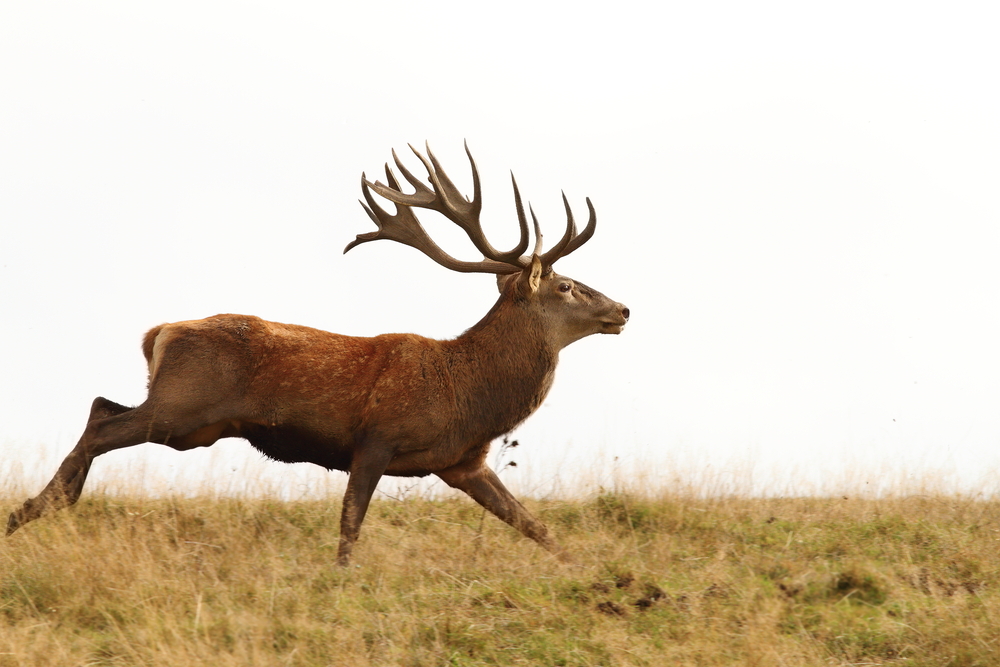
The red deer is Britain's largest land mammal and it is a true native species and a resident of the New Forest.

The red deer is Britain’s largest land mammal and a true native species. It is resident in certain parts of  the New Forest.

In last week’s edition of the Forest Journal (05.02.15) was a front-page article about poaching that caught my eye. Poaching is defined as ‘the illegal practice of trespassing on another’s property to hunt or steal game without the landowner’s permission’. It has been considered a crime since antiquity, when the idea of ‘private property’ was first conceived. However, most people have a romantic view of the poacher as a solitary rural figure, perhaps with a dog, who goes into the countryside to catch game in order to feed his family. Such a notion would perhaps have been true during the medieval period and even up into the early 20th century, but not so now. Historically, the majority of people living in and around the New Forest lived off the land and had done so for generations. The fruits of the forest, hedgerow and heath would have been used to support meagre incomes. In 1079AD, when William I created the New Forest, the wild game (venison) and vegetation on which the game depended (vert), became his personal property and thus protected by Forest Law. Not only that but a whole tier of administration, officials and a court system were introduced to ensure that the venison and vert were maintained for royal hunting only.

Ancient Forest Law
Under the harsh Forest Law those found guilty of killing the King’s deer could be sentenced to death, even if it was to feed their hungry families. Firing at or disturbing deer could lead to mutilation by blinding or having a hand cut off. It was an offence to carry any weapons such as bows, which could be used for hunting, and dogs that were large enough to chase deer were required by law to be ‘expedited’, which meant that owners were required to amputate the pad and several toes of their dog’s feet. There is even an instrument known as Rufus Stirrup, hanging in the Verderer’s Court at Lyndhurst, which was traditionally used to measure dogs. Dogs that were too large to pass through, and hence considered a threat to the deer, were maimed in this way. Under the Forest Charter 1217AD this requirement was revised so that ‘the manner, moreover, of expediting by the assize shall generally be that three claws of the forefoot are to be cut off, but not the ball.’ Little wonder then that, under such oppression, small triumphs in securing illegal game to feed their families would have given poachers an idealised and legendary status.

Modern day poachers
But the poachers of today are a different proposition. Animal welfare agencies, wildlife organisations and the police are reporting more incidents in which criminal gangs using 4x4s, dogs, firearms, high-powered crossbows and catapults are targeting wild animals, including deer, hares and birds. These modern day poachers are not pursuing game in order to feed themselves or their families; they conduct their nefarious activities for financial gain or merely for fun. It has even been alleged that they are involved in other rural crimes, such as working dog and livestock theft and farmyard burglaries. What is certain though is that they have no regard for the environment they disturb, the wildlife they injure, the land they destroy or for the people who devote their lives to maintaining the countryside. The sickening loss last year of The Monarch, a 16-year old New Forest red deer stag, to a bungled poaching attempt by an inept hunter is not an isolated incident and surely demonstrates the utter selfishness of these criminals. In robbing the countryside of its wildlife poachers are not just stealing game, they are stealing the opportunity for people who value our rural landscape to experience its wild flora and fauna for generations to come.

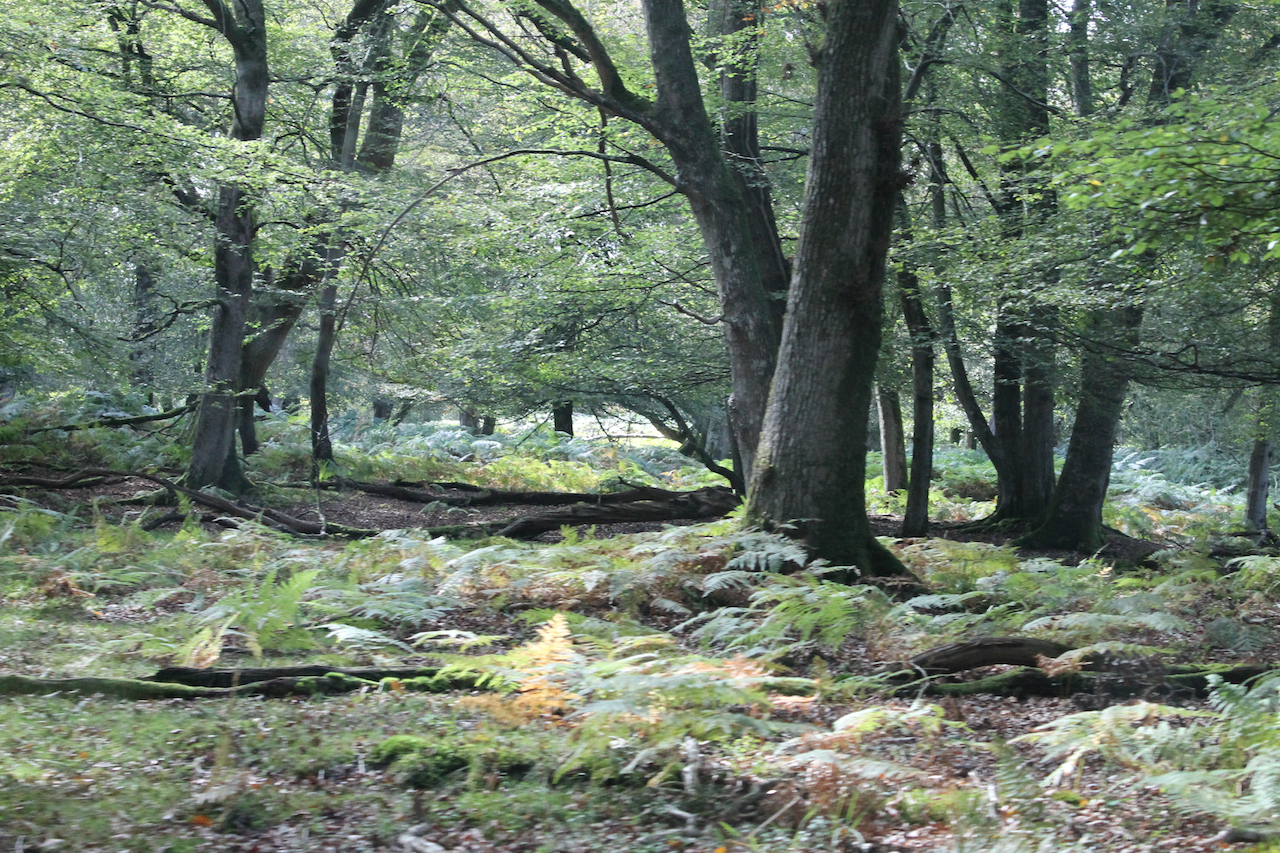
The New Forest is a landscape of irreplacable habitats that supports a diversity of wildlife.

The New Forest is a landscape of irreplacable habitats that supports a diversity of wildlife.

Posted in New Forest, New Forest flora & fauna | Tagged , , , , , , , , , , , , , | Comments Off on New Forest: poachers who steal more than game

New Forest: Magna Carta and Commoner’s Charter

Magna carta was issued on 12th June 1215. 

In London recently (February 2015) was held an event so momentous that over 40,000 people entered a public ballot in order to be present. The four surviving original copies of the 1215AD Magna Carta were brought together for the first time. Also known as Magna Carta Libertatum or ‘the Great Charter of the Liberties’ it is a powerful manuscript that has inspired a number of other documents, including the US Constitution and the Universal Declaration of Human Rights. Magna Carta is considered to be the blueprint for constitutional democracy and was designed to protect life, liberty and property. It was a radical document, which outlined the basic principle that no one was above the law, including the King. It was drafted as a remedy against the rule of bad King John (1166-1216) who just five years into his reign had lost the ancestral lands of Normandy, Anjou, Maine and parts of Poitou, earning him the nickname ‘John Lackland’. His attempts to win them back through warfare demanded huge sums of money and increasingly ruthless methods of raising it. Taxes soared and he began to exert his feudal rights mercilessly.

Magna Carta
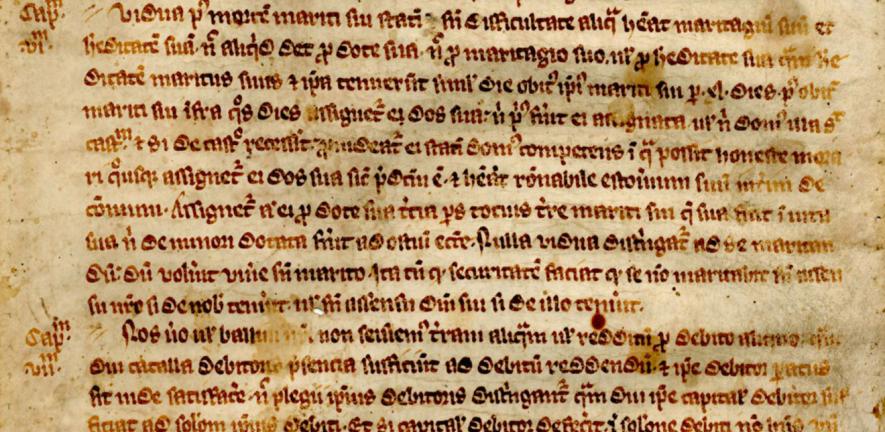
But Magna Carta was not the first document in English history that attempted to reconcile a bad king’s rule with justice. Henry I, the forth son of William the Conqueror, set a precedent on his accession to the throne in 1100AD by issuing a royal proclamation – the Coronation Edict. The Coronation Edict was regarded as wooing for baronial support and atonement for the past abuses of his predecessor and brother William II, Rufus the Red, who was killed in the New Forest in a hunting ‘accident’. According to the Anglo-Saxon Chronicles William II was “hated by almost all his people and abhorrent to God.” Henry I’s Coronation Edict specified a number of rights including the right of the church to be exempt from certain forms of taxation; the right of heirs to assume possession of property left to them, without having to pay excessive “relief”; and the right of widows to retain land and their dowries. Over a hundred years later, when the barons and the church fell into dispute with King John, the Archbishop of Canterbury, Stephen Langton, rediscovered the Coronation Edict and the idea of a new and improved document was seized upon.

Charter of the Forest
After the issue of Magna Carta, in 1215, the Charter of the Forest 1217 was also produced. It was complimentary to the original charter, but where Magna Carta established rights for the barons the Charter of the Forest gave real rights and freedoms to ordinary citizens. It is often known as the ‘Commoner’s Charter’ because it relaxed some of the extremes of Forest Law, such as the death penalty or mutilation for killing a deer, and made provision for the economic protection of free men, who depended upon the Forest to graze their stock and utilise many of its natural resources. The Charter of the Forest codified local law and customs, which was much more practical to ordinary people than setting the limits of royal authority. Because of this the Commoner’s Charter was in use for over 400 years. In fact section 1(1) of the Charter was repealed only in 1971 by the Wild Creatures and Forest Laws Act. The Act abolished ‘any prerogative right of Her Majesty to wild creatures… together with any prerogative right to set aside land or water for the breeding, support or taking of wild creatures; and any franchises of forest, free chase, park or free warren’ thus effectively ending Forest Law.

The practice of commoning, which has existed uninterrupted for over a thousand years, is still the dominant influence over the Forest’s ecology, economy and community.

The practice of commoning, which has existed uninterrupted for over a thousand years, is still the dominant influence over the Forest’s ecology, economy and community.

Posted in New Forest, New Forest customs | Tagged , , , , , , , , , , , , , , , | Comments Off on New Forest: Magna Carta and Commoner’s Charter

New Forest: searching for ponies and finding litter

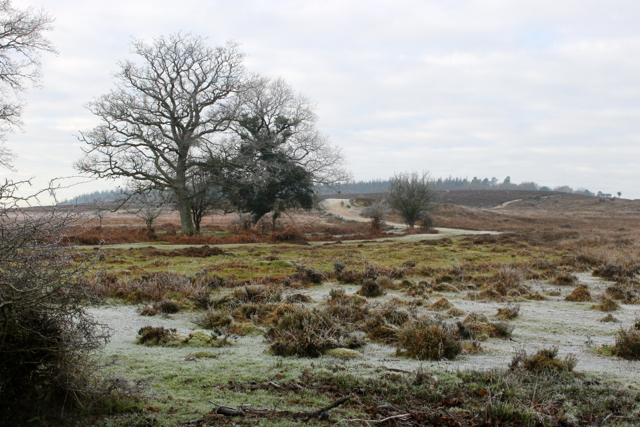
The New Forest is a stunning landscape even in the bleak wintertime.

The New Forest is a stunning landscape even in the bleak wintertime.

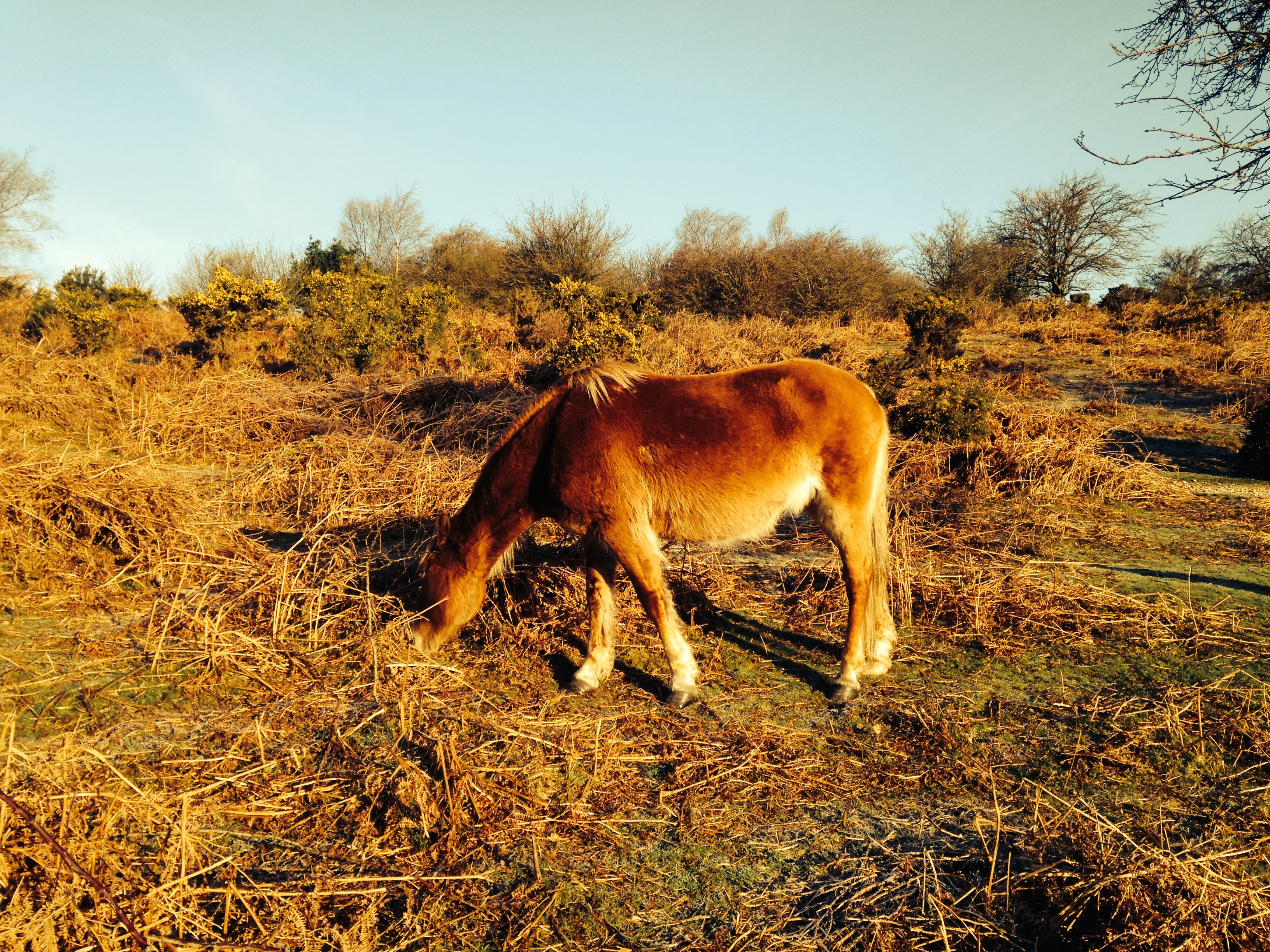
One of the great benefits of being a commoner is getting to explore the heathland and woods in search of my ponies. No matter what time of year the New Forest is a place of breath taking scenic beauty. The wildlife I encounter on my walks adds additional interest and every now and then I am rewarded for my vigilance by the sight of something out of the ordinary, which at this time of year could be the migratory Forest species of Dartford warbler. For me, even in the bleak wintertime the heathland is filled with colour. When I look across the landscape I see hues of umber, beige, brown and green that blend beneath the cold blue sky. The banks of gorse are peppered with yellow pricks of colour that blend with the rust of the bracken. However, every now and then I see something unusual in the landscape that looks alien against the natural backdrop. I perceive at first a colour or shape that is not consistent with its surroundings. Upon investigation it invariably turns out to be a discarded food or drink container that has been tossed away or worse still a bag filled with dog excrement that has been hung upon a bush or tree branch.

Impromptu litter-picks
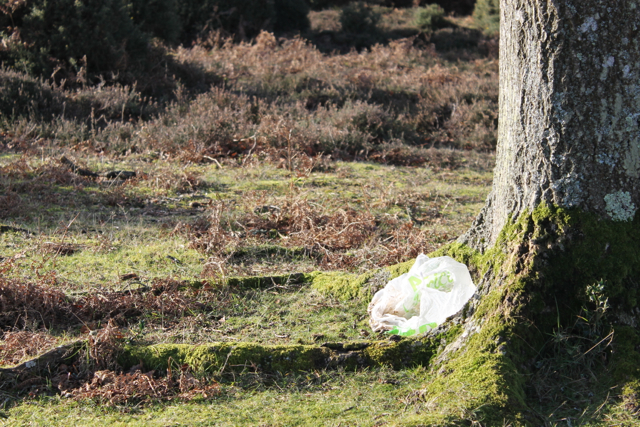
According to figures from the New Forest National Park Authority the New Forest the New Forest has more visitors per square kilometre than any other national park (7.5 visits/km2). In fact the total visitor volumes using the New Forest Park is estimated at 13,555,400 visitor days (excluding business tourists and personal and social visits to friends and relatives). Thankfully, when the number of visitors is considered in relation to the incidences of litter, such acts of thoughtlessness are generally uncommon. But even so, litter and dog mess has a significant impact on visitor satisfaction levels. Worse than that, litter is a real threat to the health of commonable animals and to wildlife. Foals and calves are particularly susceptible to choking or getting severe colic from ingesting plastic food wrappers. Birds and small mammals can become trapped or injured by discarded bottles or cans. My walks on the Forest in search of my ponies often turn into impromptu litter-picks. I really don’t understand the people that come to such a beautiful place and desecrate it in this way. So, if you go out on the Forest and see litter pick it up, even if it is not yours, the free-roaming stock, wild animals will certainly thank you for it.
Discarded plastic bags are a danger to Forest livestock and wildlife.

Discarded plastic bags are a real danger to Forest livestock and wildlife.

Posted in New Forest, New Forest Commoner | Tagged , , , , , , , | Comments Off on New Forest: searching for ponies and finding litter

New Forest: gorse cutting provides a pony’s ‘ready meal’

Gorse-cutting is a traditional healthland management practice and one appreciated by the ponies.

Gorse-cutting is a traditional healthland management practice. The New Forest ponies graze on the crushed stems.

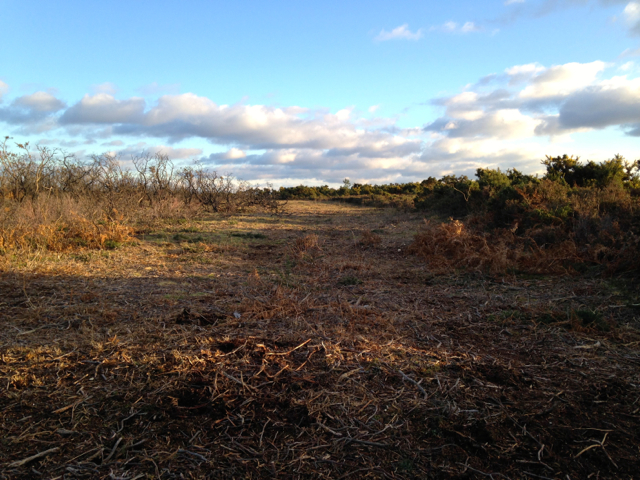
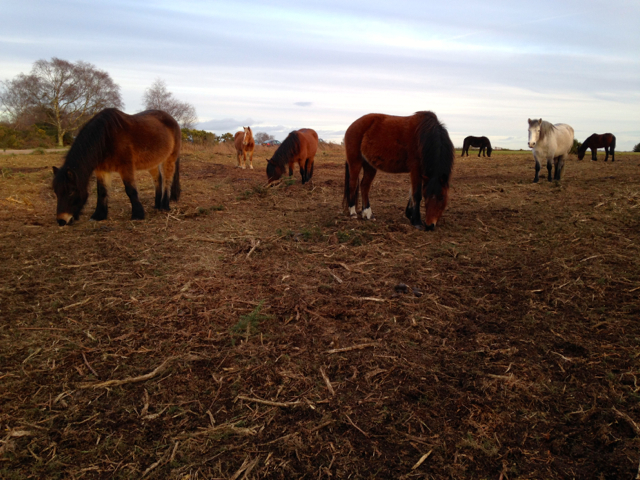
I recently received a call from a commoning friend of mine who told me that the Forestry Commission was cutting the gorse bushes at Godshill. I was urged to go and have a look at a curious sight. Sure enough wide swathes had been cleared from the area surrounding the car park and cricket pitch, giving the landscape an odd and unfamiliar look. However, the spectacle that I had been tipped-off about was not the scale of the denuded terrain but rather the large congregation of ponies that had come to take advantage of the feeding bonanza and were busily hoovering up the crushed stems. There were dozens and dozens of them! They reminded me of the large flocks of seagulls that follow the tractor when the farmer ploughs his fields.

Clearance of the fuzz
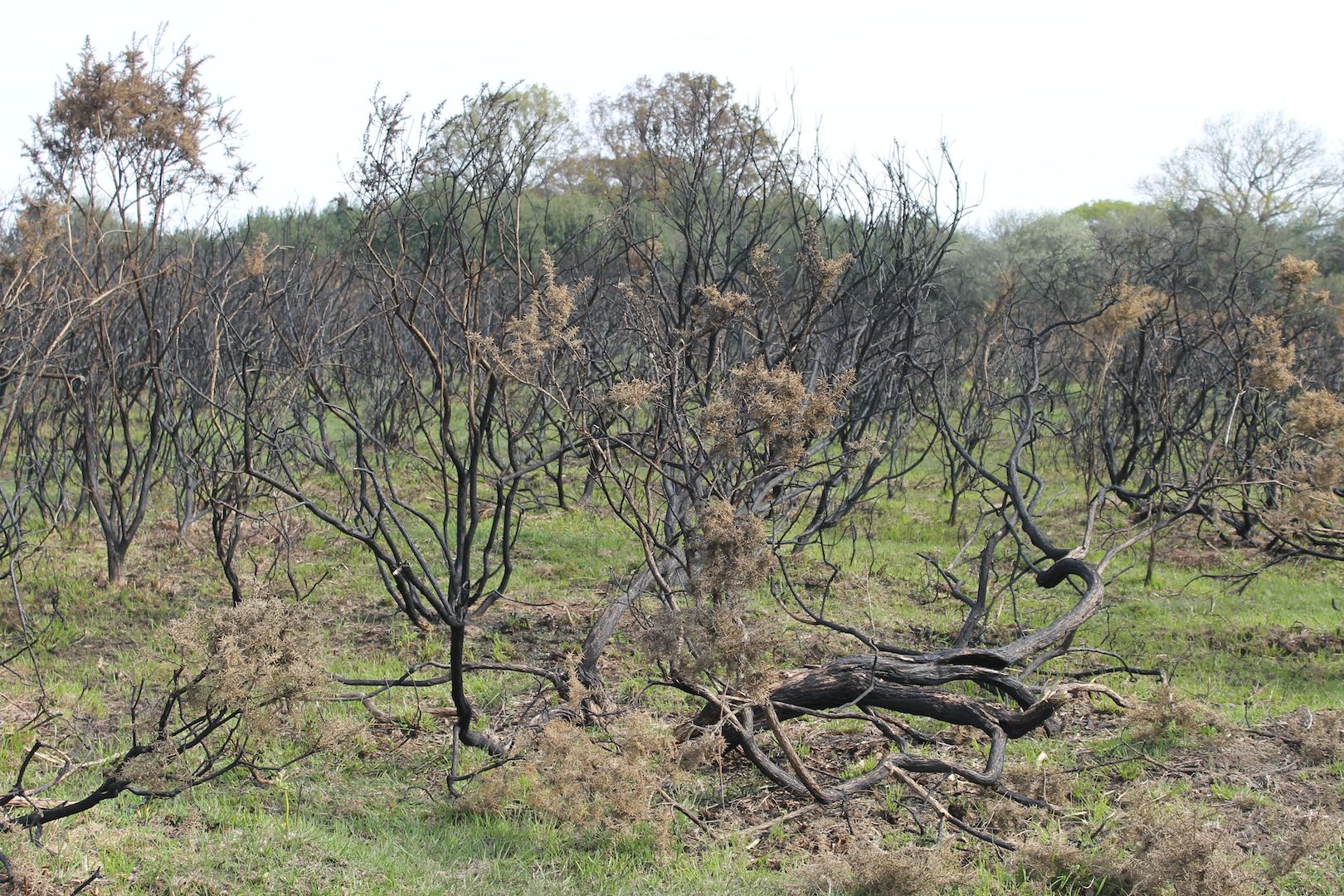
The clearance of gorse or furze (or ‘fuzz’ if you are a local) in this way is a legitimate and necessary part of managing the heathland of the New Forest, which has occurred for generations. As they get older the gorse bushes begin to deteriorate and look ‘leggy’. They lose their compactness and value to the Forest animals and wildlife. When gorse reaches about 10 years old it starts to lose its ability to regenerate and even if cut will not re-sprout. By maintaining the gorse and ensuring new growth many species benefit. Birds, such as stonechat, whinchat, meadow pipit and Dartford warbler rely on the presence of gorse, particularly in winter. Reptiles too, including the common lizard, sand lizard, smooth snake, and adder, all favour gorse-dominated environments. The abundant all year round flowers of this important heathland shrub are also valuable sources of nectar and pollen for insects.

Pony’s ready-meal
Traditionally commoners used gorse as a feedstuff during the winter months and would first ‘bruise’ or crush the spiny stems with hand-held mallets to make them more palatable to their animals. The free-roaming ponies, it has been said, have even been seen to crush the stalks of gorse under their hooves before eating them. But of course the mechanical methods employed by the Forestry Commission was able to render large areas of the spikey shrub to the consistency of the softest chaff. The ponies seemed to appreciate their nutritious winter ‘ready meal’ and all heads were down grazing. I have no idea how so many of them had found out about the flailed and flattened gorse but the word had certainly spread.

Gorse is an important food source for New Forest ponies and the reason many developed moustaches.

Gorse  is an important resource of the New Forest. The free-roaming commonable animals and wildlife depend upon it.

Posted in New Forest flora & fauna, New Forest pony | Tagged , , , , , , | Comments Off on New Forest: gorse cutting provides a pony’s ‘ready meal’

New Forest: the perils of ponies living wild

Ponies forage widely and will avoid ragwort where possible.

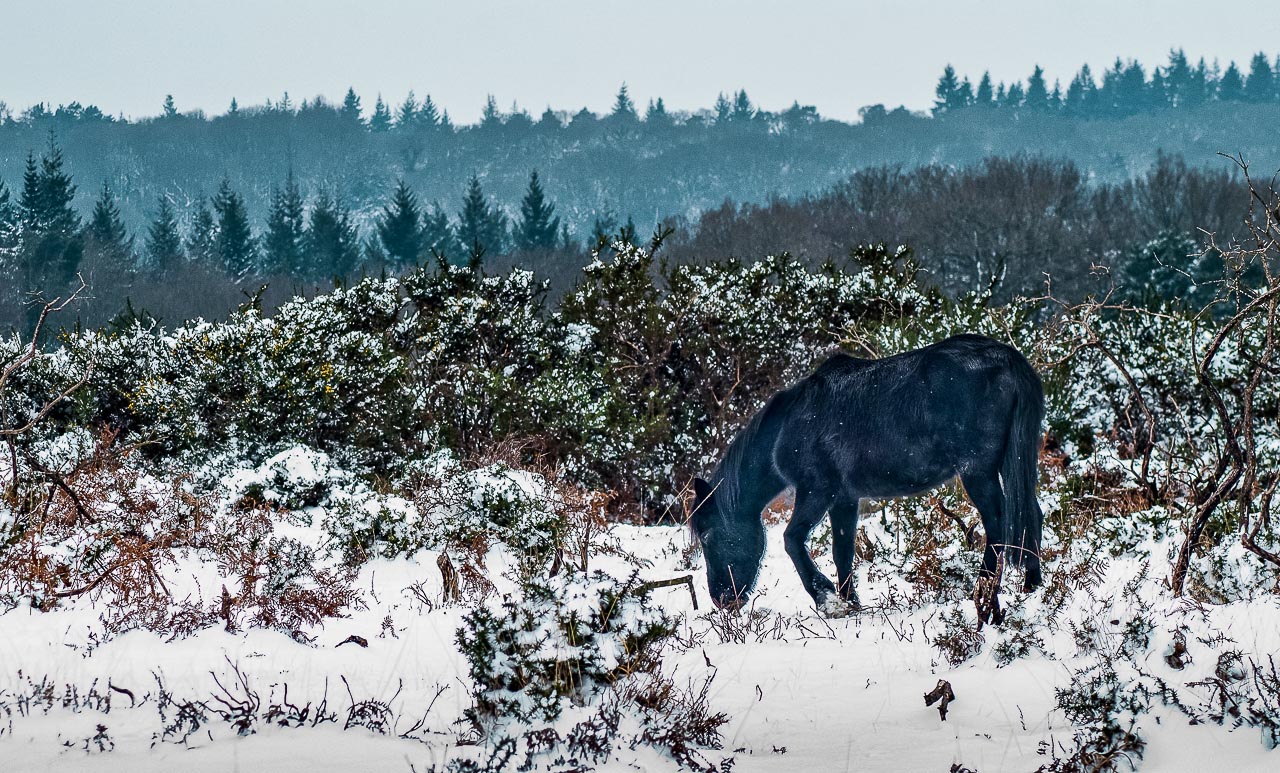
Even in the bleakest winter weather New Forest ponies will happily to fend for themselves.

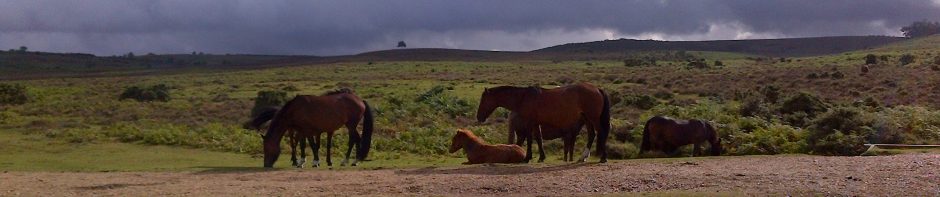
My ponies have gone back out on the Open Forest (January 2015). For a while now they have been indicating that they have had enough of being kept on the holding. They have seemed restless and impatient to be back out roaming free on the heathland, woods and lawns. When the cows they were sharing a field with came in to the barn recently my mares took the opportunity to push through the open gate and return to the Forest. They are New Forest ponies after all, and were born to live a semi-feral existence. They were ably taught by their dams to know exactly where in their territory or ‘haunt’ to find food, water and shelter. Indeed, generations of ponies have roamed freely in the area for over a thousand years. Even in the bleakest winter weather my ponies are quite happy to stay out and fend for themselves. I have learned not to worry about them finding enough to eat. If things get really tough they know where home is and will return home to hang around the entrance of the holding waiting for hay to be doled out to them.

Road traffic
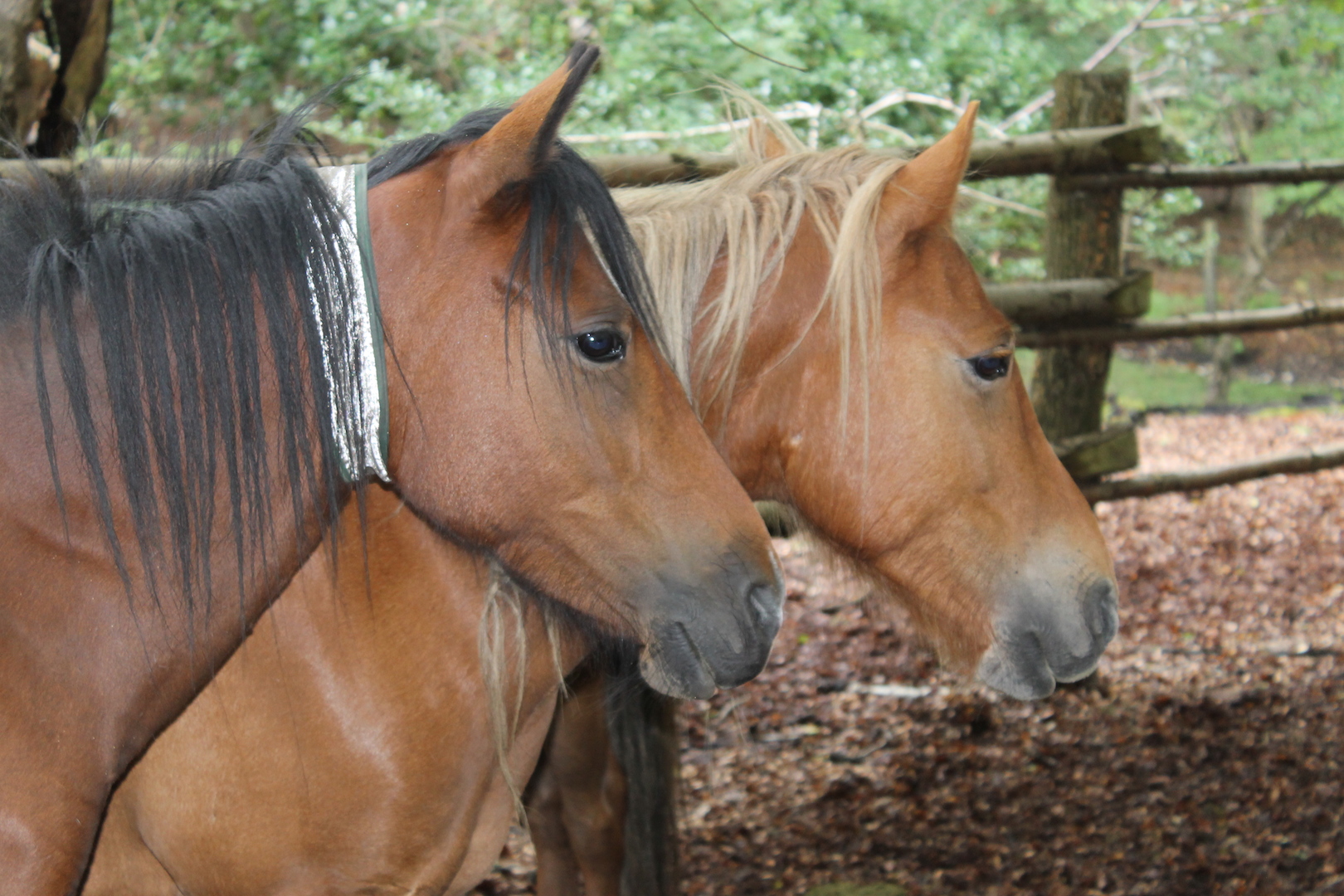
Of all the perils that my ‘wild’ ponies face the biggest, and the one that worries me the most, is undoubtedly road traffic collisions (RTC), the threat of which always seems to feel worse during the shorter days and the longer nights of winter. Using figures supplied by the New Forest Verderers’ Office for the past ten years I have calculated that, on average, 58 ponies are killed each year on the roads. This equates to over one pony death per week on the New Forest, and is a very sad and avoidable statistic. I’ve had both mares fitted with reflective collars, which will show up in the dark to warn motorists and other road users of their presence should they go near any roads. The Reflective Collar Initiative was started in 1997 but accurate records of accidents involving ponies wearing collars have only been available since 1999. In 2003 Hampshire County Council’s Environmental Department revealed, in a monitoring summary of the New Forest Transport Strategy (NFTS), that in the previous three years between 8%-19% of ponies killed on the New Forest were wearing collars. Using reflective collars on ponies is not obviously enough to protect them. Eveything depends upon drivers being alert enough to see them in the first place and the collars won’t protect my mares from vehicles that get too close or approach too fast.

Hand feeding
Significantly, equine road safety also depends on people not feeding titbits and picnic leftovers to the ponies. Hand feeding in this way directly contributes to the road collision mortality rate by encouraging the animals into the car parks and onto roadside verges to scrounge for food where they will be in close proximity to traffic and potential harm. Ponies, even the clever ones, have the mental ability of a two-year-old child and as such have very little ‘road sense’. What animal, or toddler, would be able to calculate the dangers from fast moving traffic when compared to the reward of a tasty treat? The reduction of risk to the lives of my ponies and the other free-roaming animals depends upon visitors not feeding them. It also depends upon motorists and other road users who travel on the Forest roads remaining alert for animals, giving room when passing livestock and staying under the speed limits. Whilst I do all I can to maintain my ponies wellbeing, as free-roaming animals, ultimately their lives are in the hands of those who hold their steering wheels.

The reflective collars enable the ponies to be visible at night.

The reflective collars enable the ponies to be visible at night.

Posted in New Forest Animal Road Traffic Accidents, New Forest pony | Tagged , , , , , , , , , , , , , | Comments Off on New Forest: the perils of ponies living wild

New Forest: Christmas customs and traditions

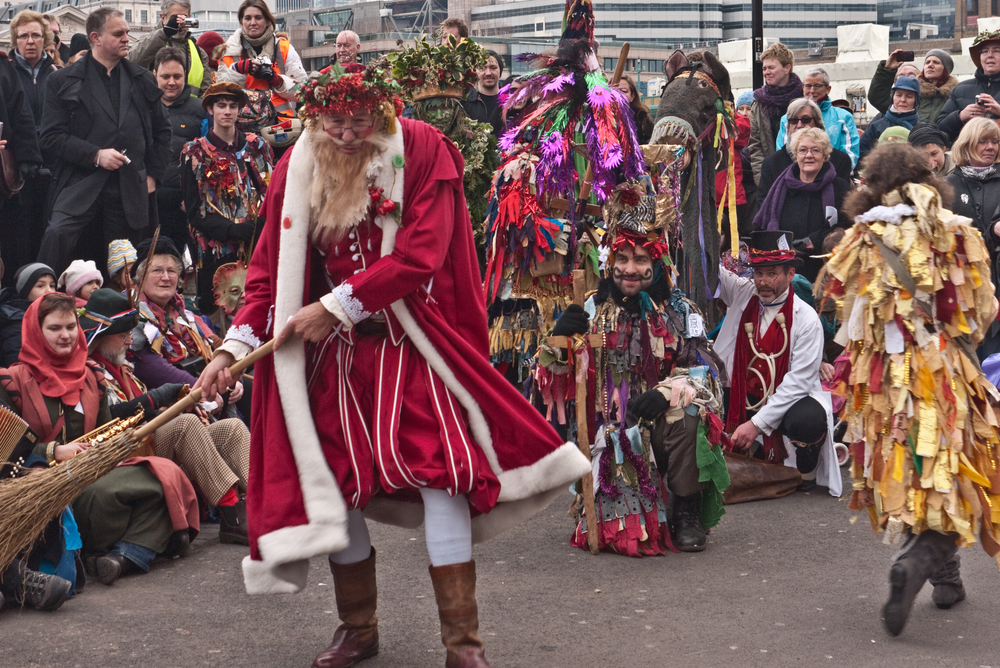
Mummers plays were traditional folk dramas performed at Christmas.

Mummers plays were traditional folk dramas performed at Christmas.

Christmas is a time for celebration, merry social gatherings and observing Yuletide customs. In the New Forest during times past traditional mummers plays were performed at Christmas. The plays were usually folk dramas, often featuring Father Chrismas, the heroic figure of St George and the Seven Champions of Christendom, which were performed in masks or disguises. Rather than performing in the streets the mummers would go door to door or perform to customers in the public houses. On St Thomas’ Day (21st December, the longest night of the year) the poor women of the community would ‘go gooding’, and sing carols to raise money to supplement their incomes. Whereas groups of boys would go ‘tipeering’ and visit the homes of the gentry, tradespeople and middle classes to sing for tips or they would perform outside the ‘publics’, which included inns and hotels. Often they were given beer and spirits rather than money and would get quite drunk. One overseas commentator in December 1896 remarked; ‘This sounds rather shocking, especially as the boys were hardly more than eight or ten years old; but the drinking habit is so common in England that such an occurrence excites comparatively little comment.’

Boxing Day pursuits
By far the most unusual and most riotous custom observed during the festive season on the New Forest was the traditional squirrel hunt, which was held on Boxing Day. Large groups of men and boys, armed with leaded sticks called ‘scales’, ‘squolyles’ or ‘snogs’, went out on the Forest to hunt for red squirrels which, in the 1800’s, were still in abundance. Observers felt that these excursions were an excuse to flout the absence of the game laws on Christmas/Boxing Day. The frustrations of the hunters, if they were unable to find their prey, were often taken out on each other and many forays ended in brawls. Nevertheless at the end of the day the hunters always finished up in an alehouse where they enjoyed great suppers of ‘squirrel pie’.

Point-to-point
Today the traditional Boxing Day activity on the New Forest is the annual Point-to-Point, which is still run under the original rules. Riders are allowed to choose their own course, across the Open Forest, between the start and finish point. The location of the finishing point is made public a week before the race, but the starting point is kept a secret until the day before – yes, on Christmas Day! The race is the perfect event for demonstrating the all-round capabilities of the purebred or part-bred New Forest pony and a good opportunity for catching up with friends. See you there.

merry-christmas-clipart-6


New Forest Mummers perform in Lyndhurst: https://www.youtube.com/user/NewForestMummers

Posted in New Forest, New Forest customs | Tagged , , , , , , , , , , , , , , , | Comments Off on New Forest: Christmas customs and traditions

The New Forest ponies are dressed for winter

The ponies must be hardy to survive in the wild.

The free roaming ponies must be hardy to survive on the Open Forest.

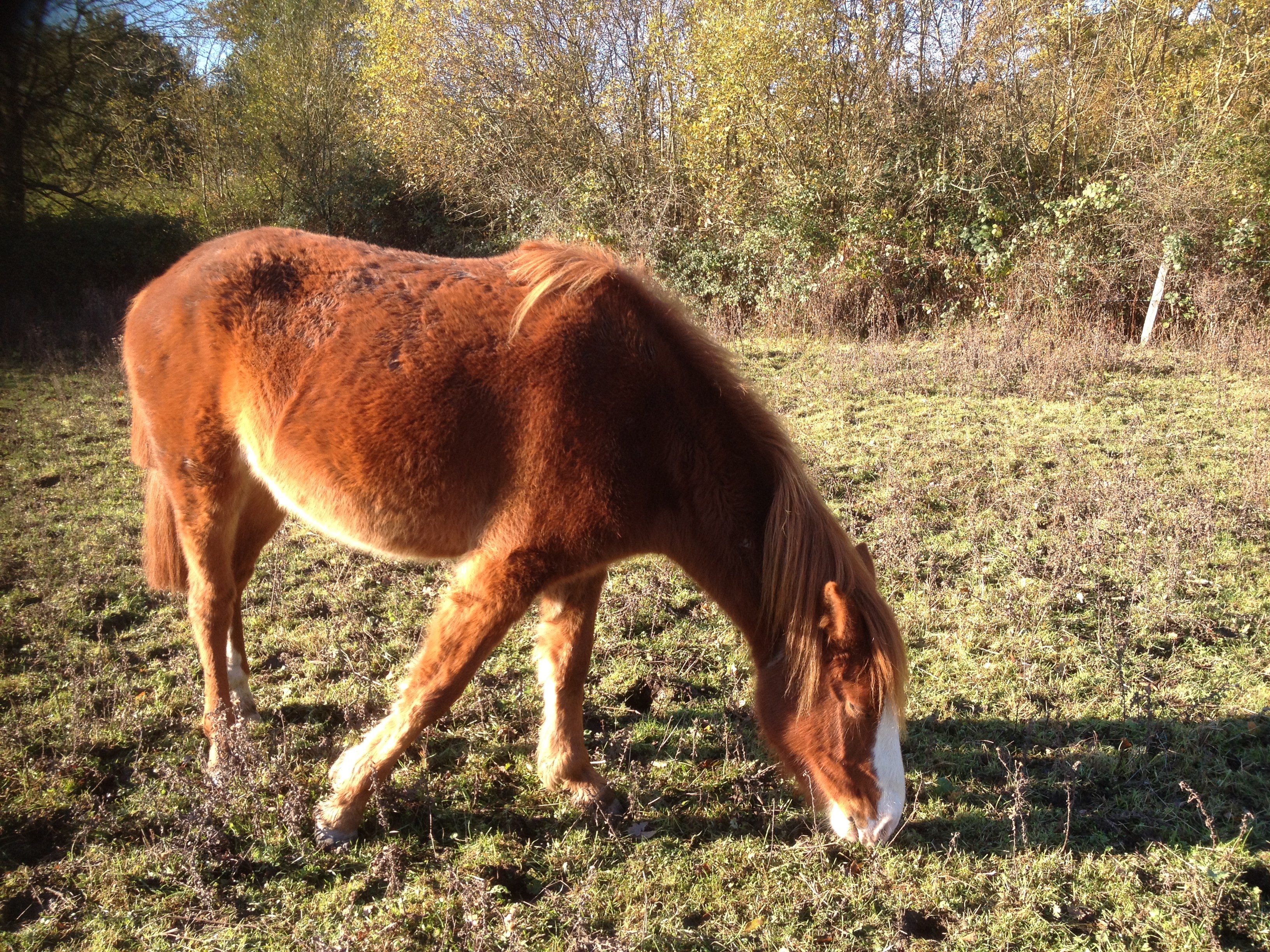
It’s getting noticeably colder (December 2014). My outdoor coat, which hangs in the porch, is chilly to put on in the morning but as I go about the early chores on my holding I soon warm up. I’ve never forgotten being told that if you set off warm you’re wearing too many layers. So I try to make sure that I don’t overburden myself with jumpers and fleeces. New Forest ponies, though, are well prepared for the bitter cold of winter. Even though I have provided the ponies on my holding with a field-shelter they don’t use it. During periods of wind and rain they prefer to stand under the hedgerow, which acts as a windbreak. They huddle together with their backs against the wind and their thick tails fan out behind them keeping their legs and bellies warm. New Forest ponies have low set on tails that are amply suited for this purpose. They are also able to take advantage of the dips and hollows in the terrain, which offer shelter or contain milder pockets of air, and they move around according to the direction of the prevailing wind.

Dressed for winter
The ponies are now dressed for winter in their thick coats and look like shaggy-haired Norman Thelwell creations. I do not put blankets or rugs on my ponies, as I believe that doing so would inhibit their natural ability to regulate their own temperatures. The physiology of the New Forest pony has adapted them to cope ably with the lower temperatures provided that they are able to access shelter and find enough food. Warmth from the winter sun and body heat is trapped next to their skin by soft hairs that act as a thermal layer while piloerector muscles, the one’s responsible for goosebumps on humans, make the pony’s hairs stand up trapping heat and increasing insulation. On the colder mornings the ponies often carry a layer of frost on their backs, which demonstrates the efficiency of their winter coat in avoiding heat loss. During periods of wet weather waterproofing body oils, called ‘sebum’, and downward sloping hair helps to repel water and keep the pony dry.

Meadow hay of summer
Because keeping warm takes up a lot of energy I also make sure that my home-kept ponies have plenty of hay to eat and access to a mineral lick, which they seem to enjoy the taste of. The clink of the gate as I open it alerts them to my presence. They know by the sound of the squeaky wheelbarrow that fodder is on the way and line up along the fence line in expectation as I dole out thick slices of the meadow hay that was made in the summer. I always put out more piles of hay than there are ponies in the field so that there are plenty of opportunities for the lower ranking individuals to feed. Once the ponies are fed and checked over I can retreat back to the house secure in the knowledge that between nature and myself the ponies’ needs are well catered for.

New Forest ponies are hardy and resourceful. Their thick winter coats help to keep them warm and dry.

New Forest ponies are hardy and resourceful. Their thick winter coats help to keep them warm and dry.

Top photo courtesy of Paul Chambers: http://www.paulchambersphotography.com/

Posted in New Forest pony | Tagged , , , , , , | Comments Off on The New Forest ponies are dressed for winter

New Forest: The cow and the cattlegrid

Many New Forest commoners bring their cattle in for the winter.

Many New Forest commoners bring their cattle in for the winter.

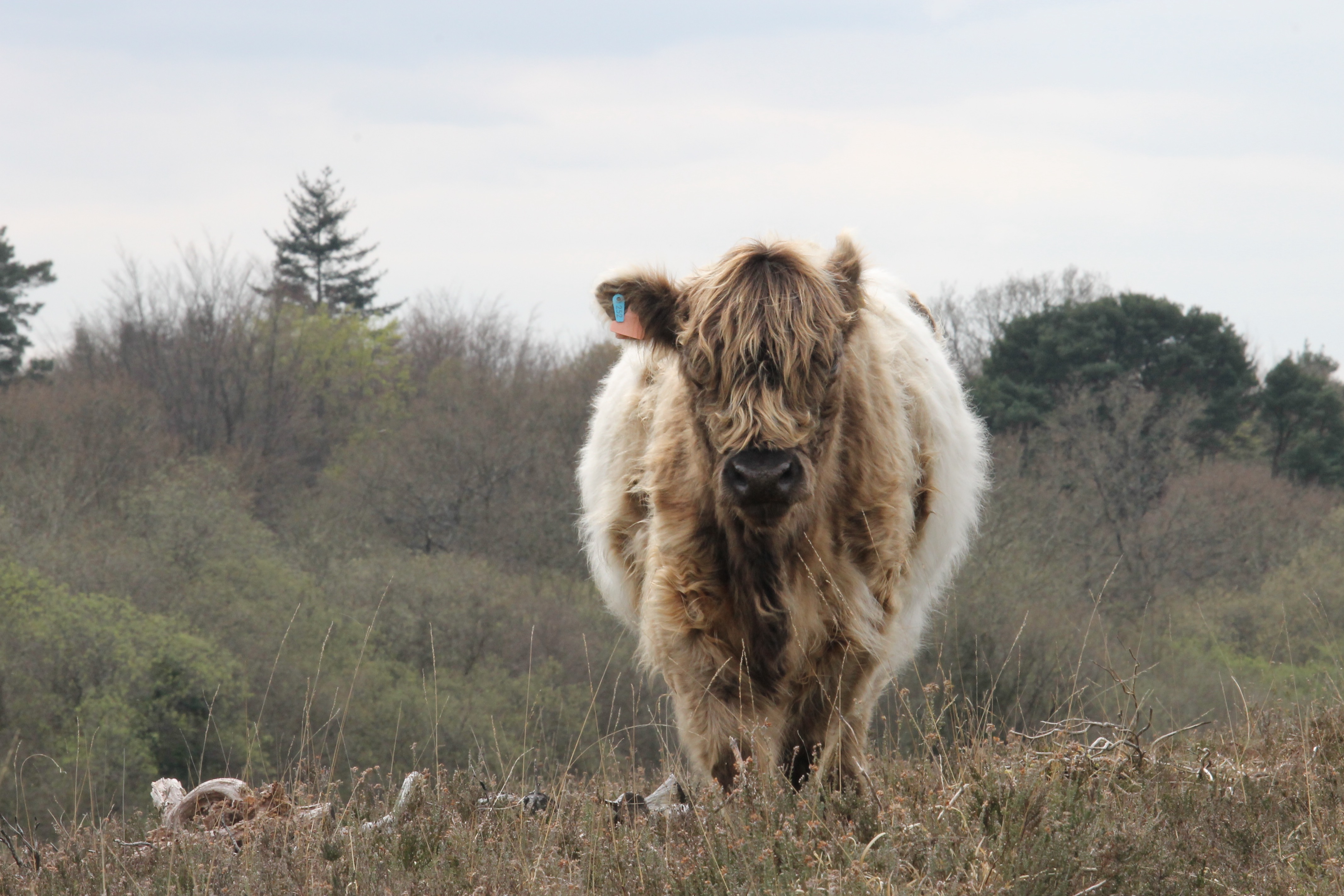
I was in the pub one evening last week (December 2014) and offered a lift home to a long established commoning friend of mine. We drove across the Forest chatting away until, within a couple of hundred yards of their holding, my friend suddenly shouted; ‘Stop the car! Stop the car!’ In the illumination of the car’s headlights we could see, grazing beside the road, a heifer that needed to be rounded-up. Apparently the rest of the herd had been previously brought in to winter off the Forest and this sole cow had managed to avoid capture. We sat for a few moments deciding on tactics. It was pitch dark outside, we didn’t have any torches and were weren’t dressed for capering around in mud but nevertheless we didn’t want to miss this golden opportunity to catch the cow. We decided to drive the beast from inside my car and use the headlights to direct it into the lane leading to my friends holding. This plan worked a treat! The cow, which by all accounts was a wild and jittery creature, seemed very compliant and followed the shaft of light into the lane with the car following behind at a safe distance. What helped the process was the mooing from the previously captured cows calling to their missing companion from the confines and comfort of the holding. This bovine encouragement acted as a homing signal and sure enough the cow turned into the lane. My friend jumped out of the car and closed a set of gates behind us to prevent the cow from doubling-back and re-escaping.

The cow that jumped over the moon cattlegrid 
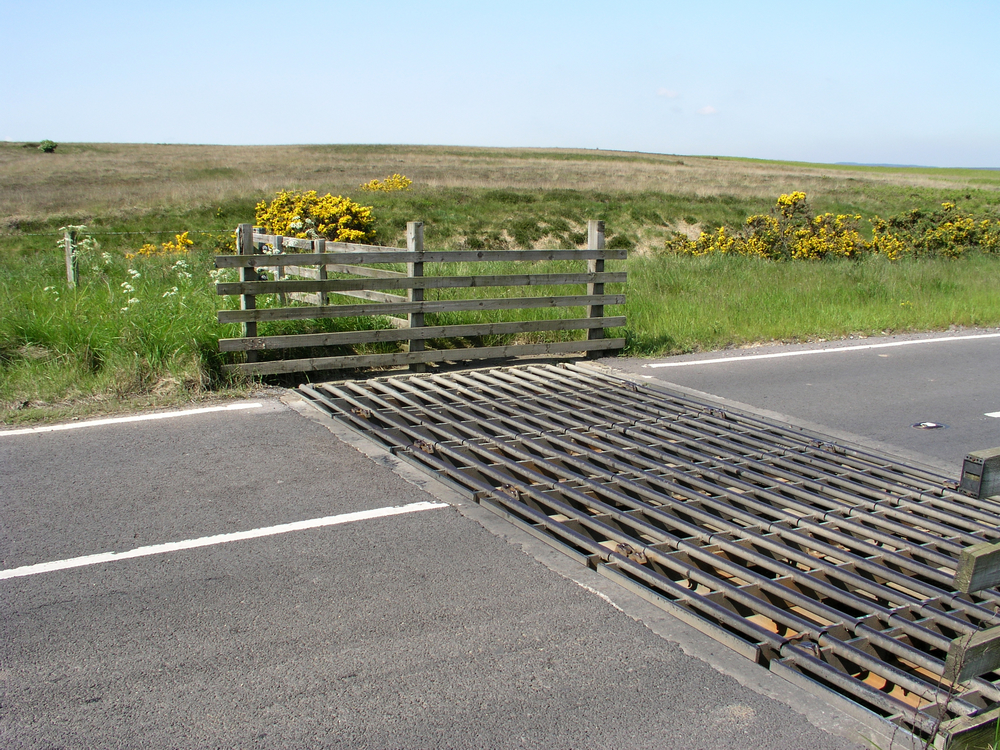
We were congratulating ourselves on our good luck and cunning when suddenly, spooked by the excited commotion of the cows from inside the holding, the heifer took off again at speed. We weren’t too worried because the lane finished abruptly in a dead-end. Well, sort of. There was a neighbouring property at the end of the lane but a cattle grid that filled the mouth of the gateway denied access to it. To the uninitiated a cattle grid consists of a depression in a road or gateway covered by a transverse grid of bars or tubes, normally made of metal and firmly fixed to the ground on either side of the depression, such that the gaps between them are wide enough for animals’ legs to fall through, but sufficiently narrow not to impede a wheeled vehicle or human foot. This provides an effective barrier to animals without impeding wheeled vehicles, as the animals are reluctant to walk on the grates. This did not seem to worry the cow though. I couldn’t see what happened next because it was pitch dark and the headlights were angled at the entrance to my friends holding but above the noise of cattle mooing and the engine of my car running I thought I heard what sounded like cloven hooves tip-toeing across each pole of the cattle grid into the neighbouring property. It was a miracle that the cow had managed to get across safely. But so she had, for the lane was empty! My friend muttered some traditional Saxon words used on such occasions and we decided that due to the lack of visibility nothing more could be done until morning. I left my friend to make contact with the neighbours and explain why they would wake in the morning to find a cow wandering about in their garden!

Cattle grids are commonly used on the New Forest to keep animals within the boundary or out of people's property.

Cattle grids are commonly used to keep animals within the New Forest boundary or out of people’s property.

Posted in New Forest, New Forest cattle, New Forest Commoner | Tagged , , , , , , , | Comments Off on New Forest: The cow and the cattlegrid

New Forest: Beaulieu Road Sales

The Beaulieu Road sales Yard offers the best facilities for processing semi-feral ponies.

The Beaulieu Road sales Yard offers the best facilities for processing semi-feral ponies.

Last week (November 2014) the final pony sales of the year were held at the purpose built sales ring in Beaulieu Road. Not only is this a chance to see native ponies being auctioned but a real opportunity to witness a glimpse of Forest life. The commoners come together and use the sales as an opportunity to catch up with one another, exchange information, gossip and pass on any news. The sales start at 10.30am but there is always lots of pre-event activity, with stalls, refreshments, and ponies arriving and being unloaded into the viewing pens. The foal show was a particular attraction at this event and the foals on display were a credit to their owners. Many a champion New Forest pony has been bought through the sales ring, and sometimes for a bargain price. There were around 158 lots to view, which consisted mainly of New Forest ponies, but there were also donkeys and other horse breeds included.

Various locations of sales rings
There have been sales of New Forest ponies in the area since ancient times. In Ringwood, for example, the market charter dates back into the Middle Ages and ponies would have been regularly sold there. In 1837 the Salisbury Journal reported on the annual Sheep Fair at Britford, near Salisbury, in which upwards of 43,000 sheep and lambs were assembled for auction observing that there was “a large show of horses of inferior description, and particularly of forest colts, which met with a ready sale.” From the early to mid-1800’s pony sales were held on Swan Green and then the Swan Inn, near Lyndhurst, but the increasing use of the motor vehicles meant that the location of the pony sales had to be moved to accommodate vehicular traffic. From 1922 the pony sales were held at the site of the old racecourse at Lyndhurst before moving to their current location in Beaulieu Road at the end of the Second World War.

Clever system 
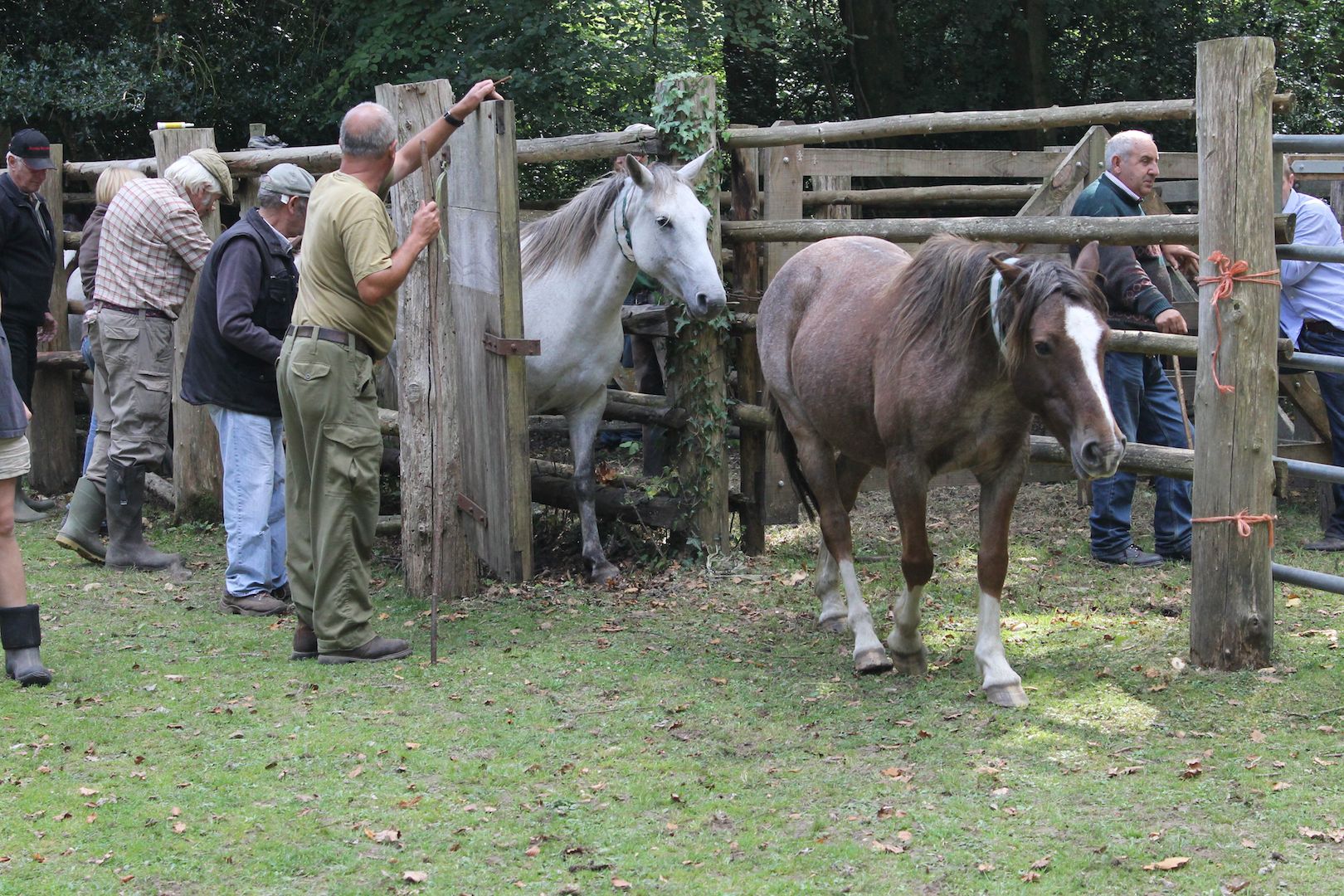
There has been much thought and planning gone into the development of the facilities at Beaulieu Road. Nowadays the infrastructure boasts permanent mains water, electricity, lighting, toilet and hand-washing features, which have been relatively new installations. There are even wash-down facilities that enable lorries and trailers to be cleaned and disinfected between loads. But what I find most impressive is the system used to move the ponies from lorry to viewing pen, and from viewing pen to sales ring, and back again, with the minimum of handling and stress. For many of the ponies that arrive at the sales human hands will have barely touched them. These are semi-feral animals that cannot be haltered and led about. So a clever system has been devised that consists of inter-connected chutes that lead from the pens to the ring. The gates to the pens are opened and the ponies enter the chutes from where they are herded into the sales ring. After they have had their turn in the ring, where the sales are conducted in guineas, they leave via a different door to be collected or returned depending upon whether they have been sold or not.

Best facilities
The Beaulieu Road Sales are always well attended and not just by the commoners. Many tourists also find their ways to the sales and are most interested in the proceedings. Present too are the welfare agencies, such as the RSPCA and the New Forest Livestock Society, and there is always a veterinary surgeon on duty to ensure that the high standards of animal health are maintained. The Beaulieu Road Sales facilities are among the best of their kind for receiving and processing semi-feral animals. I find the whole event fascinating. I like to wander around the viewing pens checking the catalogue and making a list of the top five ponies I would buy. Then I watch my choices go through the auction and see what prices they fetch. The sales are still conducted in guineas (21 shillings at pre-decimalised values or £1.05 in today’s money). It is incredibly tempting to make a bid but I have to keep reminding myself that in time my own mares will start producing foals and that, as a result, I will have enough ponies to contend with. It is probably for this reason that I spend most of the auction sat on my hands!

Commoning is a very sociable enterprise, wherever they get together.

Many a champion New Forest pony has been bought through the sales ring, and sometimes for a bargain price.

Posted in Beaulieu Road Sales, New Forest Commoner, New Forest pony | Tagged , , , , , , , , , , , | Comments Off on New Forest: Beaulieu Road Sales

New Forest ponies with moustaches

Pony moustaches can be quite noticable and occur in mares, geldings and stallions.

Pony moustaches can be quite noticable and occur in mares, geldings and stallions.

I was in the pub recently watching the rugby (November 2014). Many of the players in the England squad were sporting moustaches, in support of ‘Movember’, to raise awareness of prostate cancer. As I looked around the room there were a few other men who were also using the thirty days of November to grow a moustache. There were some very fine examples on display, from the real hairy caterpillar mouth-brow styles, to the pencil-thin face-stiletto types. Movember has certainly given the moustache a new style of credibility and place in modern fashion.

Pony-mo
In past times many New Forest ponies also sported moustaches during the winter months. The hair on the upper lip, and sometimes on the lower one too, was very noticeable and occurred on mares, geldings and stallions alike. On some ponies the moustache could grow as long as 3 inches (7.5cm) and gave them a somewhat comical appearance. However this facial hair was entirely practical, rather than fashionable, and was a natural adaptation that occurred due to the ponies’ winter diet of holly and gorse. The ‘pony-mo’ provided some protection when they browsed the prickly spines of the shrubs. Gorse is a member of the legume family and is related to peas and alfalfa. It is highly nutritious, but like holly is somewhat difficult to eat. It is an important source of food during the winter months when there is no nutrition in the grass. Their preference for eating gorse has given the ponies the nickname of ‘fuzz toppers’ by the commoners.

Pony-tache
Unfortunately many potential buyers considered a moustache to be a sign of poor breeding and so it became an undesirable feature of the New Forest pony. By the middle of the 20th century it had begun to fade and very few ponies roaming the Forest could be seen sporting a ‘tache’. Even today it is an unusual sight. However, equine moustaches are thought not to be linked to breeding at all but rather to lifestyle. Older commoners recall ponies brought in off the Forest who, living on a diet of meadow grass, feed concentrates and hay, had lost their taches within two or three years. Indeed, improvements in welfare standards and changes to management practices of the free-roaming stock by the commoners, such as removing foals during the autumn to winter off the Forest, are thought to have had far more of an impact in reducing the occurrence of pony moustaches than selective breeding has. As if to prove that the moustache was a temporary feature, one prizewinning New Forest stallion had a more novel way of removing his ‘pony-mo’ in the summer. He simply rubbed it off on his manger.

Gorse is an important food source for New Forest ponies and the reason many developed moustaches.

Gorse is an important food source, particularly during the winter months, and it is believed that many New Forest ponies developed moustaches in order to gain protection from the shrubs vicious spikes.

Posted in New Forest, New Forest pony | Tagged , , , , , , , , , , , , | Comments Off on New Forest ponies with moustaches