The Verderers of the New Forest

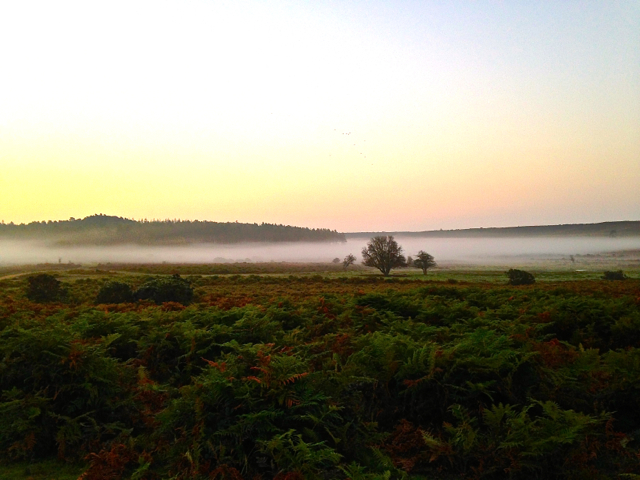
The formal livery and ritual employed at the Verderer’s Court serves to preserve and maintain the cultural practices of the New Forest.

The formal livery and ritual employed at the Verderer’s Court serves to preserve and maintain the cultural practices of the New Forest.

My first step to becoming a practicing New Forest Commoner has been taken. I have an appointment at the Office of the Verderers’ Court! I must take a completed application and other documentation to the Verderer’s Office and meet with the Clerk, who will process my claim to common rights.

The Verderers are officials, appointed or elected, who have judicial and administrative powers within the Forest. There are ten Verderers – five are elected and five are appointed. One is appointed by the Minister of Agriculture, one by the Forestry Commissioners, one by the National Park Authority and one by Natural England. The official Verderer, who presides over all, is the Sovereign’s representative. The five elected Verderers must all be commoners. The Verderers derive their offices, powers and responsibilities from an Act of Parliament passed in 1877. Subsequent Acts have increased the number of Verderers and given them additional powers to make and amend byelaws. However, the court dates back to medieval times and is one of the oldest legal institutions in the country.

The Verderers’ Court meets in public ten times a year and people may address the Court on matters that relate to the management of the New Forest. The Verderers will then consider all ‘presentments’ and make a final judgement once all issues have been discussed in private session. Working in conjunction with the Forestry Commission and Natural England, the Verderers regulate commoning and certain forms of development on the New Forest. Many of the decisions about the management of the New Forest must firstly be approved by the Verderers.

The extent of my Rights of Common must first be checked using the Atlas of Common Rights, located at the Verderers’ Office, and depending upon the outcome of the search my application to become a practising commoner will be approved. I am looking forward to meeting the Verderers’ Clerk and progressing my claim of common rights.

Verderer's Hall image

Posted in New Forest Commoner | Tagged , , , , , , , , , , | Leave a comment

New Forest Pony…the genuine all-rounder!

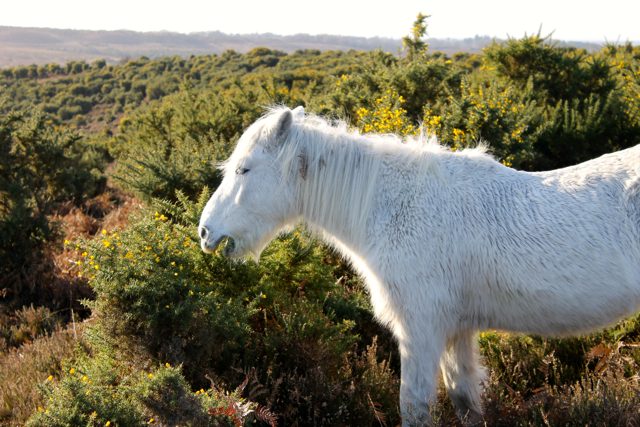
The New Forest pony is known as the 'architect' of the Forest, because their grazing habits shape the landscape.

The New Forest pony is known as the ‘architect’ of the Forest, because their grazing habits shape the landscape.

Living and working close to the New Forest means that the sight of the fabulous New Forest pony is never far away. These are native ponies whose history can be traced beyond the beginnings of the Forest itself. The standard for the breed is up to 14.2hh (148cm) and only solid colours, such as bay, brown, grey or chestnut, are acceptable. Coloured ponies, such as piebald (black and white patches), skewbald (black and/or brown and white patches) or appaloosa (spotted) types cannot be registered as purebred New Forest. Blue eyes are also not permitted in New Forest ponies and white markings are only acceptable on the head and legs. They should have sloping shoulders, strong quarters, plenty of flat bone, good depth of body, straight limbs and good hard round feet.  It is said that a New Forest pony can carry a stone in weight for every hand in height. They were bred for working and had to be able to turn their hooves to any task, which is what makes them such a versatile breed today.

New Forest ponies make excellent mounts for adults and children. Their intelligence and superb temperaments make them excel in all equine activities, including dressage, carriage driving, show jumping, polo and showing. However, the ponies that you see grazing on the New Forest are mainly semi-feral and only after a period of socialisation and training, by knowledgable people, are they safe to approach. The ponies have been called the ‘architects’ of the Forest, for it is through their browsing and grazing that the landscape takes its present form. Without their contribution to the ecology of the Forest (and also that of the cattle and deer) the Forest would soon be overgrown with brambles, gorse and other coarse herbage.

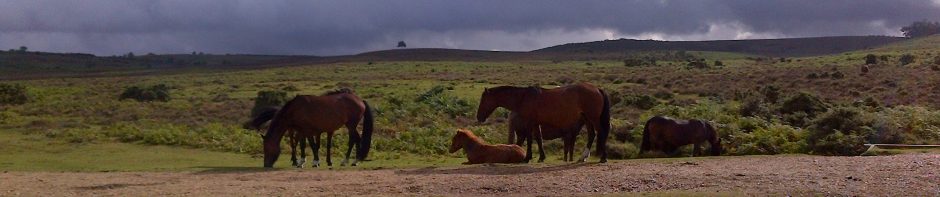
New Forest ponies live 'wild' or, more accurately, semi-feral lives.

New Forest ponies live ‘wild’ or, more accurately, semi-feral lives.

Posted in New Forest, New Forest pony | Tagged , , , , , , | Leave a comment

Commoners of the New Forest

The practice of commoning, which has existed uninterrupted for over a thousand years, is still the dominant influence over the Forest’s ecology, economy and community.

The practice of commoning on the New Forest has existed uninterrupted for over a thousand years and is still the dominant influence over the Forest’s ecology, economy and community.

We moved into our new house in 2012 and discovered to our amazement and delight that we were commoners of the New Forest. The practice of commoning, which has existed uninterrupted for over a thousand years, is still the dominant influence over the Forest’s ecology, economy and community. Commoners are those individuals who occupy land or property to which privileges known as ‘Rights of Common’ are attached. These rights include ‘depasturing’ stock on the Open Forest. There are six registered rights:

  • Pasture – grazing ponies, cattle and donkeys on the Forest
  • Sheep – grazing sheep on the Forest (which was assigned to Estates rather than individuals)
  • Mast – turning pigs out on the Forest in the Autumn to feed on Beech mast and acorns, known as the pannage season
  • Marl – taking clay to fertilize agricultural land Estovers Gathering firewood
  • Turbary – cutting turves for fuel (no longer in use)

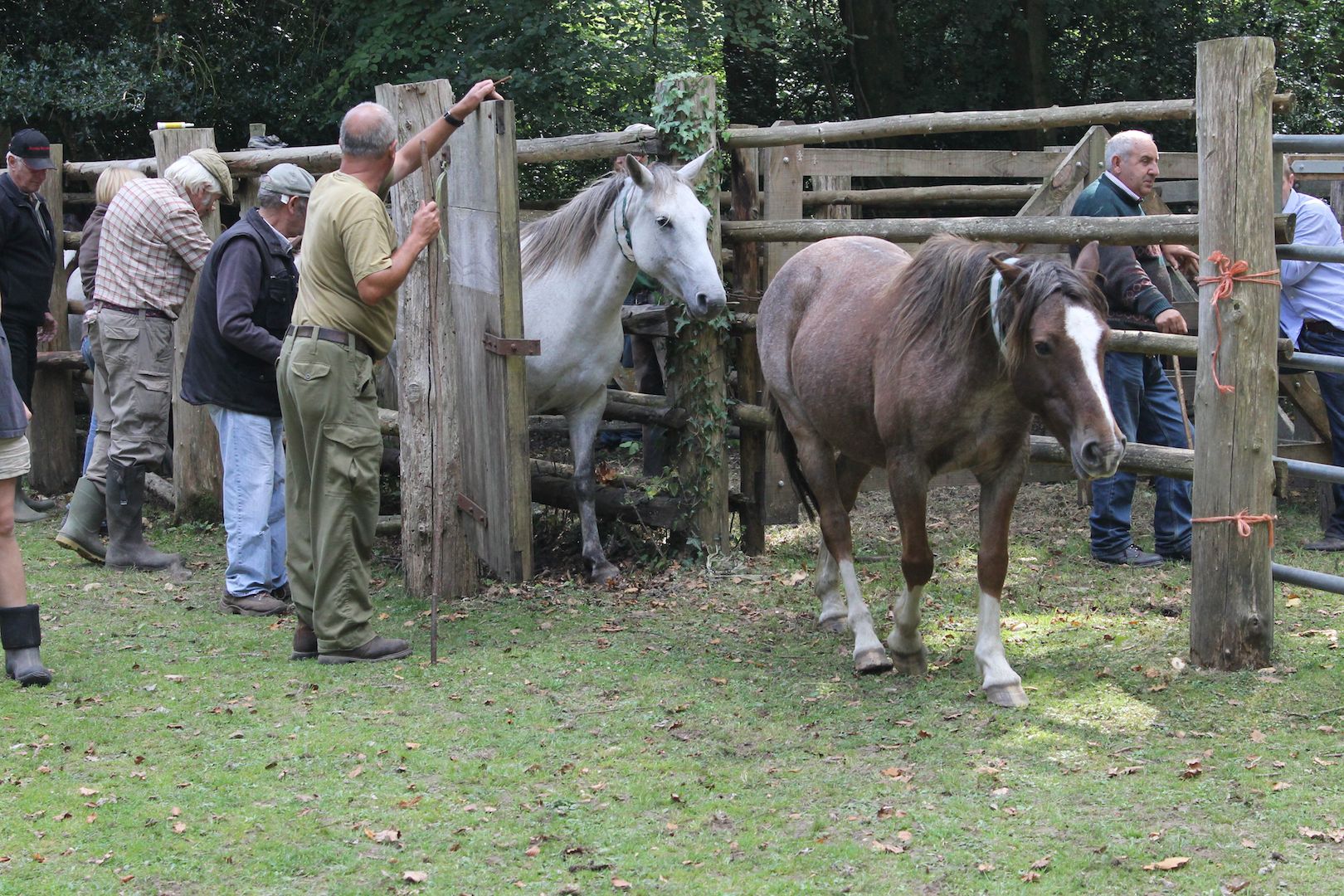
At present, over 300 commoners exercise grazing rights with more than 7,000 ponies, cattle and donkeys all year round. Our intention is to join this select band of people and turn out ponies on to the Forest. We will start with a small number of mares to begin with and see how we go from there. Before we can exercise the right of Common of Pasture we will have to make application to the Verderer’s Clerk who will be able to confirm the existence of our right and allocate a brand for our animals, to assist identification. Once they have been branded the animals may be turned out. Marking fees are paid to the local Agister each year when the ponies are rounded up in the annual drifts.

Many of the people who exercise Rights of Common are descendants of families who have been commoners for generations. Commoning today does not provide a living, it is only economic as part of a system of farming. Many of the larger farmers use the Forest for some of their stock for a part of the year but it is not an economic system that is viable in itself. Most of the smaller commoners continue with the system because they have always done so and enjoy the life and social aspects that it provides. A number of others, like us, have come into commoning for the interest it provides.

We believe that it is vital that the tradition of commoning is maintained, as without the free roaming livestock the Forest would soon become a very different place. The ponies are the ‘architects’ of the land, feeding on the gorse and brambles that would otherwise become overgrown. Commoning relies upon co-operation between commoners and represents an important social system. For us, commoning is an indivisable social, economic and ecological way of life that has deep historical importance. We are looking forward to learning about, and ultimately, becoming practicing commoners of the New Forest.

As Commoners we can 'depasture' ponies, cattle and donkeys onto the Open Forest.

As Commoners we can ‘depasture’ ponies, cattle and donkeys onto the Open Forest.

Posted in New Forest, New Forest Commoner | Tagged , , , , , , , , , | Leave a comment